
Scott County board approves Oxford Elementary change order after subsurface sinkhole and groundwater issues
Get AI-powered insights, summaries, and transcripts
Subscribe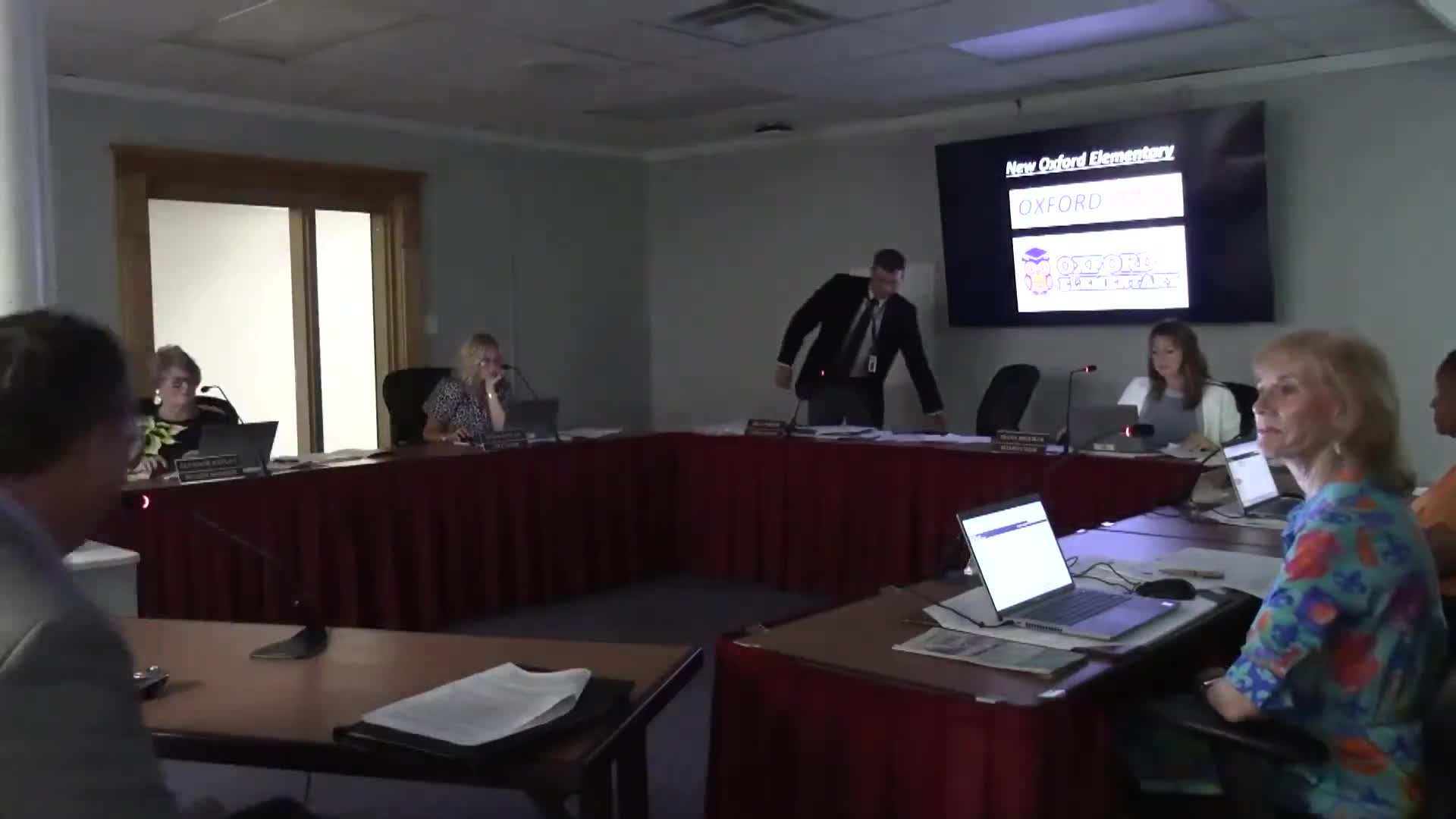
Summary
The Scott County Board of Education approved Change Order 001 for New Oxford Elementary after contractors uncovered unexpected poor material and groundwater under a classroom wing; the district and geotechnical consultants agreed on rock replacement and site mitigation, and board members said contingency funds will cover the cost.
The Scott County Board of Education voted to approve Change Order 001 for New Oxford Elementary after contractors uncovered unexpected, unstable material and groundwater under portions of the building pad. The change order covers excavation of unsuitable material, verified rock replacement, and site mitigation to stabilize the building pad. District construction presenters told the board the problem was discovered under a classroom wing as crews excavated and that the dark, water-bearing material did not appear in the original geotechnical borings. "We mitigated the site because the water and the bad conditions are not going away," the construction presenter said. He told the board the contractor, the geotechnical firm UES, and on-site inspectors verified quantities and agreed on unit prices for rock replacement. The board heard that crews performed about 50 borings across the site, that the excavation squeezed between existing borings, and that the issue was not detected in the earlier report. The construction presenter said UES estimated the repair addressed about "85 to 90% of it," though he cautioned "we may not be completely done." He described placement of the building pad, stem wall foundations and vapor barrier, and said the work included additional drainage preparation where water still needs to be routed away. Board members asked whether the district would delay the project; the presenter said waiting a year was not feasible and that site mitigation was the chosen approach. A board member noted the district's contingency funds would cover the work. The board then took the formal vote to approve the change order; the motion carried. The board also received progress photos showing walls up, gym structure in place and material staged on-site. Construction staff said wet spring conditions and a high local water table complicated site work, requiring rock to be brought on-site and additional monitoring. The board was notified other district projects have faced similar saturated subsurface conditions this spring. The approval is limited to the change order described at the meeting; the presenter warned that additional localized mitigation could be required if crews encounter more problematic areas during ongoing work.