
Fayette County schools report 79% of strategic-plan actions complete; equity scorecard work next
Get AI-powered insights, summaries, and transcripts
Subscribe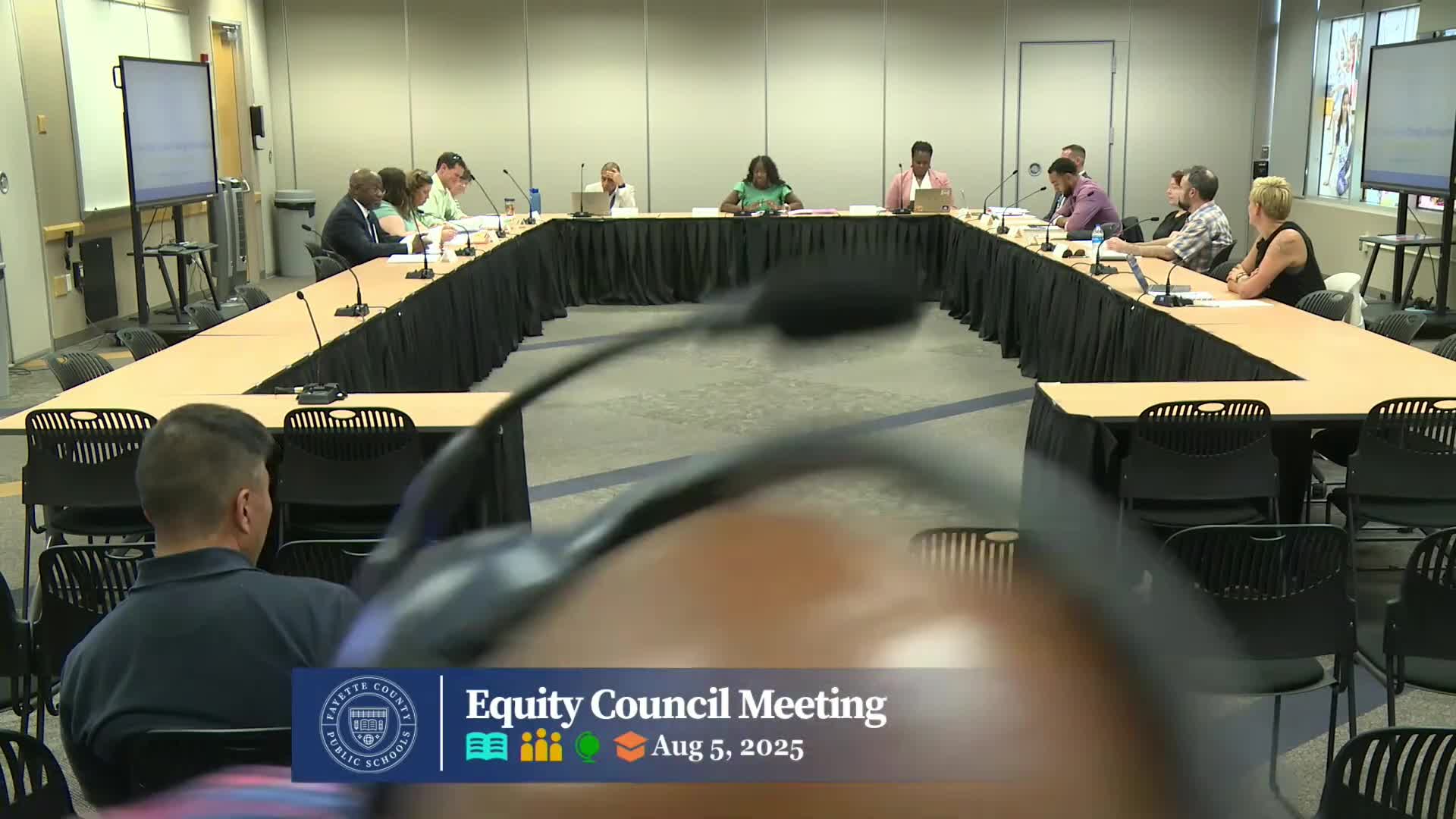
Summary
Assistant Superintendent Bill Bradford told the Fayette County Equity Council Committee on Aug. 5 that the district has completed 79% of 77 strategic activities tied to 20 priorities from its 2022 strategic plan as it begins the fourth year of implementation.
Assistant Superintendent Bill Bradford told the Fayette County Equity Council Committee on Aug. 5 that the district has completed 79% of 77 strategic activities supporting 20 strategic priorities from the 2022 strategic plan and is entering the plan's fourth year of implementation.
Bradford said the Portrait of a Graduate framework remains the district's guiding aim and noted districtwide adoption of new reading, writing and math curricula. He said 79% completion does not mean 'one-and-done' but that the actions are in place and will continue to be nurtured.
The progress report matters because the plan sets multi-year objectives intended to mature by 2027; the Equity Council was asked to help develop metrics for a proposed equity scorecard that would capture belonging, efficacy, diversity and inclusion in ways the district and board can defend and act on.
Bradford summarized outcomes from the 2024—025 school year including expanded access to rigorous courses, training on revised unit frameworks, roll-out of the Elevate platform (currently for grades 6—12 and planned for elementary), and targeted student 'defenses of learning' where students present evidence of competencies tied to the Portrait of a Graduate.
He described workforce goals that drove reductions in certified staff turnover and improved retention and said the district's outreach work produced a two-way communication platform (ParentSquare) and an external partnerships website to register volunteers and community partners.
On discipline, Bradford described the district's 'reset' model as an alternative to in-school or out-of-school suspension that emphasizes restorative practices, counseling, career/college planning and academic interventions so students can remain in learning settings. Bradford said the objective of reset is to 'minimize and or extinguish out-of-school removals.'
He outlined priorities for 2025—26: drafting a measurement tool (the equity scorecard or an alternative), reviewing grading practices to emphasize mastery over marginal differences in percentages, expanding rigorous instruction and dual-credit funding, implementing standard operating procedures across departments, and advancing professional learning tied to family and community engagement.
Discussion at the meeting included questions about the equity scorecard's independence and whether the superintendent and board should provide input. Bradford replied that broad input would help the ECC make defensible recommendations and create shared language around measures. He also recommended peer review and stakeholder input as part of the drafting process.
No formal votes or policy adoptions related to these strategic matters occurred during the meeting; Bradford returned the council to ongoing collaboration on the equity scorecard and other implementation priorities.
Less critical details: Bradford said the strategic plan was launched in 2022 after a year of research and community input; the district reports it has 20 strategic priorities supported by 77 activities. He offered to share his presentation with council leadership on request.