
Denver council orders at‑large election change to ballot; ranked‑choice proposal fails to advance
Get AI-powered insights, summaries, and transcripts
Subscribe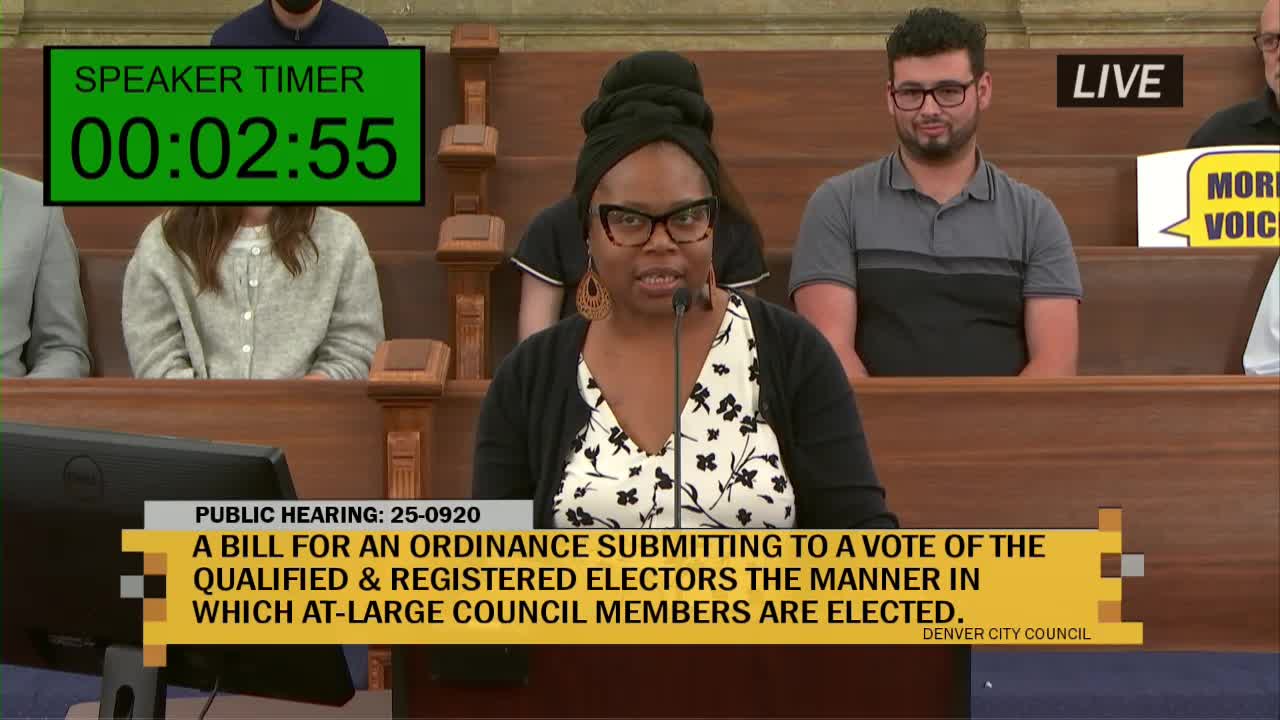
Summary
Denver City Council voted to send a charter amendment separating the two at‑large council seats (At‑Large A and At‑Large B) to the Nov. 4, 2025 ballot, but it rejected a separate measure to implement instant runoff (ranked‑choice) voting for municipal elections.
Denver City Council voted Aug. 11 to place a charter amendment on the Nov. 4, 2025 ballot that would split the city’s two at‑large council seats into separate contests (at‑large A and at‑large B), a change backers said would ensure each at‑large winner secures a majority. A separate proposal to replace the city’s runoff system with instant runoff voting (ranked‑choice voting, RCV) failed on the same night.
Councilmembers who sponsored the at‑large amendment argued the change would align at‑large elections with how other citywide offices are chosen, require majority winners and reduce undervoting observed in two‑seat, single‑ballot contests. Councilmember Kevin Flynn and other sponsors said data show substantially higher undervoting in the at‑large contest compared with mayoral and district races.
The council voted 7–6 to place the at‑large amendment on the ballot. The measure will ask Denver voters whether the two at‑large seats should be elected on separate citywide ballots so each seat’s winner must receive a majority of votes. Sponsors said this restores the original intent when the at‑large seats were created in 1968 and removes a judicially originated plurality rule that has governed the seats for decades.
By contrast, council members declined to send a ranked‑choice voting measure to the ballot. Council Bill 25‑10‑14 (RCV referral) failed 6–7 after extended public testimony and debate. Supporters — including civic groups, voting‑rights organizations and youth voter groups — urged RCV as a way to let voters rank candidates by preference, discourage negative campaigning and eliminate a separate runoff election. Opponents raised concerns about ballot exhaustion (so‑called “exhausted” ballots when voters do not rank finalists), possible effects on turnout among marginalized groups and the scale of education and administrative changes needed to implement a new voting method.
Public commenters included a mix of civic‑engagement groups, nonprofit organizations and residents. Supporters argued RCV reduces the “spoiler” dynamic and can help elect candidates broadly acceptable to the electorate. Opponents, including some local civic groups, said splitting at‑large seats may confuse voters and could advantage better‑funded campaigns in runoff-style contests. Several advocacy organizations asked the council to prioritize additional stakeholder engagement before sending changes to voters; the Colorado Civic Engagement Roundtable and others submitted written opposition asking the council to vote no on the at‑large split.
Clerk and Recorder staff told council that holding a municipal question in June would require additional mailing and staffing costs to include minor party ballots and that a special June election could cost an estimated $500,000–$700,000 above the base primary cost; staff provided an estimate of approximately $2.6 million for a standard primary election. They said many details about cost depend on timing, postage and paper prices.
Councilmembers suggested alternative reforms — including staggered terms so at‑large seats run in different years, moving municipal elections to November, and continued study of ranked‑choice systems — but cast differing votes on which path to prioritize. Councilmember Parady and others said RCV has returned positive outcomes in other jurisdictions and supported the referral of the RCV question; others said more community engagement, budget clarity, and sequencing with other election reforms are required.
The council’s action means: voters will see the at‑large split question on the Nov. 4, 2025 ballot; RCV will not appear on that ballot as a referral from council. Several council members said they would continue public education and stakeholder outreach about election design ahead of future proposals.