
Denver eliminates minimum parking requirements citywide; council adopts text amendments after heated debate
Get AI-powered insights, summaries, and transcripts
Subscribe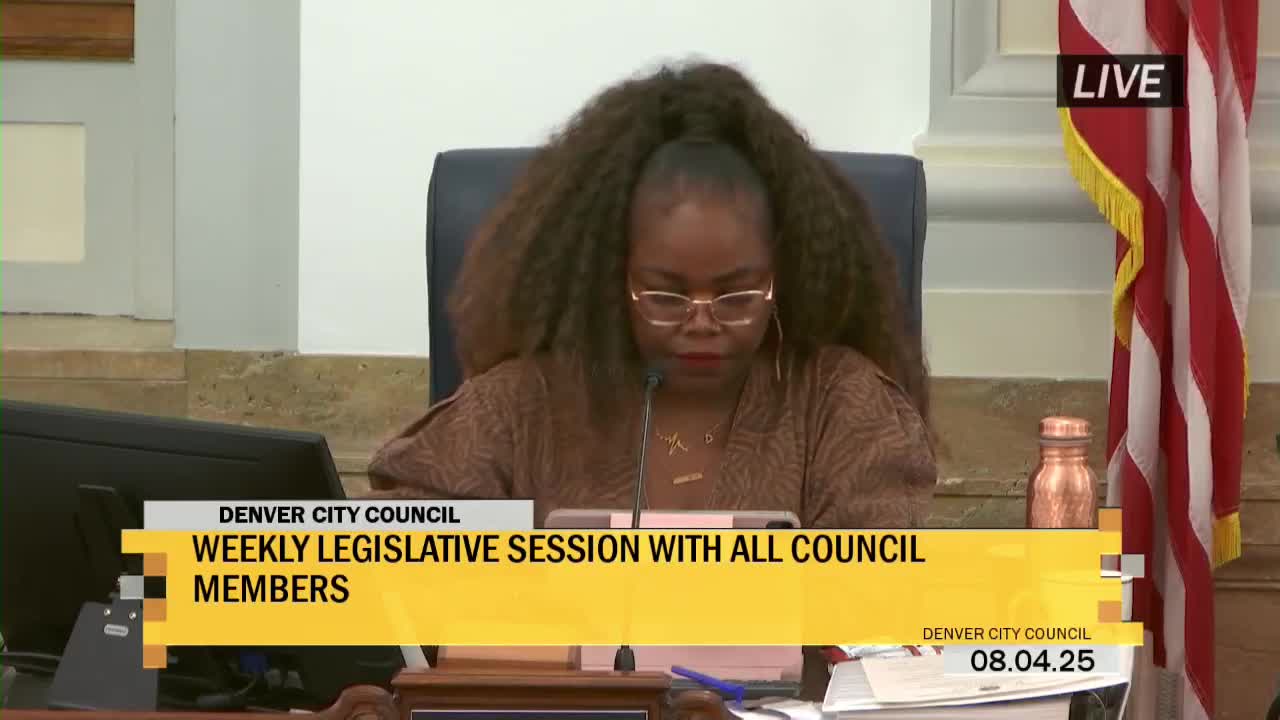
Summary
Council voted to remove minimum vehicle‑parking mandates from the Denver Zoning Code and related former‑Chapter‑59 rules, a change supporters say will reduce housing costs and promote walkable development while some council members warned about transit reliability and urged parking maximums instead.
Denver City Council on Aug. 4 adopted a package of zoning text changes and municipal code amendments that remove minimum vehicle‑parking requirements for most land uses across the city and the former‑Chapter‑59 transition areas. The package also consolidates and preserves bicycle parking standards, keeps existing maximum parking standards where present and eliminates the many exemptions and reduced‑ratio provisions that previously complicated parking compliance. The core items—Council Bills 25‑06‑84 and 25‑06‑85 (text/code changes) and the related Chapter 27 repeal item 25‑06‑86—were approved in sequence during the evening session; roll call votes on the principal bills recorded nine affirmative votes for each final passage.
City planning staff presented analysis prepared with Department of Transportation & Infrastructure and the Office of Climate Action, Sustainability & Resiliency showing that minimum parking requirements increase construction costs, consume development area, and can limit the number and type of homes a site can support. Staff cited a June 2024 state law that already eliminated parking requirements for certain multifamily projects within designated transit corridors and recommended Denver go further by removing minimum requirements for all land uses citywide and keeping maximum limits where desirable. Planning staff noted that, historically, developers frequently provided more spaces than the minimums required; the change removes the regulatory obligation while leaving space for market‑driven or locally negotiated parking solutions such as shared parking, parking benefit districts, pricing, or local maximums in the future.
Supporters argued the change will reduce the cost of housing, lower stormwater and urban heat impacts from paved lots, and permit more flexible reuse of small and irregularly shaped urban lots. “Parking is expensive, takes up space, and blocks new homes from being built,” Councilmember Flynn said during the discussion. Multiple community groups, housing advocates and neighborhood proponents urged adoption in public comments, citing housing affordability and climate reasons.
Opponents — including Councilmembers Sawyer and Flynn — said removing minimums alone will not stop developers from over‑building parking and argued the law would be more effective paired with maximums or stronger transit improvements. Councilmember Sawyer recommended establishing parking maximums and said the city should press RTD for reliable transit before removing requirements. Several council members asked staff follow‑up questions about case studies and the city’s capacity to manage curbside policy and parking demand via pricing and benefit districts.
Outcome: Council adopted the zoning text amendments and related municipal code changes. The two primary amendment ordinances and the Chapter 27 repeal passed on roll call (final tallies on the principal measures were 9 ayes for the text/code items). DPD/CPD and DOTTI will update permit manuals and the zoning code and work on accompanying implementation details. Staff and some council members signaled additional policy work to follow, including possible parking benefit districts, unbundled parking policy, encouragement of transit passes for new multifamily housing, and continued outreach to neighborhoods.
Why it matters: Removing minimum parking requirements is intended to reduce barriers to housing development and make it less costly to build infill housing and mixed‑use projects, especially near transit and in compact neighborhoods. The measure is likely to affect future development proposals citywide and change the economics of infill redevelopment and adaptive reuse.
Next steps: CPD and DOTTI will roll out code edits and guidance; the city indicated future work on potential parking maximums, pricing strategies and targeted district policies to manage on‑street demand, and coordination with RTD on transit access and with affordable‑housing programs to use the regulatory change to expand affordability.