
Denver council approves amended $950 million "Vibrant Denver" bond, sends package to voters
Get AI-powered insights, summaries, and transcripts
Subscribe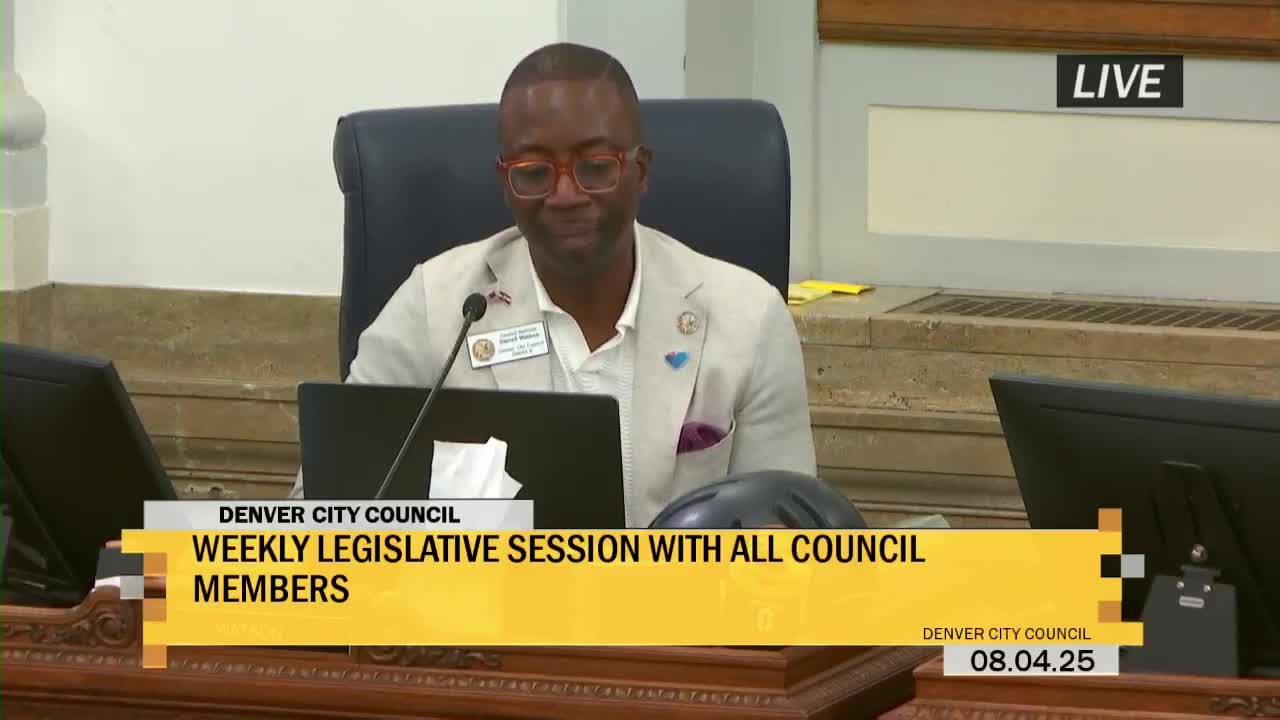
Summary
Denver City Council voted to place a nearly $950 million bond package on the November ballot after amending allocations and debating housing, transit and project clarity.
Denver City Council on Aug. 4 approved an amended $950 million bond package, referred to as the “Vibrant Denver” bond, sending the measure to the November ballot. Council approved a set of companion ordinances that split the overall package into thematic bond questions after several amendments restored funding for affordable housing projects and shifted other line items. The council passed the companion ordinance package by recorded votes; the principal package (Council Bill 25‑10‑60, as amended) passed on a 13‑aye call for final passage earlier in the meeting and related transportation, parks, housing and infrastructure pieces were approved in subsequent votes.
The package had been reworked during council debate to increase the housing bond allocation through amendments adopted on the floor. The largest floor amendment moved tens of millions of dollars back into a housing line item and added language that funding should “support projects that provide affordable housing and mitigate residential displacement.” Other amendments reduced some city facility and paving allocations and adjusted specific project dollar amounts.
Supporters including Councilmember Parady and Councilmember Lewis argued the changes strike a balance between district priorities and citywide needs. “This feels like a more appropriate amount of funding to dedicate towards [housing] in the scope of this very large bond,” Councilmember Parady said, describing the decision to restore housing funding and add displacement‑mitigation language. Council members from multiple districts described projects in their neighborhoods that would be enabled by the bond, including parks, libraries, bridge repairs and recreation centers.
Opponents expressed concerns about scope and transparency. Councilmember Sawyer, who voted against one amendment and later said he would oppose parts of the package, argued voters should be given a more specific list of projects tied to bond dollars rather than undefined buckets. “The projects that are associated with bond dollars should be clear to the voters,” Sawyer said during debate. Other council members and residents asked detailed questions about long‑term operating costs, how the city would absorb maintenance and staff needs for new assets, and the interaction of the bond with state property‑tax changes.
City finance staff told council the bond structure is capped at the proposed amount without raising the dedicated mills used to repay general obligation bonds. Staff said the city had modeled repayment and that the bond was timed to preserve future bonding capacity; they also told council that some projects in the package are intended to reduce future repair costs by restoring critical infrastructure now. Council members asked for and received briefings from the Department of Transportation & Infrastructure and the city engineer on bridge prioritization.
What passed: the council placed the full bond package on the ballot as an organized set of measures (transportation/mobility, parks, housing/shelter, health and human services, and general infrastructure) after floor amendments. Many individual district‑level projects are included in the final lists transmitted to the clerk. The council recorded votes on each companion ordinance and related items during the evening session.
Why it matters: the bond funds will be paid from the city’s existing property‑tax mills dedicated to GO bond repayment; if approved by voters this fall, the funds would finance projects intended to repair major bridges, upgrade parks and libraries, expand affordable housing and fund targeted district improvements. The questions about specificity, operating costs and the interplay with state property‑tax policy framed much of the weeknight debate and are likely to be part of fall campaign conversations.
What’s next: the package goes to the Nov. 2025 ballot. If voters approve any of the bond questions, the city will begin project-specific design and procurement and will budget operating costs in future annual budgets. Council members on the floor urged continued community engagement on project details and asked for additional briefings from finance and DOTTIE on implementation costs.