
PikeRide tells council nonprofit bike-share expands access, seeks steady funding
Get AI-powered insights, summaries, and transcripts
Subscribe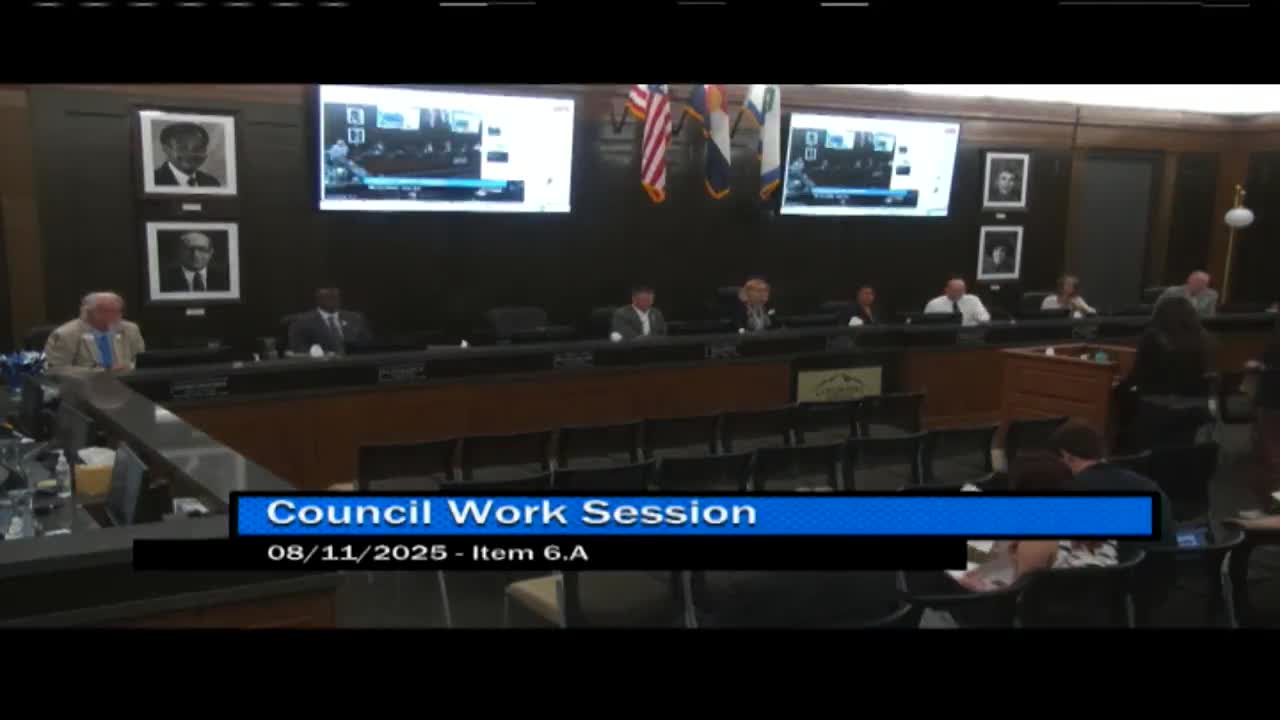
Summary
PikeRide board chair Ruth Black and Executive Director Tara McCarthy told the City Council on Aug. 11 that the nonprofit bike-share operates 300 bikes, provides deep affordability programs and partners with local agencies, and is seeking long-term funding beyond grants and one-time municipal support.
PikeRide board chair Ruth Black and Executive Director Tara McCarthy told the Colorado Springs City Council on Aug. 11 that PikeRide is a nonprofit bike-share program operating about 300 bikes and close to 98 station docks across Colorado Springs and Manitou Springs, and that it needs more stable, ongoing funding to expand service and preserve affordability.
The nonprofit said 2024 ridership included roughly 4,300 unique riders, with 31% from outside the region, and that its affordability programs provided annual memberships for $20 (regular annual is $165) and a leased e-bike program funded in part by the Colorado Energy Office. "A bicycle is an equalizer," Ruth Black said. "This is someone who, because of PikeRide, kept a job and avoided homelessness." Tara McCarthy said PikeRide’s low-income participants — 111 people in 2024 — accounted for nearly 15% of system miles despite representing about 2% of riders.
Why it matters: council members and staff pressed PikeRide on funding and operations because the program affects mobility for low-income residents, visitor access to downtown and tourist sites, and possible partnerships with other city programs. The presentation framed PikeRide as both a transportation utility and a social service connector: council members asked how the system prevents sidewalk clutter, how funding is structured, and whether PikeRide could serve other city programs such as Work COS.
PikeRide representatives said the system uses docked stations (riders are asked to return bikes to stations; convenience fees apply for ad-hoc returns) and GPS monitoring to avoid sidewalk obstruction. The board and staff described the current budget composition as roughly 19% fare revenue, 32% municipal support (parking enterprise from Colorado Springs plus support from Manitou Springs), 16% partnerships (Colorado College and others), 28% grants, and 5% individual donations. Current annual budget was described as “just under half a million dollars.” Municipal support from parking enterprise was described in the meeting as about $130,000 for the current year, with Manitou Springs providing additional funds.
PikeRide described affordability and social impacts: 80% of affordability participants report using the service to access employment; 93% use it to reach medical care; staff said the program helped 40 people maintain or obtain stable housing in 2024, and that many riders report improved well-being. The organization highlighted partnerships with Colorado College, the Independence Center, Springs Rescue Mission and other social-service providers, and noted marketing and tourism impacts (staff said riders came from all 50 states plus D.C. and 17 foreign countries in 2024, based on payment zip-code data).
Council questions and follow-up: Councilman Donaldson asked about sidewalk clutter and station rules; PikeRide confirmed stations are the primary operating model and that active fleet monitoring and retrieval are used. Donaldson and others asked about LARP funding; PikeRide said it applied for but did not receive LARP funding in 2025 and that when funded previously it received $35,000 in 2024 (prior years closer to $50,000–$75,000). Council members sought clarity on fleet and station counts (PikeRide: ~300 bikes, ~98 stations) and on expansion plans (increase to 500+ bikes, adding adaptive e-bikes and cargo e-bikes, and service-area expansions east and south).
The presentation included funding options PikeRide suggested exploring, such as fees layered on for ride-hailing trips or other local fee mechanisms, and urged council to consider stable, recurring revenue rather than year-to-year grants. Several council members praised the program’s community impact and said staff and council would continue talking about funding and partnership opportunities.
Ending: PikeRide asked the council to consider longer-term, predictable revenue sources while the nonprofit continues pursuing grants and sponsorships. Council members thanked the presenters and indicated follow-up conversations and data requests would continue as the city plans transportation and social-service partnerships.