Get Full Government Meeting Transcripts, Videos, & Alerts Forever!
Get email alerts on the Student Advisory Committee topic
No spam. Unsubscribe anytime.
Board discusses forming student advisory committee under new state law
Summary
Trustees reviewed S.B. 161 options that allow either a nonvoting student board member or an advisory committee. Members supported student voice and asked staff to draft a committee plan; no final policy was adopted.
The board discussed S.B. 161 and options for student participation at the Aug. 5 study session, reviewing whether to appoint a single nonvoting student member or to create a student advisory committee that would report regularly to trustees.
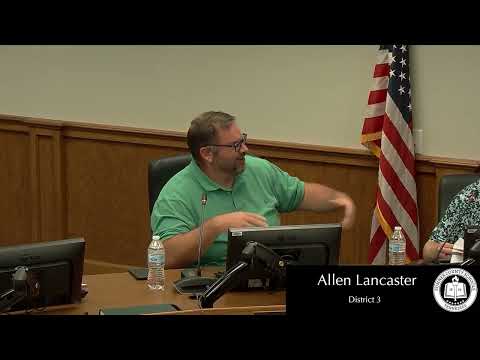
Board member Breeding proposed a structure with one student representative from each high school meeting between the study and voting sessions, producing a short report for the board and delivering two in-person presentations a year. She suggested a faculty advisor, one board liaison and procedures for virtual participation and peer feedback. Breeding said the approach would give juniors and seniors civic experience and a formal channel for student concerns.
Member Wade Evans urged inclusion of students from alternative programs (Archie Fisher and E.B. Wilson) to ensure diverse representation; he recommended the district fund travel to TSBA's SCOPE (student) conference and encouraged district support for student participation. Other trustees noted existing student groups the district has used in prior years and asked staff to compile a formal charter.
Staff cited the new law (identified in meeting materials as S.B. 161, effective July 1, 2025) and confirmed districts are not forced to adopt a student-member policy; the board can (1) appoint a single nonvoting student representative, (2) establish a student advisory committee, or (3) opt not to implement either. Trustees asked staff to draft policy options and a proposed charter for future board consideration.
No vote was taken; staff were asked to prepare draft language and to consider logistics (meeting schedule, faculty advisor, student selection process and whether advisory members could attend off-site retreats).