Get Full Government Meeting Transcripts, Videos, & Alerts Forever!
Get email alerts on the Personnel Policy Nepotism topic
No spam. Unsubscribe anytime.
Sumner County board reviews revised nepotism policy to align with Tennessee law
Summary
Board members discussed a proposed revision to the district's nepotism and fraternization policy that would tighten supervisory prohibitions, require documented exceptions and require declarations by board members when voting on matters affecting relatives. The proposal stems from Tennessee code and TSBA guidance; no formal vote was taken.
Sumner County School Board members reviewed a draft revision to policy 1.108 on nepotism and fraternization during the Aug. 5 study session, focusing on language that would align district practice with Tennessee statutes and TSBA recommendations.
The draft, presented by board member John King, pulls directly from state law language that bars relatives from being in a direct line of supervision and adds rules requiring written justification and board notice for exceptions.
Board members and the superintendent debated how broadly to define "relative," how and when board members must declare relationships, and whether exception documentation should be sent to human resources instead of presented in a public board meeting. King framed the draft around three statutory points: (1) Tennessee law prohibits placing relatives in a direct supervisory line; (2) where a direct supervision relationship arises, the director of schools should attempt to transfer one employee or adopt an alternative evaluation plan; and (3) board members who have relatives employed by the district must declare that relationship before voting on matters that affect the relative's employment.
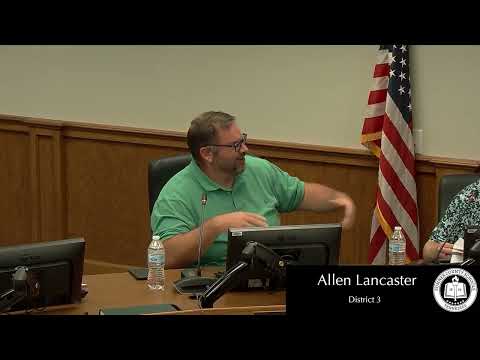
Several board members asked for clarity on scope. Member Wade Evans and others noted many employees are related in a large school system and cautioned that extending the definition to aunts, uncles, nieces and nephews without clear role-level limits could sweep in substantial numbers of employees. Member Lancaster asked whether the list of relatives in the draft mirrors state statutory definitions; King said the language he used is drawn from Tennessee code and related CTAS guidance. Member Purdy urged keeping the policy concise and delegating personnel-level documentation and review to HR and the director of schools rather than routing exceptions to the full board.
King also deleted then reconsidered a provision that would automatically require a board member to excuse themselves from votes related to a relative's employment; he asked the board for direction and recommended getting a formal legal opinion from the board attorney for questions about voting and disclosure procedures. Superintendent Dr. Langford and other members supported asking the attorney for specific guidance on when a recusal is required and whether a signed form could create a public record of disclosures.
No formal motion or vote was taken. The board directed members to review the draft and the statutory excerpts King circulated, send questions to the superintendent or staff, and return the item to a future study session for further refinement before a public first reading.
The board also discussed implementation logistics: who reviews exception requests, the timing of any required notices during busy hiring cycles, and whether any grandfathering should apply for existing employees. King emphasized that state law allows exceptions but requires documentation and an alternative evaluation plan where direct supervision cannot be avoided.
Board members closed the discussion by asking staff to solicit the board attorney's written guidance and to prepare a revised draft for the next study session.