Get Full Government Meeting Transcripts, Videos, & Alerts Forever!
Get email alerts on the Animal Services Operations topic
No spam. Unsubscribe anytime.
Prescott Valley outlines animal services rules, licensing and response procedures
Summary
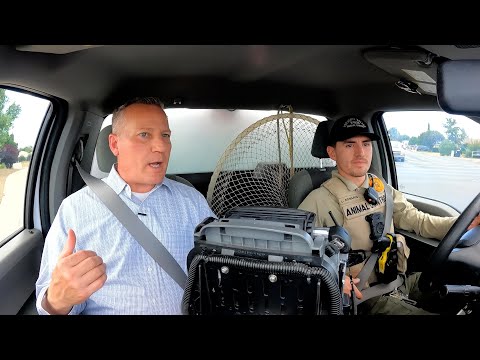
In a town-produced podcast ride-along, an animal services officer described Prescott Valley’s procedures for snake removal, pet licensing through DocuPet, handling lost or injured animals, leash and barking rules, and how the town and partners care for unclaimed animals.
Liam Edwards, an animal services officer with the Town of Prescott Valley, described the department’s day-to-day duties during a town podcast ride-along and explained how residents should report animal problems and comply with local rules.
Edwards said animal services responds to calls ranging from snake removal to picking up stray or injured dogs and enforcing licensing and public-safety rules. “If you leave your dog unattained in a vehicle, we do have the right to remove your animal by any means,” Edwards said, describing the department’s authority to rescue animals in distress. He also described the town’s new licensing system, DocuPet: “It ensures that, if your dog ever gets out, we can get that dog back home to your residence,” he said.
The nut graf: The interview walked listeners through what Prescott Valley animal services does, how to request help, and local requirements that affect pet owners — including licensing, leash rules, barking complaints and the steps taken when animals are lost or unclaimed.
Animal services duties and how to contact them Animal services handles snake removal, stray-animal pickups, and welfare checks for animals in distress. Edwards advised residents to call Prescott Valley’s nonemergency dispatch line as the fastest way to reach animal services; he added that police officers are available 24/7 to assist when animal officers are not on call. He noted that staffing is limited: “there's only about 4 of us officers for the entire town of Prescott Valley.”
Licensing, vaccination and DocuPet Edwards said the town’s DocuPet system is the new licensing platform for Prescott Valley and includes proof-of-rabies-vaccination records. He said licensing speeds reunification and validates vaccination status for public-health incidents. He said failure to license can lead to a citation: if an animal is not properly vaccinated or licensed after an incident, “we will give them a citation, for failure to license.” The podcast host demonstrated that residents can register or renew a license online through the town website.
Lost, held and unclaimed animals Edwards described the intake and holding process: animals picked up by town officers are taken to the Prescott Valley Police Department kennels for initial holding. “We can hold 8 comfortably. We can hold 4, depending on how many dogs we intake throughout that week,” he said. If an animal is not claimed at the police department, officers transport it to the Yavapai Humane Society. Edwards said the humane society will hold animals with owner-identifying information (for example, a microchip) for up to five days, and animals without such information for three days, before making them available for adoption.
Leash, barking and vehicle rules Edwards reviewed key local rules discussed in the interview: a six-foot leash is required in public and retractable leashes that extend beyond six feet are not allowed; excessive barking is a citable disturbance if it continues for more than five consecutive minutes; and leaving pets unattended in vehicles is prohibited and can lead to rescue actions when animals appear in distress.
Spay/neuter assistance and outreach Edwards said the town is exploring partnerships with local veterinarians and community organizations to increase access to spay/neuter services for residents who cannot afford them. He also described outreach efforts: animal services visits homeowners associations and schools on request to explain services and local requirements.
Exotic animals and interagency roles Edwards said many exotic animals are generally prohibited in Prescott Valley unless authorized by a permit from Arizona Game and Fish, and that the agency may assist when an exotic species requires specialized handling.
Why this matters The episode emphasized public safety, animal welfare and the practical steps that help pets and people — from licensing and microchipping to calling the correct nonemergency line when an animal is in distress.
Ending Edwards asked residents to use the nonemergency dispatch line for animal concerns and to register pets on the town website. He thanked listeners and reiterated that animal services aims to resolve issues through education first, then enforcement when necessary.