Get Full Government Meeting Transcripts, Videos, & Alerts Forever!
Get email alerts on the Cultural Crossroads Conference topic
No spam. Unsubscribe anytime.
Landmarks Foundation proposes "Cultural Crossroads" conference; commission discusses midcentury modernism and civil rights
Summary
A Landmarks Foundation representative presented "Cultural Crossroads 2026," a three-day conference proposal linking horticulture, midcentury modern architecture and the Black experience; commissioners discussed the complexity of midcentury modernism’s relationship with the civil rights movement.
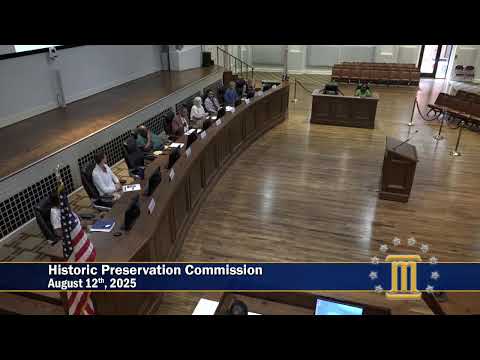
Jacob Van Meeken of the Landmarks Foundation presented a proposal for "Cultural Crossroads 2026," a three-day conference that would explore cultural exchange, American horticulture and midcentury modern architecture, and which the presenter said should explicitly incorporate the Black experience into preservation narratives.
Why it matters: Commission members said that midcentury modern architecture in Montgomery intersects with the city’s civil rights history and that preservation narratives should address that complexity, including lost Black-built work and neighborhoods affected by highways and redevelopment.
Presentation and proposed program: Van Meeken, identifying himself with the Landmarks Foundation, described a planned April 2026 conference with Day 1 focused on "the American Cultivated Tapestry" (gardening, homesteading and the edible landscape) and Day 2 titled "mid century modernism and the civil rights movement, a complex relationship." He said the conference aims to "link the past to the present by incorporating the black experience in our preservation hours" and proposed learning outcomes that include examining how suburbanization, white flight and federal housing policies shaped landscapes and architecture.
Commission discussion: Commissioners responded that the topic is "very thought provoking" and agreed the relationship is indeed "complex." One commissioner noted that midcentury studies in Montgomery must address Black architects, builders and the effects of interstate construction and urban renewal on predominantly Black neighborhoods. Another commissioner said the commission had studied midcentury Montgomery for a book and emphasized that due diligence is difficult because the work of Black architects is less documented under Jim Crow-era constraints.
Next steps and participation: Van Meeken invited commission members to advise on content and to serve as advisers for the conference; commissioners encouraged further contributions and suggested follow-up discussions to integrate local research and oral histories. No formal action was taken at this presentation; the item was a request for input and an invitation to participate.