
Gail Morrison describes 40-year project documenting Hmong refugee stories; plans archive release
Get AI-powered insights, summaries, and transcripts
Subscribe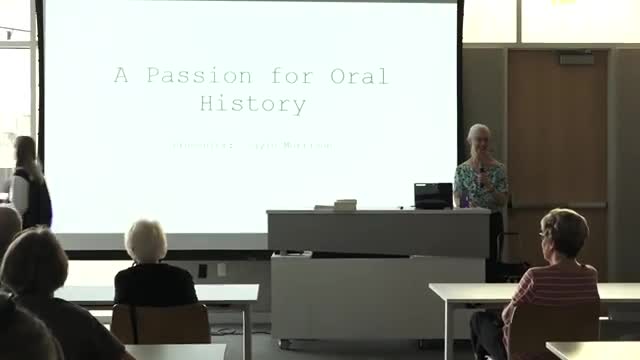
Summary
Oral historian and author Gail Morrison told a History of Missoula audience about her four-decade effort recording Hmong refugees’ memories of Laos, Thailand and resettlement in the U.S., and said she is preparing the interviews for archival release after redacting sensitive material.
Gail Morrison, an oral historian and author, told a History of Missoula audience that she has spent about 40 years recording interviews with Hmong refugees and plans to place her interview files in an archive after a multi-year redaction process.
Morrison said the project began in the 1970s, when she encountered Hmong students while working as a community-college counselor and then at Lao Family, where she managed an ESL (English as a second language) program. She described using a borrowed tape recorder to collect first-person accounts in the late 1970s and 1980s and later traveling to refugee camps in Thailand and to Hmong communities across the U.S. to expand her collection. “I borrowed a tape recorder from the ESL program… and started interviewing my coworkers,” Morrison said.
The project records wartime experiences in Laos, the 1975 evacuation from Longchang to Thailand, and later life in refugee camps and the United States. Morrison attributed her material about the U.S.-backed evacuation to interviews with Hmong who worked with American operatives and to longtime contacts such as Jerry Daniels. She recalled that, as the evacuation unfolded two weeks after the fall of Saigon, “Jerry and General Vang Pao developed a plan to fly 2,500 Hmong officers, soldiers, and their families from Longchang to neighboring Thailand.” Morrison also quoted interview subjects who described jungle survival, river crossings of the Mekong and prolonged stays in Thai camps.
Morrison described methodological challenges for cross-cultural oral history: many early arrivals were preliterate, making recorded testimony the primary documentary record; using interpreters required careful vetting because of internal community networks; and corroboration relied on cross-referencing multiple interviews and seasonal cues rather than written records. “You have to be a good listener for sure,” she said, adding that memories are “messy” and that interviews often require multiple sessions to “lay down the bones” and then add detail.
On preserving the collection, Morrison said she is methodically re-reading every interview to remove material that should not be released publicly. “I’m in my second and a half year of going through every single file again and preparing it to go into an archive,” she said, and added that the redaction work means release will take “a couple more years.”
Morrison also recounted the research path that led her to Missoula material, including interviews connected to Jerry Daniels and to Hmong families resettled there. She said her published work includes three Hmong oral-history books and that she brings bound volumes to talks for sale.
At the end of the presentation, audience members asked questions about deportations, how long refugees spent in Thai camps before resettlement, training of Hmong forces, and why some Hmong were sent to Missoula. Morrison answered from her interviews and experience and described variation by individual circumstance: some evacuees were resettled quickly, others remained in camps for many years. She confirmed that many people she interviewed have since died and that some Hmong who arrived as infants were later deported in separate administrative actions.
Morrison closed by inviting attendees to buy her books and noting she will continue preparing the archive. The meeting was organized by History of Missoula and took place in Missoula as part of that group’s speaker series.