Get Full Government Meeting Transcripts, Videos, & Alerts Forever!
Get email alerts on the Code Talkers topic
No spam. Unsubscribe anytime.
Flagstaff proclaims Indigenous Code Talker celebration; Hopi veterans, researchers call for language preservation
Summary
Flagstaff marked Indigenous Code Talker Celebration on Aug. 11 with a city proclamation, presentations on Hopi code talkers’ wartime service and a call for more language preservation and veteran outreach.
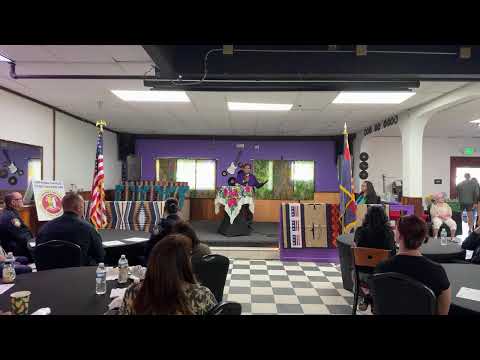
Flagstaff city officials, Hopi veterans and community members gathered Aug. 11 at the Sunnyside Community Center for an Indigenous Code Talker Celebration that included a city proclamation, musical performances and a presentation by the Hopi Tribe's veterans director on newly documented wartime communications.
The event opened with an honor guard and a Hopi prayer song. Lori Matthews, Flagstaff City Councilwoman and the council's liaison to the Indigenous Commission, read a land acknowledgment and thanked attendees. "The Flagstaff City Council humbly acknowledges the ancestral homelands of this area's indigenous nations and original stewards," Matthews said.
The city's mayor read a proclamation designating Aug. 11, 2025, as an Indigenous Code Talker Celebration in Flagstaff to honor members of Indigenous nations who served the United States in wartime using their languages as battlefield codes. The proclamation cited service by Hopi, Navajo and other nations during World Wars I and II and recognized the role those communications played in U.S. operations in the Pacific and European theaters.
Why it matters: presenters and veterans framed the event as both commemoration and a call to action. Speakers emphasized that Indigenous languages were decisive wartime assets and urged continued cultural and veteran support in Flagstaff and across the region.
Gino Talus, the Hopi Tribe's veterans director, showed slides tracing code-talker history and described research his office submitted to the U.S. Army Historical Center that helped validate service records for Hopi members assigned to Army and Army Air Forces units in World War II. Talus said the documents helped confirm that Hopi service included both ground and air‑crew radio communications. "The secret coded messages in combat saved lives, thousands of lives," he told the audience.
Talus detailed the Hopi contribution: 10 Hopi men served in code‑talking roles during World War II, with eight attached to the 81st Infantry Division and two to Army Air Forces bomb groups, according to his presentation. He summarized the unit training and Pacific deployments he traced in unit records and noted the late declassification of some materials that has allowed tribal researchers to corroborate veterans' accounts.
Event organizers and speakers linked the historical recognition to contemporary needs. Rose Tohi, Flagstaff's Indigenous Affairs administrator, thanked city staff and community partners and acknowledged local sponsors including Desert Financial Credit Union, Arizona Complete Health and Native Americans for Community Action (NACA). Tohi and other presenters urged continued support for language classes and veteran services.
Several speakers highlighted related observances and laws. The program referenced Arizona legislation establishing National Navajo Code Talkers Day (identified in the program as Senate Bill 1802) and federal measures authorizing medals for code talkers; the presentation traced federal recognition and later congressional and tribal honors. Talus also described tribal efforts to designate an annual Hopi Code Talker Day and to secure congressional recognition for multiple nations that contributed code‑talking services.
The ceremony included musical performances by Hopi singer Clark D'Nakoma, remarks from community members including Jennifer Joseph (who dedicated a song to her father), and a cultural performance by the Yoihoyam Hopi Youth Dance Group, mentored by Jordan Macta. Officer Darren Talawipi, a Hopi officer recently sworn into the Flagstaff Police Department, offered brief remarks tying family military service to his public safety work.
Organizers said the event would be available on the City of Flagstaff's YouTube channel and that materials from presenters could be requested directly from the Hopi Veterans Office or the city's Indigenous Affairs office.
Ending: speakers and organizers framed the ceremony as both remembrance and a forward-looking appeal for language preservation and veteran outreach. They urged families to teach Indigenous languages at home and encouraged veterans and family members to seek services through the VA and local providers.