Get Full Government Meeting Transcripts, Videos, & Alerts Forever!
Get email alerts on the Meeting Procedure Public Records topic
No spam. Unsubscribe anytime.
County attorney clarifies handling of mass notices, public records and council questioning during deliberations
Summary
Boone Countyattorney told the council that mass emails and notices received by the county are public records and explained when the council may receive information and when speakers should be limited to individuals with relevant expertise; he also advised on the line between council discussion and formal debate.
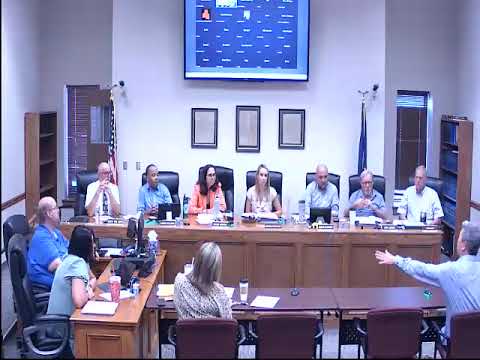
Boone CountyCounty Attorney Kevin Van Horn briefed council members on handling mass notices, public-record requests and proper meeting procedure during Tuesday's meeting, urging clarity about when documents must be treated as public records and how the council should manage public comment and staff participation.
Van Horn said multiple emails and notices the council and commissioners had received must be treated as public records and become part of the public file. "They need to be treated as public records, so they are part of the file," he said. Van Horn explained that while members of the public may ask the council to take certain actions, the council is not required to act: "I can sit here and say, hey. I would like to be a vote on fixing this bridge. That doesn't mean that you take action on fixing that bridge."
Van Horn clarified public-records avenues and the limits of alternative request formats: access comes through public records; there is no separate FOIA-style information-request process under state law that triggers a different statutory response. He advised that the council should control comments to keep discussion focused on the agenda item at hand and that individuals with direct, relevant information (for example, a sheriff on a jail question) should be recognized to respond and answer council questions.
On council-member participation in debate, Van Horn said the chair must recognize speakers. He described that the line between asking clarifying questions and participating in debate is not bright: "Is there a difference between debate and asking a question to clarify?" he asked, then answered, "Yes. I think the safest way to go about it though because the line is not a bright line ... is to not or to pass a gap." He recommended that the chair recognize individuals with pertinent information and allow council members to ask the necessary questions to make an informed vote, while avoiding a free-for-all.
The guidance followed recent meetings in which council members raised concerns about who could approach the dais during discussion versus waiting for public comment. Van Horn said he would be more vocal at future meetings if the chair needed assistance on recognition and order and that the council should build a clear record for decisions.
No formal council action was required on Van Horn's guidance; it was a legal briefing intended to clarify public-records obligations and meeting procedure.