Get Full Government Meeting Transcripts, Videos, & Alerts Forever!
Get email alerts on the Pros Plan Overview topic
No spam. Unsubscribe anytime.
Kenmore planning commissioners review PROS plan update, request further benchmarks and Chapter 5 draft
Summary
City consultants presented an update to Kenmore's Parks, Recreation and Open Space (PROS) plan, reminding commissioners the plan must be updated every six years to remain eligible for grants and outlining next steps including a revised Chapter 5 draft ahead of the Aug. 26 meeting.
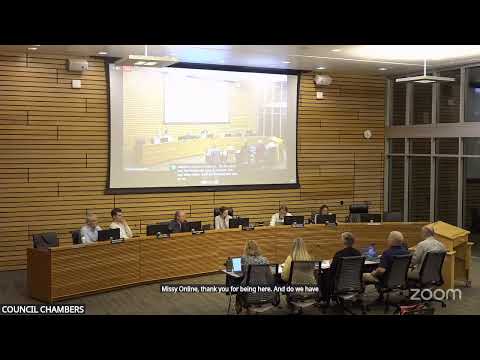
Kenmore Planning Commission members on Aug. 7 received an update on the city’s Parks, Recreation and Open Space (PROS) plan and directed staff to return with additional benchmark material and an updated Chapter 5. City consultants and planning staff said the PROS update is required every six years to remain eligible for grants and that the effort will produce both goals/policies and a new 20-year capital facilities list.
The consultants summarized the work to date as data collection, asset inventories and identifying implications for future needs. "We are updating the PROS plan, because it's a requirement to have that done every 6 years to be eligible for grants," Tom, the lead consultant, said during his presentation.
The nut graf: the update combines a policy element for the comprehensive plan and a 20-year capital facilities program; commissioners requested clearer service-level benchmarks and more detail on Chapter 5 (the facilities/amenities benchmarks) before making recommendations.
Commissioners pressed for quantification of gaps and comparables. Several commissioners said they want to see how Kenmore’s facility counts compare to similarly sized jurisdictions and how nearby larger cities (Bothell, Kirkland) affect local service needs. City staff and consultants said Chapter 5 contains benchmark comparisons and that a fuller draft of Chapter 5 would be distributed in advance of the Aug. 26 meeting.
Discussion also covered the role of master plans for individual parks, the difference between the PROS element and detailed master planning, and the city’s intent to produce a six‑year financial program in addition to the 20‑year vision. Staff noted that the process separates high‑level goals and policies from site‑level feasibility work that would include environmental and permitting analysis.
No formal action was taken to adopt any changes to the PROS plan; the commission voted earlier in the meeting to approve the consent calendar unanimously. The consultants said they will supply the updated Chapter 5 draft a week before the Aug. 26 check‑in and that the next public PROS check‑in meetings are scheduled for Aug. 26 and Sept. 2.
Ending: Commissioners and staff agreed the next drafts should include clearer benchmarks (what exists today, what comparable cities provide, and the quantified gap) and that master‑plan details will be refined later in site‑specific feasibility studies.