
Park Service outlines upgrades, partnerships and community coordination at Freedom Riders and Birmingham Civil Rights sites
Get AI-powered insights, summaries, and transcripts
Sign Up Free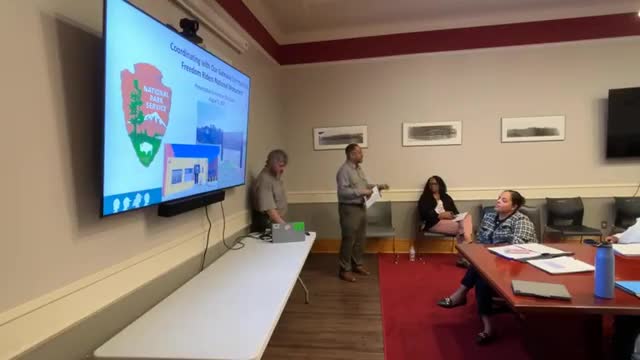
Summary
National Park Service staff described planned repairs, exhibit replacements and a partnership-driven outreach effort for the Freedom Riders and Birmingham Civil Rights sites, and said Department of the Interior direction now requires formal community coordination and written co-management arrangements with local governments.
Park Service staff described planned site repairs, exhibit replacements and a new partnership-driven outreach effort for the Freedom Riders National Monument and Birmingham Civil Rights National Monument, and said the Department of the Interior now requires formal coordination with nearby communities.
A Park Service staff member told the meeting the monuments “were designated as a national monument in January 2017 as one of the last acts of President Barack Obama,” and that the service now has a foundation document outlining the parks’ fundamental resources and values. “We need to coordinate with our neighborhood community,” the staff member said, adding that the Department of the Interior’s direction had been “concretized and made formal that all parks are mandated to do this.”
The presentation said no new national designation is being sought; rather, staff are pursuing a range of mostly administrative and visitor-service improvements so the sites can better serve visitors and the gateway communities. The most immediate work identified includes replacing a roof at one site, improving gravel parking areas by installing a designated parking lot, replacing second‑hand exhibits with updated displays, launching an oral history project, and exploring site security and wayfinding measures such as installable cameras and new signage.
Kevin, a Park Service staff member, described the foundation document and said the service administers the two sites in “two parts” and tries to combine work across them through partnerships. He said the parks were chosen to host Business Plan Internship consultants this summer, adding that the parks were “selected out of six parks” for that program and that consultants are developing an organizational partnership plan.
Staff said they have conducted outreach to about 30 local partners so far — including local governments, historic sites and community organizations — to gather feedback on how the parks and partners have worked together, what has succeeded, and what challenges remain. A student who had participated in outreach praised the work and the community’s role in preserving the sites: “There were so many students who spoke on behalf of this house,” the commenter said, and later called the mapping “a phenomenal job.”
Presenters characterized most items discussed as planned improvements and partnership efforts rather than actions requiring new legislation or councils’ votes. They also said the site near Downtown Anniston includes the Greyhound bus station and the bus-burning site connected to 1961 Freedom Riders events, and that some items — notably the co-management and visitor-station arrangements — require formal written agreements with local governments.
The presentation noted that some exhibits currently in use were acquired second‑hand and may not be fully relevant to the site’s story; staff said public comment would be sought on new exhibits. Staff also indicated a planned evening public event tied to the sites’ programming, with details to be announced.
No formal motions or votes were recorded in the presentation. Staff framed the work as ongoing and contingent on partnership agreements, Department of the Interior direction, and completion of planned projects such as roof repair and parking improvements.