Get Full Government Meeting Transcripts, Videos, & Alerts Forever!
Get email alerts on the Economic Development topic
No spam. Unsubscribe anytime.
Mavita reports job and investment metrics; councilors press for evidence of returns and clearer incentives
Summary
Dovin Lopez, president of the Mesilla Valley Economic Development Alliance, told the City Council the group’s mission is to recruit and retain employers and train workers, and summarized results and new initiatives including a private closing fund and the Automate Up training program.
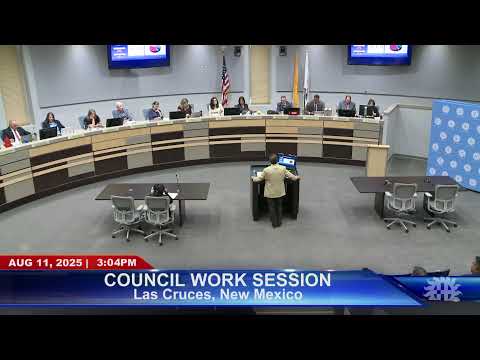
Dovin Lopez, president of the Mesilla Valley Economic Development Alliance (Mavita), presented the organization’s annual update to the City Council and described recruitment, retention and workforce programs, then answered extended council questions about performance and incentives. Lopez summarized Mavita’s mission: “Our goal is to bring economic based jobs to the region, improving the health and wealth of residents around Dona Ana County and Las Cruces,” and listed marketing campaigns, business consultations and strategic initiatives including a locally managed closing fund and the Automate Up workforce program. Why this matters: Mavita is the city’s contracted economic-development partner; the organization’s ability to attract projects, jobs and capital investment affects municipal tax revenue, workforce opportunities and the city’s use of incentives. Lopez reported that under the city contract the organization met several targets (qualified prospects, site visits and completed projects) and cited 10‑year averages of about 315 jobs and $20 million in capital investment per year, saying the long-term results represent a substantial return on the city’s investment. He described the private closing fund established with El Paso Electric merger proceeds (committed to date: $790,000 to projects and $300,000 currently identified in the queue) as a tool to help smaller projects and developers close deals the state incentive programs do not cover. Lopez described the Automate Up program — a workforce certificates initiative — and said the city’s ARPA funding, state grants and philanthropic grants have supplied training costs. He said 116 certifications in Las Cruces were committed through the program at the time of the presentation. Councilors pressed on measurement and value. Councilor Flores said he was concerned about measurable returns and asked, “It doesn't seem to be a very profitable investment for the city of Las Cruces.” Lopez responded with the organization’s 10‑year impact figures and said Mavita provides a return on the city’s investment as measured by an external impact model; he also said private-sector fundraising and grants make up about half the organization’s budget and the remainder comes from public sources. Councilor Matisse, Councilor Pro Tem and others asked for clarification on what counts in the city-only contract metrics versus countywide activity; Lopez said the presentation numbers for recruitment and consultations were for the city contract specifically. Questions also focused on developer engagement and site readiness: Lopez described option-to-purchase agreements, pre-permitting and developer marketing intended to lower the risk of speculative vertical construction and noted three developers engaged with the Las Cruces Innovation and Industrial Park, including Crawford Hoisting (cold storage project) and other out‑of‑state developers in discussion. Lopez identified state programs and recent legislation as context for site-readiness funding and incentives; he cited a state fund referred to in his presentation as “S. P. 169” (approved this past year) and HB 19, the Tradeport Development Act, and said those programs — together with site‑certification initiatives and local partnerships — could increase readiness for larger projects. Several councilors raised two recurrent themes: (1) local capacity to support very large projects compared with larger metros; and (2) the balance between offering incentives and ensuring projects are sustainable and aligned with local priorities. Eric Montgomery, Mavita board chair, briefed the council on the organization’s 30‑year history of local partnerships and reiterated the board’s commitment to strategy, sustainability and education. The presentation was followed by extended council Q&A but no formal action. Councilors requested additional documentation and follow-up briefings on Mavita metrics, incentive funds and project pipelines. Ending: Lopez and board leadership invited further dialogue with council and city staff on incentive design, ARPA use for workforce training and site-readiness strategies; no vote was taken on the update at the meeting.