
GMWSS outlines near-, intermediate- and long-term steps to address low pressure in northern Scott County
Get AI-powered insights, summaries, and transcripts
Subscribe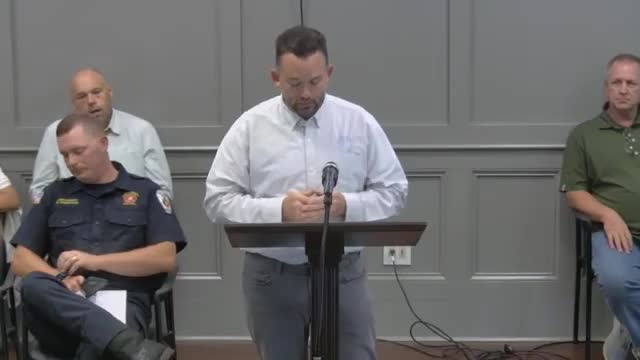
Summary
Georgetown Municipal Water and Sewer Service told the Scott County Fiscal Court it can address current low-pressure complaints in the Burton tank zone with operational changes this month, has ordered hydraulic modeling for 2–10 year improvements and is pursuing long-term supply planning and a $5 million state grant for a South Side tank.
Georgetown Municipal Water and Sewer Service representative Chase Azevedo told the Scott County Fiscal Court on Aug. 8 that residents north and northwest of the Burton elevated storage tank are experiencing low system pressure as growth has increased demand on water lines sized 2–12 inches. "We have to maintain a minimum system pressure at 20 PSI. That's regulatory standard," Azevedo said, adding that some customers in the Burton pressure zone were at or near that minimum.
Azevedo said the utility has a three-tiered plan: immediate operational changes to boost pressure with existing equipment; intermediate projects identified through hydraulic modeling; and a long-term water-supply plan that could include additional tanks and new sources. The immediate measures — changing how the Burton and Stamping Ground tanks are filled and adjusting booster-station operations — have already produced higher pressure readings during testing, Azevedo said.
The utility argued the original distribution lines were sized to serve a then-expected customer base and that smaller diameters in parts of northern Scott County (commonly three to six inches, with transmissions up to 12 inches) cannot support unlimited build-out without upgrades. Azevedo said the Burton tank is a half‑million‑gallon elevated storage tank and that the plant treats about 3–4 million gallons per day, supplemented by a minimum daily purchase from Frankfort Plant Board of roughly 0.5 million gallons.
The near-term steps are operational and low‑cost: testing new standard operating procedures for pumping and tank filling and placing more pressure gauges in the Burton zone. Azevedo said tests show many locations rising from about 20 PSI to consistent readings in the 40s (some spots to 50 PSI). He told the court he expected the operational changes to allow the utility to address the list of existing customer connection requests within months.
For the intermediate term (roughly 2–10 years), the utility has issued a task order to a hydraulic-modeling consultant to produce a list of smaller, phased projects — upsized line segments, looping dead-end mains, booster station adjustments or additional tanks — with scoping and projected costs the county can use to seek funding. Azevedo said Senator Nunn has already asked where he could help and the utility expects to pursue grants and appropriations for those projects.
Longer term, Azevedo said the utility is updating its long-term water-supply assessment because Royal Spring has a finite capacity and future growth may require additional sources. He noted a $5,000,000 state grant obtained for a South Side tank, which will factor into the master plan.
Court members asked specific operational and policy questions: whether tap fees cover upsizing lines (Azevedo said connection fees cover meters and physical connection costs but are not a sinking fund for line upsizes), how fire-flow needs factor into distribution decisions (Azevedo said many county lines cannot guarantee regulatory fire flow because of line size), and whether purchases from Kentucky American Water were feasible (Azevedo said the county can and does buy water from American Water in emergencies but prefers Frankfort Plant Board for price reasons).
Judge Covington and other magistrates asked the utility to return with further data; Azevedo said the utility will present additional information later in the year, including the hydraulic model deliverables and long‑term supply options. The court did not take any formal vote or adopt a policy change at the meeting.
The court was advised that residents with imminent building projects or active permit requests should meet with utility staff to determine whether a connection is feasible under the current operational changes, while landowners with speculative or distant plans will be tracked on the utility’s connection list for future consideration.
The presentation combined technical detail (tank size, line diameters, minimum pressure) with planning steps the utility says will allow most current requests to be handled in the near term and will lay out capital projects to address longer-term demand.