Get Full Government Meeting Transcripts, Videos, & Alerts Forever!
Get email alerts on the Public Participation topic
No spam. Unsubscribe anytime.
Residents raise transit, development and water concerns during public comment
Summary
Public commenters at the Aug. 12 Palm Coast workshop urged the city to improve bus connections, questioned rezoning and industrial plants, raised wastewater and tap‑water quality complaints, and asked for transparency on contracts, developer influence and stormwater decisions.
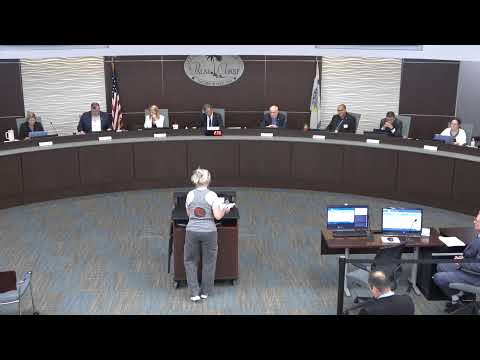
During the public comment period at the Aug. 12 council workshop, residents raised several recurring concerns: public transportation for aging and disadvantaged residents, environmental and traffic effects of nearby industrial or batching plants, water taste and discoloration reports, and the pace and oversight of development.
Public commenters and concerns (high level) - Public transportation: Chantal Preninger asked whom to contact to pursue bus service in new neighborhoods, noting traffic from new housing and asking which organizations oversee transit. City staff referred her to the Flagler County Transportation Disadvantaged Association and said county staff handle eligibility and signup. - Rezoning and industrial plant: Jeff Adams spoke in favor of a rezoning previously approved for a batching/industrial plant (he referenced SRM), said he viewed the project as compatible and a significant local investment and urged the council to consider the project’s economic benefits at second reading. - Water quality and wastewater siting: Multiple commenters raised concerns about green or discolored water, denied access to certain stakeholder meetings and about the siting of wastewater treatment facilities. Jeanne Duarte asked why Wastewater Treatment Plant 2 had been prioritized and urged the use of nature‑based solutions and vulnerability assessments. City staff and the city manager answered many of the water questions in sequence: plant projects were delayed or advanced based on growth timing and funding, and task‑force meetings include different stakeholder groups at different times. On potable‑reclaimed water questions staff said use of recovered water and future engineering would be addressed in the water supply work plan. - Rate increases and low‑income households: Several speakers urged the council to consider impacts of recent or proposed utility rate increases on fixed‑income and low‑income households before approving further increases. - Accountability and transparency: Some speakers alleged improprieties or undue developer influence in campaign finance and asked for more public disclosure. One commenter said he had sent materials to council on wastewater and silica and asked why certain contractors were invited to a canal meeting while others were not.
How staff responded City staff and the city manager answered specific procedural questions (how to sign up for county transit programs, why certain utility projects were advanced or delayed because of funding/timing and how saltwater task‑force meetings had varying invitee lists). Utility and planning staff encouraged residents to submit formal comments and noted that many technical questions (for example, about quality results) could be followed up outside the meeting with utility staff for detailed testing and results.
Ending No vote or action resulted from the public comment period; city staff recorded concerns, provided immediate procedural answers in several cases and said staff would follow up on technical water or wastewater questions outside the workshop.