Get Full Government Meeting Transcripts, Videos, & Alerts Forever!
Get email alerts on the Land Use Development topic
No spam. Unsubscribe anytime.
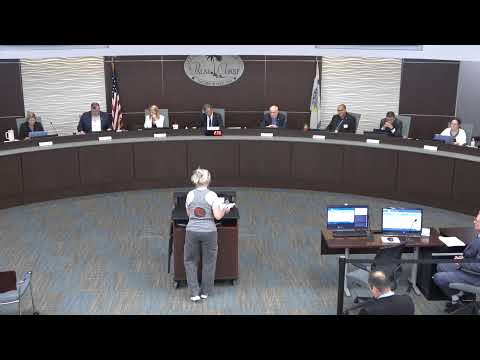
Council workshop: 18,883 dwelling‑unit pipeline and wastewater plant capacity after planned expansions
Summary
City staff reviewed development pipeline numbers and wastewater capacity, reporting roughly 18,883 dwelling units in the planning pipeline (including many ITT lots) and quantifying the capacity gap they expect to close with the Plant 1 expansion scheduled for 2028 and Plant 2 upgrades.
City staff gave council a rollup of residential development in the approval pipeline and an assessment of wastewater treatment capacity if planned expansions proceed.
Ray Tyner, deputy director of community development, led the explanation of the subdivision approval process and the technical reviews projects receive before final platting or construction. "This is a very long process," Tyner said, describing environmental, stormwater, utility and traffic review by the city's technical team.
Why it matters: councilors and residents have repeatedly asked how many dwelling units remain unresolved in the planning system and whether existing wastewater and water plants can handle the buildout. Staff presented pipeline counts, the modeling assumptions used to turn dwelling units into wastewater demand, and the effect of the Plant 1 expansion (scheduled to complete in 2028) on available capacity.
Key figures and approach - Pipeline: staff reported 18,883 dwelling units in the combined pipeline (this number includes platted ITT lots and subdivisions at varying approval stages). Of the units shown, 13,381 were assigned to Wastewater Treatment Plant 1 in the mapping used by staff. - Unit‑to‑flow conversion: staff used a historical wastewater usage factor of 180 gallons per dwelling unit per day to translate dwelling counts into wastewater demand. - Plant capacity and shortfalls: staff estimated Plant 1 will need roughly 2.4 MGD of additional capacity to support units assigned to it. After the scheduled Plant 1 expansion (the project staff discussed with council and that is included in upcoming bond plans), Plant 1 capacity was shown as 10.83 MGD; with the pipeline demand and existing flows counted, staff projects about 2.0 MGD of remaining headroom (enough for an estimated additional 11,496 ERUs by their math). For Plant 2, staff said the pipeline needs about 981,000 gallons per day and the recent expansion brings Plant 2 to about 4.0 MGD (staff noted membrane upgrades will likely rerate that plant to about 5.2 MGD later).
Process and safeguards Tyner and legal counsel explained the three‑step subdivision process: subdivision master plan (Planning Board review for larger developments), preliminary plat (technical engineering and utility plan approvals), and final plat (surveying and recordation). Staff emphasized technical review by city stormwater, utility, traffic, environmental and building experts and described utility development agreements and DEP certification as necessary steps before a project can activate service.
Public and council concerns Councilors asked how current approvals translate into immediate construction potential. Staff said projects with complete development orders and technical plans can move quickly toward building permits; ITT infill lots, in many cases, can be permitted and built sooner because their entitlements were established long ago. Staff also reiterated that the city does not "reserve" system capacity permanently without executed utility agreements and DEP certification; capacity availability when a parcel is ready to activate can be subject to system constraints.
Ending Staff recommended a wastewater master plan update and clarified that final construction approvals and DEP system certifications remain the operational check on whether approved lots can immediately connect. Council requested staff follow up with clearer current headroom figures for existing capacity (before the 2028 expansion) at a subsequent meeting; no final decisions were taken at the workshop.