Get Full Government Meeting Transcripts, Videos, & Alerts Forever!
Get email alerts on the Annexation Conflict topic
No spam. Unsubscribe anytime.
Gulf County initiates conflict-resolution process with Port St. Joe over annexations and land-use changes
Summary
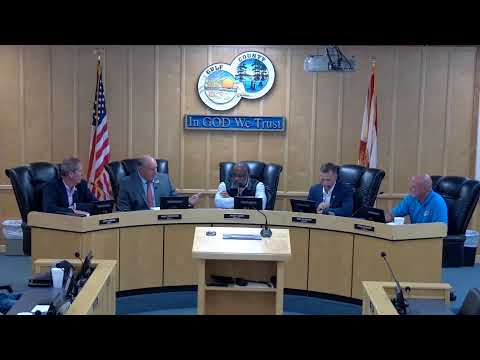
Gulf County commissioners voted Aug. 7 to begin a chapter 164 conflict-resolution process with the City of Port St. Joe after the city approved ordinances to annex and reclassify industrial property as residential.
Gulf County commissioners on Aug. 7 voted 5–0 to begin the statutorily authorized conflict-resolution process under Florida Statute chapter 164 after the City of Port St. Joe approved ordinances to annex and reclassify parcels in the county’s industrial area.
Why it matters: County leaders said the annexation and simultaneous land-use change could affect industrial land and existing businesses — notably Eastern Shipbuilding, which sent a letter opposing the action — and could set precedent for how commercial and industrial sites are converted.
County Attorney Mark Novak recapped the situation for the commission: the city held planning-board and two city-commission meetings to annex roughly 2.5 acres on Industrial Road (parcel cited in the meeting as 04571-000R, part of the historic “Kenny Mills” platted subdivision), then moved to change the land use. Novak said the parcel is surrounded by city-owned industrial property but that the county’s concern was proper process and whether the change is lawful and appropriate.
Novak told commissioners he had provided the city copies of the county’s resolution of opposition and Eastern Shipbuilding’s letter and recommended conflict assessment and mediation; he also said litigation remained an option if mediation failed. Commissioners adopted two resolutions by title — one opposing the annexation ordinance and one opposing the land-use ordinance — and directed staff to initiate the chapter 164 conflict-resolution process. Commissioner Pritchard moved; the motions passed unanimously.
Novak said the county must respond within the statutory period and that a conflict-assessment meeting (mediation-style session) would be scheduled to seek common ground and possibly avoid further litigation. He told the commission he would notify the city manager and city attorney and return with dates and options.
Next steps: County staff will schedule a chapter 164 conflict-assessment meeting, circulate the county’s formal resolutions of opposition to city officials, and return to the commission with proposed dates and further recommendations if mediation fails.