
District sets early-learning math goals; discourages timed tests in early grades
Get AI-powered insights, summaries, and transcripts
Sign Up Free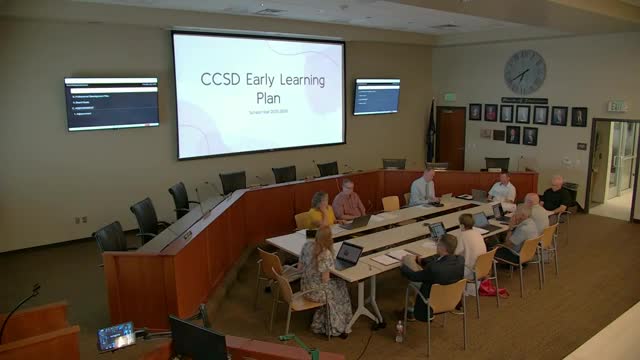
Summary
District staff presented the required early learning plan, setting growth and proficiency targets for grades 1–3 and stating a district preference against timed multiplication tests in favor of conceptual and fluency-focused instruction.
Britney presented the district’s annual early learning plan on Aug. 7, which the Utah State Board of Education requires to include a growth goal and two additional performance targets. Nut Graf: The district’s plan identifies conceptual understanding, procedural fluency (non-timed), strategic thinking and productive mathematical mindsets as the focus areas and sets measurable goals tied to Acadience (math) benchmarks. Staff said the state growth goal requires at least 60% of first-through-third grade students to show at-or-above typical growth on Acadience math; the district set a first-grade target to increase missing-number fluency by 6% from fall to spring and a third-grade computation target of a 3% increase from beginning to end of year. Britney emphasized research-based instructional strategies framed by concrete–representational–abstract progression and stated that the district discourages timed multiplication tests as a practice that research does not support for building conceptual fluency. Board members asked for classroom alternatives and Britney described visualization and modeling strategies as preferred substitutes. The plan also includes a district literacy goal: 65% of students in grades 1–3 to meet adequate yearly progress or better on Acadience reading pathways. Ending: The plan is informational and will be incorporated into district professional development and instructional support; no board action was taken at the Aug. 7 meeting.