Get Full Government Meeting Transcripts, Videos, & Alerts Forever!
Get email alerts on the Superintendent Evaluation topic
No spam. Unsubscribe anytime.
Pasco board debates superintendent evaluation targets; members seek measurable goals before final approval
Summary
Board members and community speakers pressed for specific, measurable goals tied to superintendent evaluation policy 16-30. The board plans to approve annual targets by the start of school to meet contract timelines while board officers will consult the outside consultant to define measurable objectives.
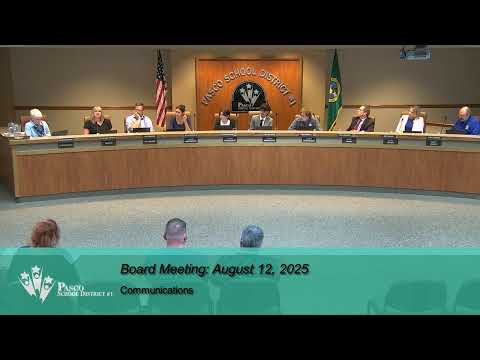
The Pasco School District Board of Directors spent a large portion of its meeting debating how to translate the board's chosen evaluation targets into measurable goals under Policy 16-30, the district policy that requires annual objectives for superintendent evaluation.
Superintendent Whitney and board members discussed a set of targets the board selected earlier in the year and affirmed the requirement in policy 16-30 that the board identify annual objectives before the start of the evaluation cycle. Whitney told the board the only items that legally require board approval at the start of the year are the targets themselves; staff recommended the board approve the targets on the first day of school so the district stays in compliance with the superintendent's contract and the policy. Whitney said data elements that would populate progress monitoring reports can still be refined following approval of targets.
Several board members, led by Director Phillips, said the targets lack measurable, timebound goals and pressed for numeric, stepwise objectives the board and public can use to assess progress. Phillips said she expected concrete targets tied to the district's strategic priorities and requested clearer interim "stepping-stone" goals that would show progress toward aspirational outcomes such as the district's 100% third-grade reading objective.
Board members and student representatives echoed the call for measurable goals. Director Simmons and others asked that the outside consultant who helped develop the evaluation framework, Dr. Thomas Alsbury, be brought back to guide the board on how to convert targets into measurable objectives. Superintendent Whitney said she would not directly contact the consultant about her own evaluation (to avoid conflicts) and proposed that board officers coordinate with Dr. Alsbury to finalize measurement approaches.
During public comment, teachers and union representatives also weighed in. Amber Haines, a second-grade teacher and elected representative of elementary educators with the Pasco Association of Educators, asked that two assessment data points (IRLA and DIBELS/DeNeille, described in testimony as optional under an assessment waiver) be removed from any evaluation requirement because teachers are not contractually required to administer or report those specific assessments. A public commenter, Bear Turner, criticized the board's consultant and said parents lack clarity about the measures; Turner urged the board to demand clearer metrics from the consultant.
The board did not vote to change the targets at the meeting. Several members reiterated that the targets were chosen by consensus in a prior study session with Dr. Alsbury and that the board must be mindful of the superintendent's contract timeline. The group agreed that board officers would schedule a follow-up discussion with Dr. Alsbury to define measurable objectives and that targets would be formally placed on the August 26 agenda in compliance with policy and the superintendent's contract. Several board members said they expect measurable goals to be finalized and reported back through the board progress monitoring process.