Get Full Government Meeting Transcripts, Videos, & Alerts Forever!
Get email alerts on the Property Maintenance topic
No spam. Unsubscribe anytime.
Terre Haute council tables property maintenance ordinance after debate on enforcement, hardship and language
Summary
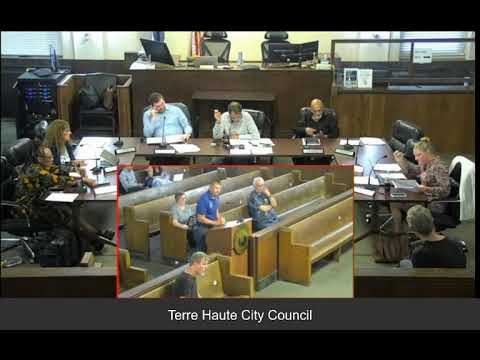
The Terre Haute City Council on Aug. 7 debated a proposed property maintenance ordinance that would add new enforcement tools to Chapter 7 of the city code but voted to table the measure for further edits.
The Terre Haute City Council on Aug. 7 debated a proposed property maintenance ordinance that would add broad new enforcement tools to Chapter 7 of the city code but voted to table the measure for further edits. City Engineer Marcus Myers said the draft responds to repeated complaints about unsafe or blighted properties and would allow staff to require repairs short of condemnation. “The key is, you know, the one thing we—re not willing to modify is overall safety,” Myers said, adding a hardship section would allow the building inspection official to adjust timelines after storms or other events. The proposal would create standards for hazardous trees, add a $25 permit fee for certain tree permits, and use ‘‘diameter at breast height’’ as the tree-size metric. Myers told the council the language requiring a warrant for interior inspections was removed at the request of the council to emphasize voluntary compliance and notice. Council members pressed staff on several points. Councilperson Dinkle asked which official would designate a hazardous tree; Myers said the code definition uses the phrase authorized enforcement agency and includes the building inspector and designees from police, fire, code enforcement and stormwater. Councilperson Himmons asked to replace the gendered term “workmanlike” with a neutral phrase; Myers agreed to research wording that preserves the code—s intent. Councilperson Boyd asked that a sentence requiring owners to "restore said surface to a state of maintenance and repair within 15 days" be clarified to read "within 15 days of notice." Members also raised equity and implementation concerns. Councilperson Dinkle urged the council to consider financial assistance for low- and moderate-income property owners who might face fines or repair costs; Myers and others said no targeted funding mechanism was in the ordinance but suggested future budget or grant actions could be considered. Building staff and Council members repeatedly emphasized a preference for voluntary compliance and time for reasonable contractor scheduling while reserving faster deadlines for immediate public-safety hazards. After discussing several editorial fixes and suggested amendments, Councilperson Nazar moved to table the ordinance to the Aug. 14 meeting; the motion passed and the ordinance was tabled. Next steps include staff redrafting to: (1) replace language such as “workmanlike” with a neutral term, (2) clarify the 15-day timeframe as 15 days of notice, (3) confirm which departments are designated enforcement authorities, and (4) prepare a version that shows additions and deletions for easier council review. Councilmembers asked staff to return with revised language before final consideration.