Get Full Government Meeting Transcripts, Videos, & Alerts Forever!
Get email alerts on the Public Safety Parking topic
No spam. Unsubscribe anytime.
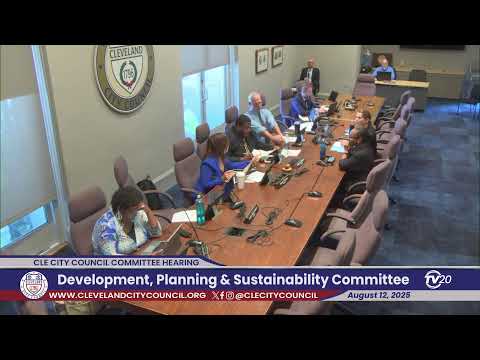
Council committee approves updated paid‑parking rules for downtown, adds police review of garage security plans
Summary
Cleveland — The council committee approved ordinance 726-2025, updating paid‑parking regulations to set a 1 foot‑candle lighting baseline citywide, require occupancy documentation for licenses and add a Cleveland Division of Police review of downtown parking facility security plans.
Cleveland — The City Council committee approved ordinance 726-2025, an update to the city's paid‑parking facility code that sets new lighting standards, adds licensing requirements and creates a police review for security measures at downtown parking facilities.
Lucas Reeve, senior advisor in the mayor’s office, told the committee the ordinance aims “to reduce crime that has been occurring in paid parking facilities across the city” and to “work collaboratively” with facility owners and the Cleveland Division of Police (CDP) on security measures for downtown lots.
Key changes in the ordinance include a citywide lighting standard of 1 foot‑candle on walking surfaces and strengthened lighting and shielding requirements for stairwells and landings; a licensing requirement that applicants submit a certificate of occupancy and scaled, dimensioned signage images; and a new downtown‑focused process in which CDP reviews license applications and the operator’s safety and security questionnaire for lots within downtown districts (core, Warehouse District, Erieview, Gateway). CDP has up to 60 days to review the submitted security measures, may request additional information or a revised plan, and may require an updated security plan if an operator has three or more nuisance or criminal violations in a six‑month period.
The administration proposed language describing required security measures as “reasonable” rather than “adequate” after meetings with parking operators and property owners; the council adopted that and an amendment shortening a required implementation effectiveness report from two years to one year. The amended ordinance also raises a criminal penalty in limited sections from $100 to $150 and adds requirements that operators maintain accurate signage to prevent fraudulent third‑party payment schemes.
Councilmembers who spoke in favor framed the measure as a targeted, prototype approach for downtown: Councilman McCormack and others said downtown has a higher density of paid facilities and a higher incidence of reported criminal activity, so a downtown pilot will allow city officials to test the process and return with recommendations for citywide expansion. Councilwoman Santana and Councilman Harsh asked whether the model would be rolled out beyond downtown; the administration said the change is a pilot tied to an in‑year report and could be expanded after evaluation.
The ordinance passed with amendments. The transcript shows the committee approved the change to the security‑review language and shortened the director of public safety’s effectiveness report to one year.
Ending: The city adopted the rule changes for downtown parking facilities and higher baseline lighting standards citywide. Officials said they will monitor results and may recommend a wider rollout after CDP and the administration report back to council in one year.