Get Full Government Meeting Transcripts, Videos, & Alerts Forever!
Get email alerts on the Public Comment And Community Programs topic
No spam. Unsubscribe anytime.
Residents urge better funding for special education and praise local programs during Fond du Lac public comment
Summary
Public commenters used the board’s public‑comment period to spotlight special‑education reimbursement shortfalls, praise summer and community programs and ask the district to reduce safety barriers to speaking at meetings.
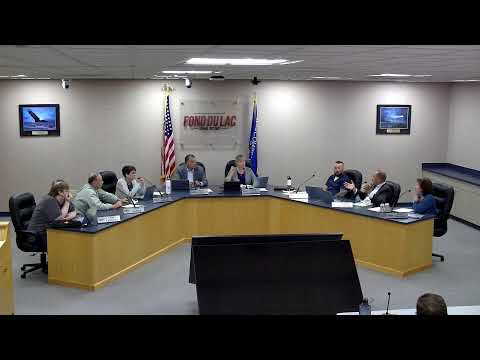
During the public‑comment portion of the Fond du Lac School District Board of Education meeting, several residents raised concerns about special‑education funding, district practices and community supports.
Jim Hess, who identified himself as an Eden resident, framed his remarks around state reimbursement for students with special needs and criticized broader policy choices. He said the state currently reimburses roughly 42% this year and he cited a percentage of about 45% for next year (those figures were cited by a district staff budget presenter later in the workshop). Hess called on state policymakers to increase funding and expressed concern about what he described as broadening special‑education classifications and district practices.
Other speakers highlighted positive community programs and asked the board to consider practical changes in meeting procedures. Shari Trotter pointed to Fond du Lac School District social‑media posts and urged more community sharing of positive stories. Antonio Godfrey described the Back to School Fond du Lac collaborative, reporting that last year about 2,429 district students received supplies through the program and that the upcoming distribution would be at the Fond du Lac YMCA.
Bree Barthulli, a parent, urged the board to stop requiring speakers to give their home address during public comment, saying it raises safety concerns and could deter people from speaking. She also praised summer school options for elementary students and urged better support and a “home base” for instructional assistants (IAs) to help retention. Barthulli said she supports teachers respecting students’ preferred names and pronouns, saying, “If a student tells me that they prefer that I call them James and they go by he, him, or they, them, I am not going to disrespect them.”
Other public commenters described summer community activities including an Ebony Vision program at Maplewood Commons and a new local track‑and‑field camp. Several speakers encouraged volunteers for upcoming Back to School events and thanked staff for summer programming.
What the board recorded
The board’s public‑comment rules were read aloud before speakers, including restrictions: comments limited to five minutes per person, no board responses at the same meeting per the open‑meetings explanation and a citation of board policy 0167.3. The president reminded speakers that the presiding officer may interrupt or limit remarks that are too long, personally directed, abusive or irrelevant.
No policy action followed the public comments; the items were heard under the meeting’s public‑comment process and were not placed on the agenda for formal board response or action.