Get Full Government Meeting Transcripts, Videos, & Alerts Forever!
Get email alerts on the School Budget And Referendum topic
No spam. Unsubscribe anytime.
Fond du Lac board holds budget workshop, eyes referendum planning after state increases special-education aid
Summary
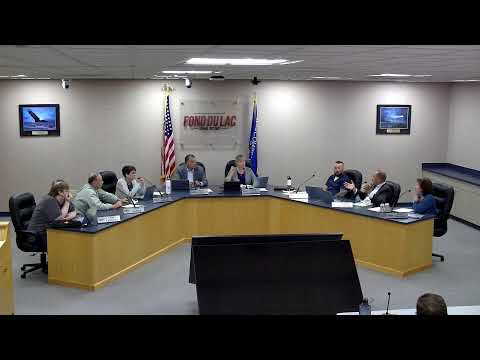
At a regular meeting and workshop, the Fond du Lac School District Board of Education approved routine business, heard a detailed budget briefing and moved forward with community survey and referendum planning after the state biennial budget raised special-education reimbursement rates.
The Fond du Lac School District Board of Education approved routine business and then met in a workshop to review 2025–26 budget assumptions and begin planning for a possible operational referendum following changes in the state biennial budget.
District staff told the board the July state budget preserved the $325 per-pupil revenue limit increase but did not raise general equalization aid. The budget did, however, increase state special education reimbursement from levels used in the district’s June budget: staff noted a legislative change that raises categorical special-education aid to a projected 42% of eligible costs in fiscal 2026 and 45% in fiscal 2027, and separately increases the high-cost special-education reimbursement percentage (details of the high-cost aid calculation remain subject to actual claims statewide).
The budgeting presentation, led by district staff, emphasized three main forces shaping the 2025–26 financial picture: uncertain fall enrollment, the finalized state biennium budget and the district’s prior reductions to reach a balanced plan. Staff said the district’s enrollment forecast used a 5‑year cohort model and projected about 6,404 students for the fall; the district’s July 31 live count was 6,268 students. That gap, staff warned, could materially affect revenue because enrollment drives membership calculations used in the revenue‑limit formula.
“Enrollment drives revenue. Money follows students in the state of Wisconsin,” a staff presenter said, explaining why a lower September membership could reduce available district dollars. Staff also told the board the district would receive field work from its independent auditors the week after the presentation and that audit testing will validate prior-year financials used in planning.
Board members discussed the possible financial effect of the special-education aid increase. Staff estimated the change could yield roughly $1.3–$1.5 million more in state categorical aid for the district if reimbursement rates and claim patterns reach modeled levels, though they cautioned the actual reimbursement rate is determined after state claim totals are processed. Staff also noted the district has a one‑year declining‑enrollment exemption that would offset some revenue loss in the first year if membership falls; staff estimated the revenue impact tied to the enrollment projection differential at about $867,000.
On taxes, staff showed a projected decline in the district’s mill rate to about $5.25 per $1,000 of equalized property value (from roughly $5.97 previously), assuming current law and the modeled enrollment and revenue inputs.
Board members pressed staff on line items from the July check register as part of the public consent agenda review. Staff explained payments for ClassLink single‑sign‑on licensing, copier leases, math manipulatives tied to the elementary Bridges math curriculum, gym bleacher inspections and Internet/security licensing and how those fit into instruction, safety, or operations. Staff described purchased services (consultants and outside vendors) as about 1.6% of the general fund and said salaries and benefits remain the largest share of spending.
Workshop direction and next steps
Board members directed staff to proceed with community engagement and referendum planning work. The district will engage School Perceptions (the polling/engagement vendor discussed) to design and field a public survey; the board asked to see refined cost estimates for survey options and to schedule follow‑up workshops to refine survey questions and referendum scenarios. Staff said the vendor provides question banks and will work with the board on the specific items to test, including possible questions about school safety investments, operating referendum amounts and community tolerance for facility consolidation.
Board members also asked staff to provide a concise facilities‑use/capacity summary and financial scenarios showing estimated savings and costs associated with potential building closures or consolidations, including debt/service and maintenance implications and any revenue or cost effects from selling or repurposing facilities. Staff said they would compile occupancy, debt, maintenance and estimated transition costs for board review.
Formal actions
During the business meeting preceding the workshop the board approved the consent agenda (which included check registers, personnel items and the bimonthly financial report) and separately approved a one-line amendment to the July 1, 2025 minutes that clarified a board member’s comment; both motions passed unanimously by roll call. At the meeting’s close the board voted unanimously to adjourn the regular meeting to a workshop on 2025–26 budget and referendum planning and later adjourned the workshop by unanimous vote.
What the board emphasized
Board members repeatedly stressed the need to present clear, public‑facing information: the survey should both gather public priorities and explain the district’s fiscal choices. Multiple members said they want the district to show what will happen if a referendum does not pass, and what additional investments would be possible if voters approve an operating referendum. Several members also urged the district to be prudent and to plan for 3–5 year scenarios rather than short‑term fixes.
The superintendent and finance staff urged caution about assuming a one‑time projected surplus. “This is a real key point,” staff said, noting the district’s presented surplus under some models would be less than 1% of annual expenditures and could be eroded by enrollment changes or other factors.
Votes at a glance
- Motion: Approve consent agenda (regular and workshop minutes from July, personnel recommendations, resignations and new hires, and bimonthly financial report). Mover: Henschel; Second: Laberance. Outcome: approved, roll call 7–0. - Motion: Approve amended July 1, 2025 minutes to add a sentence under “Other appropriate matters.” Mover: Maine; Second: Frame. Outcome: approved, roll call 7–0. - Motion: Adjourn the regular meeting to a workshop to discuss 2025–26 budget referendum planning. Mover: Henschel; Second: Laberance. Outcome: approved, roll call 7–0. - Motion: Adjourn workshop. Mover: Laberance; Second: Henschel. Outcome: approved, roll call 7–0.
Board members and staff agreed to continued public workshops, follow‑up board sessions and community outreach beginning with a School Perceptions survey and a facilities summary for the next round of meetings.