Get email alerts on the Code Enforcement topic
No spam. Unsubscribe anytime.
County staff propose dedicated code‑enforcement role, broader nuisance code and seed fund for abatements
Summary
Staff proposed creating a dedicated code‑enforcement officer or unit, broadening the county nuisance code to permit civil infractions and establishing an upfront abatement fund (potentially seeded from solid‑waste tipping fees) to pay for cleaning hazardous properties and then recover costs via liens.
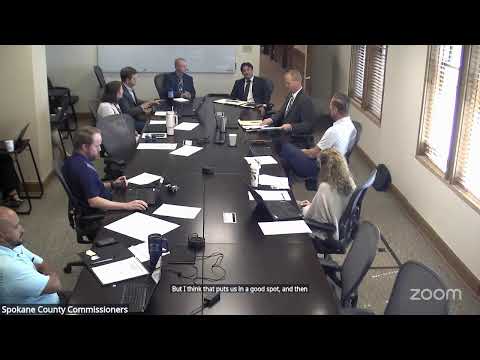
County staff and the prosecution team briefed commissioners on a plan to strengthen enforcement of Spokane County code by amending nuisance and related code sections, creating a centralized code‑enforcement function, and setting up contracting and funding to execute abatements.
Presenters said Spokane County currently lacks a consistent, centralized enforcement unit: building and planning departments receive complaints and may issue stop‑work orders or notices, but heavy criminal remedies exist only as a last resort and the county has not routinely used civil penalties or a central abatement process. Staff described frequent calls about junk vehicles, hazardous debris piles and abandoned or partially burned structures. The panel said the current Title 6.13 nuisance code is useful but too narrow and not well integrated with solid‑waste, building and zoning titles (3, 8, 11, 14) to provide a functional countywide enforcement pathway.
The staff recommendation includes three parts: (1) amend the nuisance ordinance to broaden covered conditions and explicitly authorize a civil‑infraction process and abatement remedies; (2) create a code‑enforcement officer or small task force whose job is investigation, remediation planning, coordination with subject matter staff (building/planning/health) and frontline contact with complainants; and (3) establish an abatement execution contract with third‑party vendors (waste haulers, tow companies, hazardous‑waste contractors) and seed the initial abatement costs with a dedicated fund. Staff suggested possible seed funding sources such as a small incremental increase to solid‑waste tipping fees (examples discussed: $1–$2 per ton scenarios) and emphasized that abatement costs would, in most cases, be recorded as special assessments or liens that the county can recover later.
Prosecutors and staff framed civil infraction authority as a practical tool: it lowers the burden of proof compared with criminal prosecution, is faster for resolving nuisance conditions and creates a pathway to recover abatement costs. Commissioners signaled support for the concept and asked staff to advance ordinance language and funding scenarios for future board consideration.
Ending: Staff will prepare draft nuisance‑code amendments, options for the size and structure of a code‑enforcement unit and funding scenarios (including tipping‑fee models and lien recovery processes) for the board’s review.
AI generated
The text on this page is AI generated. Summaries, highlights, analysis, and video transcripts are all produced from the original source material.
AI can make mistakes, so if you spot one, and we will fix it for everyone.
Note: the source content is unaltered by us. Any content source we link to, be it a video, an audio recording, or a document, is presented exactly as its publisher released it. That publisher is usually a government body, sometimes an individual official or another organisation.