Get Full Government Meeting Transcripts, Videos, & Alerts Forever!
Get email alerts on the Grants And Implementation topic
No spam. Unsubscribe anytime.
Digital Equity working group submits near-$100,000 implementation plan to Mass Broadband Institute
Summary
The Springfield Digital Equity Working Group submitted a final report and a near-$100,000 list of implementation priorities to the Massachusetts Broadband Institute, focusing on hotspot expansion, public Wi‑Fi and training grants for the library and council on aging; the package is a priority list, not a binding city budget.
The Springfield Digital Equity Working Group submitted a final report to the Massachusetts Broadband Institute (MBI) on Aug. 12 and proposed a package of implementation priorities that totals $99,986, the group said.
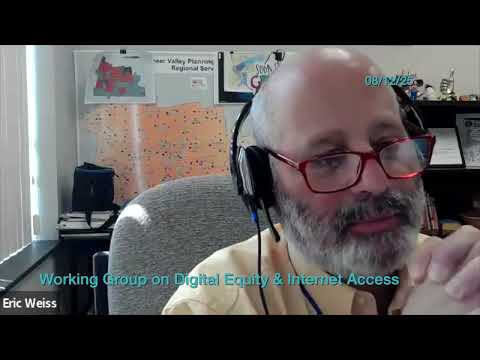
The package was presented to the working group by Eric (working group member), who said the list was delivered to MBI so the state agency “could have something to go by.” He described the submission as a prioritized, flexible plan rather than an “ironclad budget”: “it is not meant to be definitive like the be all the end all. It is what we submitted to the to the Mass Broadband Institute,” Eric said.
Why it matters: the funding request—close to $100,000—aims to finance short-term, ready-to-mobilize items to support digital equity in Springfield if MBI awards implementation grant funds. The group said MBI could return up to $100,000 for implementation; the package organizes local priorities in case the state release the funds.
Most important facts
- Total submitted: $99,986, presented as a prioritized estimate intended for MBI’s implementation grant process. “There's a potential of up to a 100,000 coming back from the state, MBI on this,” Eric said.
- Major line items: expansion of a hotspot program intended to be run cooperatively by the city, the public library, the council on aging and partner organizations; public Wi‑Fi on city-owned buildings and public spaces (parks and other areas); and funding to support digital training run by the library and the council on aging. On the training line, Eric said: “maybe that could be broken over 2 years, 18,000 each year.”
- No direct funding was allotted in the submission to Tech Foundry or WaveFinders because the working group understood the city already supports those organizations. Eric said: “the city is gonna already has a permanent digital equity working group. Part 2, we understood ... the city has already supported Tech Foundry and WaveFinders to a significant extent. So we did not put any money towards that explicitly.”
- City staff cost: Vice President Whitfield asked whether staff costs were included. Sequoia (city staff/grant specialist) replied, “No. There isn't on this one.”
Details and background
Eric characterized the submission as a synthesis of feedback from prior working-group meetings and subsequent meetings with the mayor’s office and department heads. He said he and Sequoia worked together to answer follow-up questions from MBI and to refine the cost estimates. “I drafted and redrafted this, had some discussions with Sequoia, to make sure that we were in the in the right boundaries,” Eric said.
The working group emphasized that the budget is flexible and that priorities can be shifted with an accompanying explanation to MBI. Eric said the group “shifted quite a bit from the original proposal to this based on what ... the city wanted it to work.”
The group also noted that one earlier, larger proposal—the so‑called Launchpad grant—was cut at the federal level. Sequoia and other working-group members described that loss as a factor in focusing on a shorter, one-year implementation package that can be mobilized quickly.
Next steps and context
Members said they will continue coordinating with Sequoia and MBI on implementation and will circulate updates on any new grant opportunities. Eric asked members and local partners to keep the group informed of other potential funding sources. The working group also recommended maintaining the advisory body so members can assist with grant implementation and keep a running inventory of local programs and funding.
Ending
The proposal to MBI is a prioritized plan, the working group said; it does not bind the city to specific spending decisions. If MBI awards the implementation grant, the city and the working group expect to refine allocations and coordinate with library, council on aging and partner organizations to mobilize hotspots, training and public Wi‑Fi.