Get Full Government Meeting Transcripts, Videos, & Alerts Forever!
Get email alerts on the School Closures topic
No spam. Unsubscribe anytime.
Board continues school closure and consolidation planning; consultants to present community feedback and alternative scenarios
Summary
Superintendent and staff told the board they will gather consultant analysis of public input from community meetings and offer alternate consolidation scenarios for a Sept. 3 discussion; staff emphasized the need to evaluate long'term facility costs (FCI) versus neighborhood impacts before final votes.
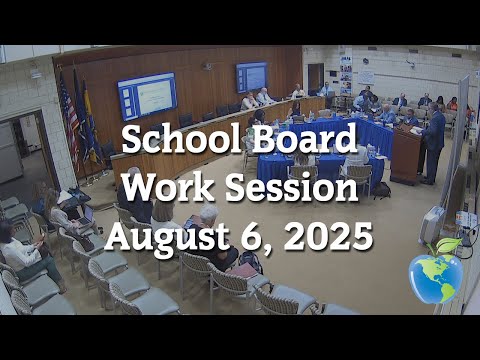
Norfolk Public Schools staff and consultants continued a multi'month conversation with the board Aug. 6 over a proposed closure and consolidation plan. The presentation covered next steps for community feedback, how consultant analysis will inform alternative scenarios, and the financial and facility condition considerations that drove the current list of candidate schools.
Staff said consultants are compiling feedback from prior community meetings and will provide a slide presentation with collated comments and suggested alternative scenarios by the end of the week or early next week; staff asked board members to send any additional community input they receive so it can be incorporated. The administration proposed using the Sept. 3 board work session for an initial discussion of edits and alternatives and to continue the decision process toward a business meeting vote (noted Sept. 17 on the calendar as the next possible vote date).
Key planning considerations cited were facility condition index (FCI) and projected capital requirements: staff said the total cost to repair and bring the 10 candidate buildings to full "warm, safe, cool and dry" condition exceeds $200 million. Staff described a rough operating-savings estimate of roughly $1 million per elementary school closed, larger amounts for middle schools and about $3 million per high school when factoring staffing and operating costs; staff stressed these are high-level and will be refined in scenario work. Tarleton (example given) was highlighted as requiring large capital investment (staff cited a roughly $17 million estimate to address near-term priorities).
Board members raised concerns about feeder-pattern and attendance-zone impacts, timing relative to the city resolution's five-year timeline, and how closures would affect programs like All-City or environmental education sites. Staff replied that after the board agrees on a prioritized list, subsequent steps include detailed redistricting/attendance-zone analysis, public hearings, and coordination with the city on property disposition and possible alternative reuses (childcare, community centers or division use).
What's next: consultants will return analyses of public-input feedback and alternative scenarios; the administration plans a Sept. 3 board discussion to incorporate that analysis and expects to use December for deeper mapping and public hearings before final votes. The board and staff noted city council engagement and scheduling remain part of the timeline; staff said the consolidation timeline has been made intentionally multi-year to avoid forcing immediate relocations and to allow redistricting and public hearings.