Get Full Government Meeting Transcripts, Videos, & Alerts Forever!
Get email alerts on the Attendance Dropout topic
No spam. Unsubscribe anytime.
Norfolk schools report falling chronic absenteeism but rising dropout rate; new coordinator hired
Summary
At an Aug. 6 Norfolk School Board work session, staff reported chronic absenteeism has declined since 2022 while the division'wide dropout rate rose from 10.4% in SY22 to 14.8% in SY25; the division has hired a senior coordinator for on-time graduation and other supports are planned.
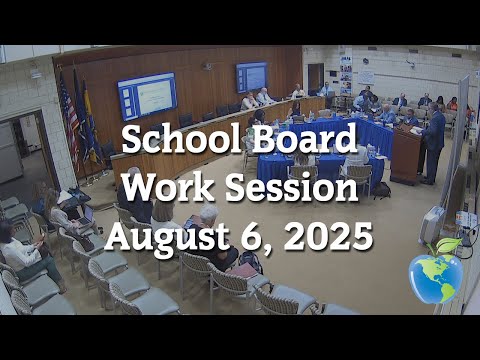
Norfolk School Board members heard Aug. 6 that chronic absenteeism in Norfolk Public Schools has declined since school year 2022 while the division'wide dropout rate increased, prompting new staffing and program steps to reengage students. Dr. Pohl presented the division'level data and outlined steps administrators plan to take to reverse the trend.
The report showed the district exceeded its strategic-plan target for chronic absenteeism for 2025, and Dr. Pohl said the division "nicely seen declines from school year '22 through school year '25." By contrast, the preliminary dropout rate rose from 10.4% in SY22 to 14.8% in SY25, a change administrators said partially reflects pandemic-era cohorts now leaving high school.
Why it matters: administrators said lower absenteeism increases instructional time, but an increasing dropout rate signals a separate problem that requires targeted reengagement. The division has hired a senior coordinator for on-time graduation and student engagement to work with schools, and a dropout-prevention specialist position was added in the current budget and has now been filled.
Supporting details and responses from board members focused on school-by-school differences, staffing and program responses. Dr. Pohl said school-level teams will receive training on Multi-Tiered Systems of Support (MTSS), and that the newly hired senior coordinator, Dr. Moore, "has already been visiting the graduation coaches" and will prioritize schools with the highest chronic absenteeism and dropout rates. Principals worked over the summer to contact students who had dropped out to encourage reenrollment; staff noted that a switch to a 4-by-4 schedule allows students who need only two or three courses to recover credits in the fall and be eligible for a winter graduation.
Board members asked for more disaggregated data. Dr. Pohl said the division can run reports by subgroup if the board requests them; the school-by-school data posted publicly did not include subgroup breakdowns at the time of the meeting. Board members also pressed on staffing: the division reported it has 10 graduation coaches shared across high schools and Madison Open Campus; placement of coaches is adjusted to be equitable rather than equal.
Administrators described specific schools with high chronic absenteeism rates. At the meeting, a board member cited figures: Booker T. Washington High School 25.2% chronic absenteeism (about 227 students of 899), Jaycox 30.8% (about 184 students), and Lake Taylor 24.7%. Dr. Pohl said Title I schools such as Booker T. and Jaycox have family engagement specialists as required by federal Title I rules; Lake Taylor has on-site graduation coaches and is receiving targeted supports.
Staff also discussed external barriers and funding. Dr. Pohl said the division has used McKinney-Vento funds for private transportation where necessary and reviewed other federal sources, and that the division is short on bus drivers, limiting options such as a second bus run. Board members asked how dropout and attendance outcomes factor into principal evaluations; Dr. Pohl said dropout rate and absenteeism are part of the data considered in those evaluations. On GEDs and alternative pathways, staff said the division operates GED and open-campus options but noted accountability rules have changed and GED completion no longer counts toward some state accountability measures.
What's next: staff offered to produce subgroup-level chronic absenteeism and dropout data and to continue monitoring through MTSS implementation and the senior coordinator's targeted school visits. No formal board vote was taken at the work session on policy changes; the discussion resulted in staff commitments to run additional disaggregated reports and to present further updates.
A note on the data: staff said the dropout numbers were preliminary and subject to change because students who reenroll before final state reporting are removed from the dropout count; the state finalization occurs later in the fall.