Get Full Government Meeting Transcripts, Videos, & Alerts Forever!
Get email alerts on the Budget Tax Rate topic
No spam. Unsubscribe anytime.
Polk County moves forward with FY2026 budgeting: commissioners accept proposed tax rate and debate discretionary pay funding
Summary
Commissioners accepted the tax assessor‑collector’s calculations and moved forward on a proposed tax rate of 0.5986 while continuing discussion on budget priorities including longevity pay, a $3,000 across‑the‑board increase, capital projections and discretionary funds allocation to the sheriff’s office.
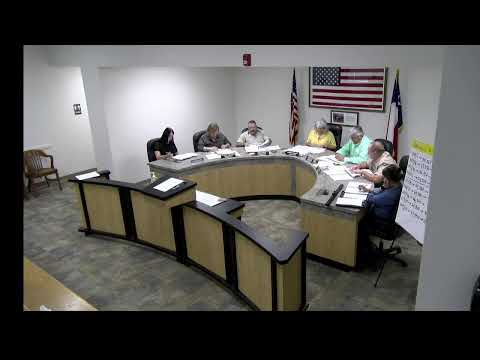
At a budget workshop, Polk County Commissioners accepted the tax assessor‑collector’s calculations and advanced budget development for FY2026, using a proposed tax rate of 0.5986 and a 97.5% collection rate in the draft. The court recorded a call vote accepting the tax calculations and the draft rate; the judge explained the rate is below the voter‑approval threshold and that the draft budget built on that assumption.
Court members spent extended time on capital projections and staffing costs. The county administrator and finance staff outlined capital needs, including a sizable jail generator project estimated in the capital projection and a $750,000 figure identified for generator work because multiple jail generators are out of service. Commissioners discussed options including purchasing a single large generator that could carry the entire jail and retaining existing units for life‑safety loads.
The court also reviewed employee compensation and longevity structure. The judge described the longevity schedule and explained a proposed $3,000 across‑the‑board increase in the draft budget; staff provided examples showing how longevity, retirement contributions and certificate pay affect total compensation costs. The court discussed the timing of future pay studies and the fiscal implications of embedding recurring salary increases in the general fund.
Commissioner DuVos recommended allocating 75% of this year’s discretionary funds to the sheriff’s office to address jail and staffing needs; the court did not finalize that reallocation but discussed constraints on using the general fund for ongoing pay increases. The court also reviewed the TRA contract (training/retention agreement) and was advised that the TRA contract remains unchanged and is not part of the discretionary funds available for reallocation.
The court approved capital purchase projections and several capital items were placed on the financing schedule; commissioners emphasized that capital projections are financed (debt) and that personnel costs are recurring operating expenses to be treated cautiously. No final long‑term commitment on discretionary allocations or pay‑scale changes was made; staff were asked to return with financing plans and implementation details.