Get Full Government Meeting Transcripts, Videos, & Alerts Forever!
Get email alerts on the City Budget topic
No spam. Unsubscribe anytime.
Haslet council holds public hearing on FY 2025–26 budget; $1.5M pay proposal would require roughly 24% tax increase, staff says
Summary
At a special May public hearing on the proposed FY 2025–26 budget, Haslet staff outlined a proposed $1.5 million addition for salaries and benefits that they said would narrow a revenue–expenditure gap but require an estimated 24% increase in the property tax rate; no members of the public spoke.
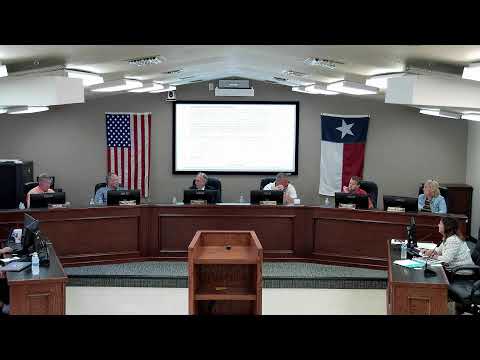
The Haslet City Council held a special meeting and public hearing on the proposed fiscal year 2025–26 operating budget and heard staff analysis of revenue, expenditures and recommended changes; no members of the public spoke during the hearing.
City staff presented the budget structure and trends, noting operating revenues have grown since 2021 but that expenditures have been rising faster because of staffing and infrastructure needs. Mayor Halsey said the proposed $1.5 million in additional salaries and benefits would close part of the gap between revenues and expenditures but would be recurring and therefore have long-term tax implications. “If you put this million 5 into salaries … each year you've got this recurring at that same level,” Mayor Halsey said.
Marcy Lamb, the city staff member who presented workshop changes, summarized the specific workshop adjustments: an addition of $1,500,000 to the administration salaries/benefits line; $300,000 for a park master plan; $500,000 for two playground areas; removal of a $2,750,000 Farmers Market/Teaching Garden project and replacement with $2,000,000 for street repair/Haslet Park; and no change to ball field improvements. Lamb said those capital changes moved total capital projects from $6,345,281.05 to $6,395,251.05.
Lamb and other staff also described the tradeoffs between one-time capital spending and recurring maintenance or personnel costs. Staff described the property tax (ad valorem) as the city’s most reliable revenue source for recurring maintenance and M&O (maintenance and operations) items; they said sales tax and other revenues are less predictable and that adding recurring personnel costs without a property tax increase would deplete reserves within a few years. Staff presented an estimate that the $1.5 million package would require a roughly 24% increase in the city’s tax rate — which, in the course of the presentation, was described as moving from about $0.29 to about $0.39 per $100 of valuation — and explained that state rules trigger additional voter-approval procedures once certain thresholds are crossed.
Staff reviewed enterprise funds separately. Lamb said the water and sewer enterprise had experienced a prior crossing of revenues and expenditures and that council action last year (new water and sewer rates) partially corrected that. She said the budget workshop proposed finalizing the sewer rate increase and that the sewer-rate ordinance would go through formal adoption at the council meeting scheduled for the 18th.
Council members questioned projections, growth assumptions and the mechanics of reallocating capital funds. One councilmember asked whether designated capital dollars (for example, a line for Haslet Park or for a “fire station fields” line item) would lock the city into a specific project; Lamb replied, “It does not lock you in. . . It could be used over at Brentwood,” explaining that money could be reallocated within the fund.
The council also discussed personnel and benefits. Staff noted that the proposed budget increases staffing from prior years to a total authorized position count of 58 and highlighted major staff growth in Public Works and the Fire Department. Lamb presented worst-case cost scenarios for fully insuring employees under the proposed plan: if all 50 authorized employees selected the PPO option and the city covered spouses, she estimated an additional $666,042; similar tiered estimates were provided for children and family coverage and for the HSA option. Lamb described those figures as a worst-case projection based on hypothetical full enrollment.
Councilmembers asked for clarification on health-plan design and cost assumptions; staff gave numerical plan figures during the hearing and said they would provide supporting documents and updated summary pages before the adoption meeting. Staff also said a crossing-guard service provider’s price was expected to be about $50,000 annually and that that amount would be added to the budget for the formal adoption vote.
The mayor opened the public hearing at 7:26 p.m.; no one from the public attended in person or online to comment, and the mayor closed the hearing the same night. Staff reminded the council that the council will adopt the budget and any individual amendments at the regular meeting scheduled for the 18th; any changes recommended by council members between now and that meeting should be submitted to staff for analysis and then moved, seconded and voted on at adoption.
No formal budget or tax-rate action was taken at the special hearing; staff and council discussed changes and next steps ahead of the adoption vote scheduled for the council’s next meeting.
Lamb and other staff agreed to correct smaller numeric inconsistencies in the packet and to circulate updated pages and supporting detail before the adoption vote. The hearing concluded with the council instructed to forward written requests for additional analysis to staff prior to the adoption meeting.