Get Full Government Meeting Transcripts, Videos, & Alerts Forever!
Get email alerts on the Pedestrian Safety Oxmoor Saint Charles topic
No spam. Unsubscribe anytime.
Committee approves restriping at Oxmoor and Saint Charles, sends design funding to budget hearings
Summary
The Public Safety Committee voted unanimously Aug. 4 to approve interim restriping at the Oxmoor–Saint Charles intersection and to send engineering design and Phase 1 funding to upcoming budget hearings after committee discussion about pedestrian safety, loading zones and impacts on nearby businesses.
At its Aug. 4 meeting, the Public Safety Committee voted 5-0 to approve an interim restriping plan at the intersection of Oxmoor and Saint Charles and referred engineering design and Phase 1 funding to upcoming budget hearings. Councilor Wolverton moved the striping motion, Councilor Nelms seconded it, and the committee recorded a unanimous vote.
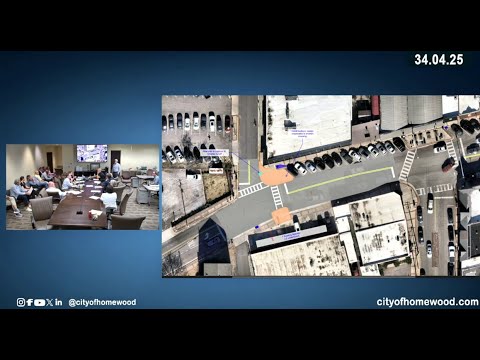
Committee members said the item was prompted by repeated pedestrian safety concerns at the diagonal crosswalks and by a recent resident report of a child and caregiver struck while crossing properly. A staff presentation described a three-phase plan focused first on shortening and straightening crosswalks, installing curb bulb-outs and removing a westbound left-turn lane that would free space for traffic flow and pedestrian protections.
The plan’s Phase 1 elements include curb extensions (bulb-outs) at Saint Charles, removal of a left-turn lane into an alley and restriping to shorten crossing distances. The engineering presentation estimated the striping would remove two perpendicular parking spaces at one location while adding about five parallel spaces elsewhere, and it noted that certain construction items (the bulb-outs and other orange-highlighted infrastructure) would require budget funding.
City staff and the committee discussed interim, low-cost protections including bollards and restriping to remove the left-turn lane. A staff member said restriping could be done while the committee pursues budget approval for engineered curb extensions, and recommended meeting with nearby businesses before implementing parking or loading-zone changes.
Business owners and residents at the meeting raised two recurring concerns: where deliveries and loading would be accommodated if diagonal parking or the center turn lane are removed, and the effects on short-term customer parking. Several speakers noted that some deliveries arrive on large trucks (18-wheelers) and that staging space and timing vary by business. Committee members agreed that accommodating morning deliveries and coordinating specific loading-zone times would require follow-up with individual businesses.
The committee also discussed the availability of funds. Staff said there are leftover funds from an Oxmoor “road diet” project that could be moved into general funds for engineering but that design and construction of curb extensions would need formal budget approval. Committee members directed staff to refer the Phase 1 design to budget hearings and to meet with business owners to refine loading-zone and parking arrangements prior to any permanent changes.
The committee voted on two formal procedural actions: a motion to approve the restriping changes as shown on the engineering PDF (passed, 5-0) and an agreement without objection to refer the engineered Phase 1 design and associated funding request to the city’s budget hearings. Next steps listed by staff include meeting with affected businesses, procuring engineering services for detailed design, and returning recommended ordinance language to council if changes to existing loading-zone orders or new pedestrian-walkway regulations are required.
Committee members emphasized the distinction between short-term measures (bollards and repainting to remove the left-turn lane) and capital work (bulb-outs and curb rebuilding) that will require budget approval and possible ordinance action. The committee did not authorize construction of bulb-outs before design and budget approval and said it would not remove or repurpose private parking without the property owner’s agreement or compensation.
A final administrative note: the committee also agreed to coordinate potential future parking-shift strategies tied to other downtown parking access projects referenced by staff, including use of an identified city lot for restricted morning deliveries and possible longer-term reallocation of surface spaces for customer use if off-street parking or a parking deck becomes available.