Get Full Government Meeting Transcripts, Videos, & Alerts Forever!
Get email alerts on the Opioid Settlement Funds topic
No spam. Unsubscribe anytime.
Homewood committee refers opioid‑settlement spending plan to budget hearings after Recovery Resource Center presentation
Summary
The Finance Committee heard a presentation from John Bales of the Recovery Resource Center on uses for opioid settlement funds, discussed best‑practice guidance from public health authorities, and referred the item to upcoming budget hearings for further review and costing.
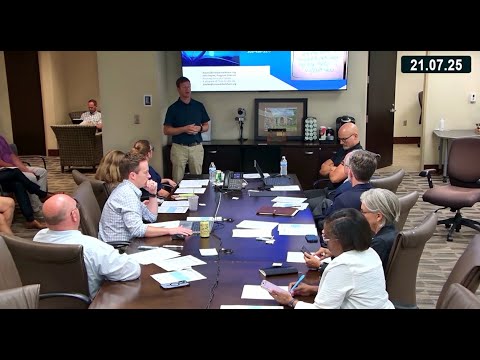
John Bales, program director at the Recovery Resource Center, told the Homewood Finance Committee on Aug. 4 that the recovery center offers same‑day, no‑cost assessments and peer‑led navigation to speed access to substance‑use treatment and reduce overdose risk.
The committee’s referral to the city’s budget hearings will allow staff to develop cost estimates and contract terms for using the city’s opioid settlement funds on assessments, training, outreach and recovery supports.
Why it matters: municipalities receiving opioid settlement dollars must follow restrictions and guidance from state and county public‑health officials and the attorney general; the committee said it wants a documented plan and monitoring so the funds can be tracked and evaluated.
At the meeting, Councilor Sims introduced Bales and said the city has kept opioid settlement proceeds in a separate account and must follow guidance on allowable uses. Bales described the Recovery Resource Center (RRC), a program of the Crisis Center, and outlined services the RRC says it can provide if the city chooses to allocate settlement funds: no‑cost ASAM‑based assessments, linkage and referral to treatment, peer recovery supports, training and education, and potential mobile supports and prerelease assessments for people in jail.
Bales said the RRC began in 2018 in response to the opioid epidemic and emphasized lowering barriers to treatment: “We offer the assessments no cost, walk in, same day, no appointment,” he told the committee. He said assessments follow ASAM criteria — the American Society of Addiction Medicine standard — and are necessary to place people at the correct level of care.
Bales and committee members discussed training for city staff, possible fee‑for‑service models for assessments, and data and evaluation components. Bales said he would provide a copy of an existing contract model with UAB to city staff for review and to help the committee weigh options for either a set 12‑month contract or per‑training fees.
Committee members also noted that some supplies (for example, naloxone) and overtime costs are currently being provided through other agencies or contracts, and that funding decisions should be coordinated with police, fire and health partners.
Outcome and next steps: without objection, the committee referred the item (file 21‑07‑25) to the city’s budget hearings so that staff can present proposed funding levels, potential contract language, and a recommended scope of work. Bales was asked to send the UAB contract sample and proposed pricing structures to city staff for distribution to the committee ahead of budget hearings.
Discussion vs. decision: the committee did not adopt a spending plan or contract at this meeting; it directed staff to include the item in budget hearings and requested specific documentation and cost estimates.
Community relevance and limits: the discussion focused on Homewood and Jefferson County populations affected by substance‑use disorder, with proposed services intended for justice‑involved clients and community members at risk. Committee members repeatedly referenced existing guidance from the state attorney general, the Alabama Department of Mental Health, and the Jefferson County Department of Health; the meeting did not change legal restrictions on the settlement funds.
Ending: The referral places the proposed programming in the budget process, where cost and contract details must be resolved before any funds are committed.