Get Full Government Meeting Transcripts, Videos, & Alerts Forever!
Get email alerts on the School Funding Legislation topic
No spam. Unsubscribe anytime.
Oakwood superintendent urges lawmakers to keep Fair School Funding phase-in, opposes 30% carryover cap; parents press board to join voucher lawsuit
Summary
Superintendent Neil Gupta urged the Ohio Senate Education Committee to keep the Fair School Funding Plan phase-in and opposed a proposed 30% carryover cap, citing Oakwood's residential tax base and potential bond-rating impacts.
Superintendent Neil Gupta told the Ohio Senate Education Committee this week that Oakwood Schools relies heavily on local revenue and asked lawmakers not to replace the Fair School Funding Plan phase-in with temporary bridge funding.
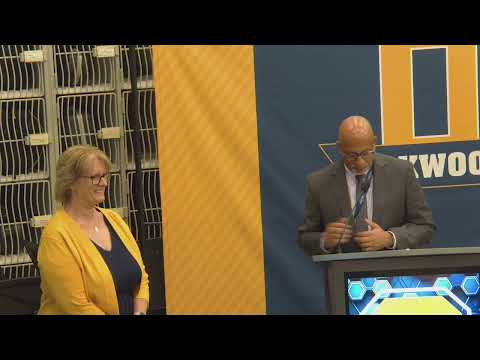
"My name is Dr. Neil Gupta, and I serve as the Oakwood School superintendent located just outside Dayton with a little over 2,000 students," Gupta said as he read prepared testimony to the Senate Education Committee on House Bill 96. He asked the legislature to "remove temporary bridge funding and maintain phase in as proposed by Governor DeWine, update the base cost inputs to reflect current costs such as staffing, class sizes, and services, and maintain guarantees until full implementation of the fair school funding plan is complete," language he included in his prepared remarks.
Gupta said Oakwood is unusually dependent on residential property tax: "We don't have a large commercial or industrial tax base. 95% of total district property value is residential property." He warned a proposed 30% carryover cap would force Oakwood to reduce its projected fiscal-year 2025 cash reserve from 52% by about $7.5 million and could undermine the district's ability to obtain a favorable bond rating. "Falling below that 30% threshold doesn't just hurt our ability to respond to emergencies. It also undermines our any chances of earning the bridal a bond rating we've been working hard towards it," Gupta said in the transcript.
Gupta also urged lawmakers to keep the five-year forecast requirement rather than replacing it with a three-year projection, saying deficits often appear in years four and five and the longer forecast helps districts plan for levy timing and other long-term issues.
At the Oakwood board meeting the same night, three public commenters urged the board to take action on vouchers. Ashley Tallman, a parent and PTO volunteer, invited board members to an informational session on May 14 about vouchers and the "Cupp Patterson Fair School Funding Plan," and urged the community to learn about voucher impacts on local schools. Michelle Berry, another parent, urged the district to "join the Vouchers Heard Ohio Coalition" and said Ohio's voucher program is "siphoning about $680,000,000 from our public schools each year." Joseph Fulford asked the board to join the lawsuit, arguing that "Oakwood needs to join not so much to protect itself in the near term, but so as to help protect Ohio's public education system in the long term."
A board member who spoke during reports echoed Gupta's concerns about House Bill 96 and voiced worry about language in House Bill 8 that the board member said "includes targeted attempts to erase the existence of people who are transgender, non binary, and gender expansive." The board member said they plan to attend the May 14 panel at Wright Memorial Library to learn more.
District finance staff told the board they have not yet incorporated any enacted changes from the state budget into the district five-year forecast because the budget has not been finalized.
No formal board action to join the statewide voucher lawsuit was recorded on May 12. The board instead heard public comment and discussed the superintendent's testimony and the local budget forecast during routine business.
Officials said they will continue monitoring state legislation and will report back to the board and community as proposals evolve.