Get Full Government Meeting Transcripts, Videos, & Alerts Forever!
Get email alerts on the Development Agreements topic
No spam. Unsubscribe anytime.
Spokane Plan Commission backs development agreement for Excelsior Wellness, sends recommendation to council
Summary
The Spokane Plan Commission on Aug. 13 recommended that City Council approve a development agreement for the Excelsior Wellness site in the South Indian Trail/Balboa neighborhood, with an amendment requiring the applicant to identify a potential location for a future water transmission main on its conceptual plan.
The Spokane Plan Commission on Aug. 13 recommended that City Council approve a development agreement for the Excelsior Wellness properties northeast of Indian Trail Road in the South Indian Trail/ Balboa neighborhood, with one amendment requiring the applicant to identify a potential location for a future water transmission main on its conceptual plan.
Kevin Freybod, senior planner with the City of Spokane Planning and Development Department, told commissioners the development agreement is a required follow-up to a comprehensive plan amendment approved last year and “is not a relitigation of the comprehensive plan amendment.” He said the agreement sets filing and mitigation requirements the developer must meet before building permits will be issued, but it does not approve a site plan or authorize construction.
The commission’s recommendation matters because the adopted comprehensive plan change conditioned approval on a signed development agreement addressing five topics: an all-phases site plan, a circulation/traffic memo, water and sewer demand information, cultural resources protections, and limits or clarifications on primary uses. Freybod said Exhibit B of the draft agreement contains the full development requirements the city is asking the developer to satisfy before permits are issued.
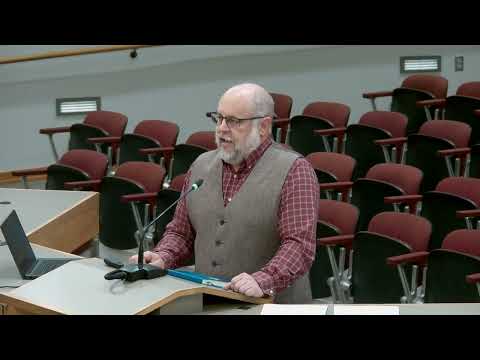
Applicants and supporters described the project as a long-term, multigenerational campus. Andrew Hill, an applicant representative, said the project’s planning has been “about a co-design and shared implementation with the neighborhood” and that the developer intends additional public engagement and a public-facing website to produce the conceptual plan the agreement requires.
Sean Cross, vice chair of Excelsior Wellness’s board, described the proposal as modeled on intergenerational campuses such as Portland’s Bridge Meadows and said the full build-out could exceed $100,000,000 over a decade or more. Colleen Condon, an Indian Trail resident and owner of Lilac City Early Learning Center, told commissioners she plans to operate a childcare facility on the campus and said co-locating services on one campus would improve access for children and families served by foster-care or publicly funded programs.
Key development requirements in the agreement include a binding development table that establishes maximum unit counts and nonresidential square footage for the purpose of impact analysis; a requirement for a cultural-resources survey on undisturbed portions of the site as requested by the Washington State Department of Archaeology and Historic Preservation; an engineer-prepared traffic or trip-generation memo and a water/sewer demand memo; and language distinguishing minor amendments (which may be processed administratively) from major amendments that would return to the legislative process.
Freybod and commission members discussed other specifics: the zoning adopted with last year’s ordinance changes the site from R-1 (low-intensity single-family) to a mix of moderate residential (multi-family) and a smaller area of community business with a 55-foot height limit. The developer will need to submit the conceptual plan, development details (unit counts and commercial square footage), and circulation/traffic plans so city departments can determine system capacity and require proportionate facility improvements if needed. Freybod noted the existing SEPA (State Environmental Policy Act) determination made for the earlier comprehensive plan amendment is still in effect for this non-project action; any environmental review for future building permits will be considered when project-level applications are submitted.
During deliberations, a commissioner moved to amend language in the agreement’s water section to require the developer to identify a location for a potential future transmission main on the conceptual plan in coordination with Integrated Capital Management (ICM). The amendment passed on a voice vote. Commissioners discussed that such transmission mains are typically routed in street rights-of-way rather than across private parcels, and the amended language was intended only to require consideration and identification of a potential corridor “if needed,” not to mandate construction of a main that ICM later determines is unnecessary.
The commission then voted 6–0 to recommend approval of the development agreement, as amended, to City Council. Commissioners voting aye were President Banks, Vice President Patterson, Commissioner Edwards, Commissioner Lenhart, Commissioner Shook and Commissioner Tamush; Commissioners Francis, Williams and Yachts were absent. The recommendation will be forwarded to City Council for a hearing and final action, which Freybod said is likely before the end of the year.
The agreement also reiterates that applicable impact fees—including transportation impact fees and general facility charges—apply; staff noted those are existing city fees required by municipal code rather than new charges specific to this project. Freybod said standard contract boilerplate (recording, severability, force majeure, and other standard terms) will be added to the version submitted to council.
What happens next: if City Council approves the development agreement, the applicant must submit the required conceptual site plan, traffic and water/sewer memos, and the cultural resources survey, after which city staff (and ICM where relevant) will determine whether additional mitigation or system improvements are required before building permits can be issued. The Plan Commission emphasized in its motion and findings that timelines and thresholds in the final contract language should be clear and that a process for addressing missed milestones be included as the city finalizes the boilerplate contract terms.
Votes at a glance: Plan Commission recommendation to City Council to approve the Excelsior Wellness development agreement, as amended — Recommendation: approved; Vote: 6 yes, 0 no, 3 absent. The amendment requiring identification on the conceptual plan of a potential transmission-main corridor, coordinated with ICM, carried by voice vote prior to the final recommendation.