
Council approves Hardy Way condominium tentative map amid homeowner-association questions
Get AI-powered insights, summaries, and transcripts
Sign Up Free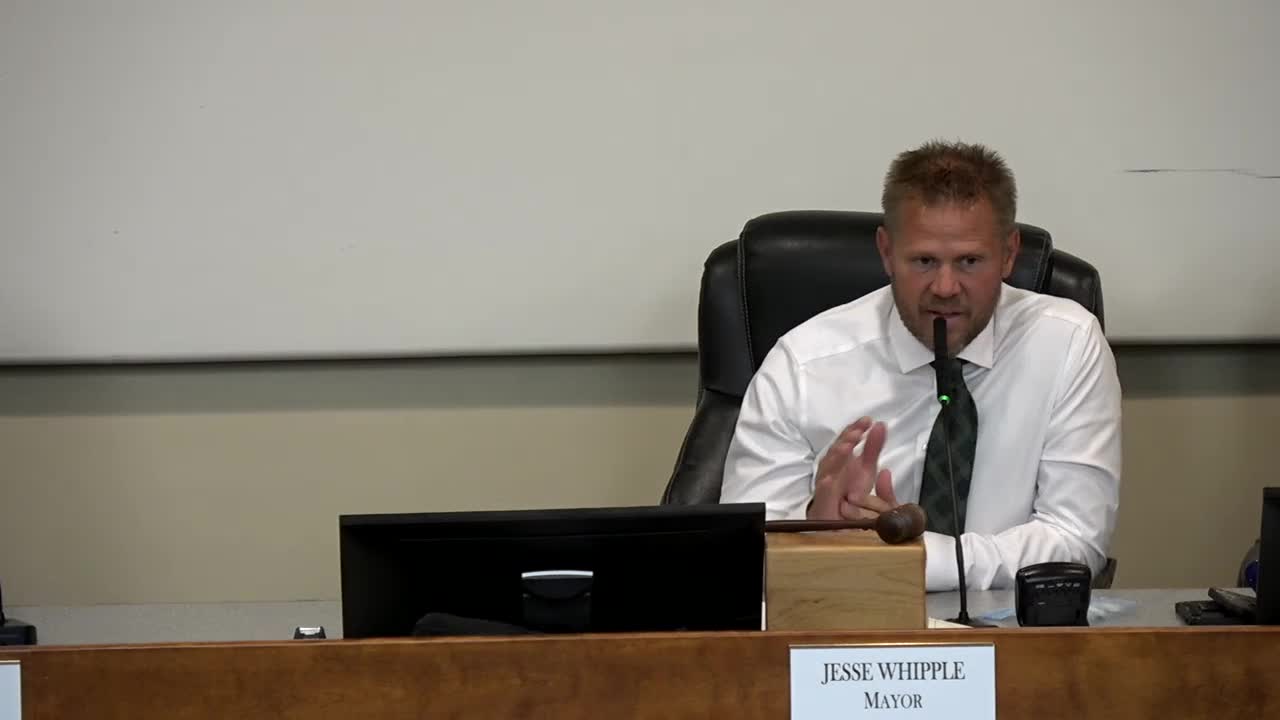
Summary
The council approved a tentative map to divide an 18-unit townhome development into condominium ownership, while public commenters raised concerns about Mesquite Vistas PUD procedures and whether HOA notice and annexation requirements had been followed.
The Mesquite City Council on June 24 approved a tentative map (case TM-25-002) to subdivide an 18-unit townhome development at 720 Hardy Way into individual condominium units.
City planning staff indicated the applicant supplied a June 20 letter from the Mesquite Vistas Community Association board stating the association reviewed and approved the project. Planner Simon told the council staff recommended approval, subject to standard conditions.
Several public commenters raised objections and urged the council to delay action. Public speaker Raline Giovanno said city staff had denied her company’s final map because it needed master-plan or PUD approval and that similar subdivisions had been processed previously without apparent HOA votes. “2.4 says there's a 51% vote of the master association to annex in property,” Giovanno said, urging the council not to “rubber stamp” approval while litigation and association notice questions exist.
Planning staff and city officials responded that subdivision approvals and PUD amendments are separate processes. Simon told the council the tentative map had been reviewed and that a community-association approval letter had been supplied. Public works and city legal advisors said that if the HOA letter were later shown to be incorrect, that would be a private dispute among parties and not, by itself, a city-code violation preventing the subdivision approval.
Councilwoman Wanless moved to approve the tentative map; Councilwoman Fielding seconded. The motion passed and the council approved the tentative subdivision. Councilwoman Gallo recorded an abstention on the vote.
The action approves the tentative map only; final map approval and any requirements tied to master-plan or PUD amendments would follow the city's established review steps if triggered. Staff noted that HOAs and private covenants (CC&Rs) can impose additional requirements beyond the city’s subdivision process and that obtaining and reviewing any HOA approvals is part of the city's standard intake for subdivisions located within existing common-interest communities.