Get Full Government Meeting Transcripts, Videos, & Alerts Forever!
Get email alerts on the Historic Preservation topic
No spam. Unsubscribe anytime.
Fayetteville reviews renewal of state contract for Camp Legg historic site
Summary
Officials and state preservation staff discussed a proposed renewal of a state management agreement for the Camp Legg historic site, covering contract length, a new foundation planning document, permissions for reenactments and live‑fire events, and city responsibilities for maintenance and insurance.
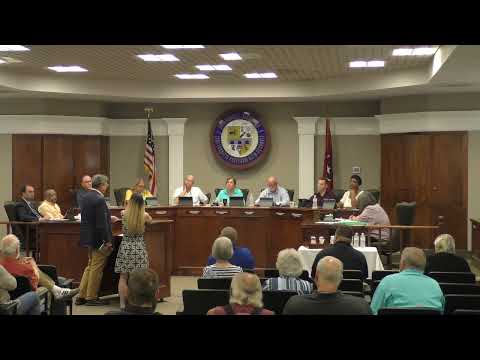
FAYETTEVILLE, Tenn. — Fayetteville aldermen and representatives of the Tennessee Historical Commission discussed a proposed renewal of the state’s management agreement for the Camp Legg historic site, focusing on contract length, a new foundation planning document and safety and liability procedures for reenactments. The Tennessee Historical Commission’s director, Patrick McIntyre, told the Board of Aldermen on Aug. 7 that the state has invested more than $1.6 million in the site over the years and that the partnership with local volunteers and the city began with an agreement McIntyre signed in December 2015. McIntyre and program staff said the commission paid about $135,000 to the Fayetteville City‑County Museum and cited a recent $2,000,000 round of historic properties funding at the state level. Commission staff said last year’s agreement was shortened to three years so the parties could draft a “foundation document” — a primary planning guide for preservation, interpretation and future development — that will be included in the next contract. City officials and commission staff discussed returning the contract term to the standard five years now that the planning document can be incorporated. The commission’s program director and a staff attorney described why the commission requires advance notice and state approval for certain events, including reenactments and any use involving live firing. The commission framed that requirement as a coordination and safety measure: the commission asks for a written request, evaluates staffing and safety certifications, and offers to promote approved events on state channels. City officials and aldermen pressed for clarity on what the contract requires of the city, noting the city already provides mowing, utilities, insurance and some security checks. City staff said the agreement is a no‑cost contract between the state and the city and encouraged creation of a separate memorandum of understanding (MOU) or memorandum of agreement (MOA) between the city and the site’s nonprofit friends group to clarify day‑to‑day responsibilities. No formal vote was recorded at the work session. Commission and city staff said they would continue to revise contract language and share an updated draft incorporating the foundation document and any agreed clarifications.