Lifetime Citizen Portal Access — AI Briefings, Alerts & Unlimited Follows
Fayetteville adopts inoperable-vehicle ordinance after church youth raise display concerns
Loading...
Summary
The Board of Mayor and Aldermen adopted Ordinance 2025-22 (Title 13, Chapter 4) regulating inoperable vehicles. Members of First Baptist’s student ministry told the board their planned restored vintage vehicle display may be affected; the ordinance passed after discussion and committee review.
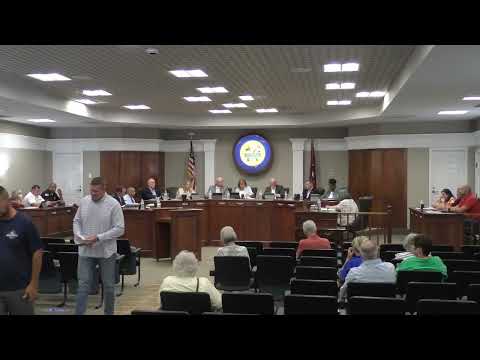
The Board of Mayor and Aldermen of Fayetteville on Aug. 12 approved Ordinance 2025-22, amending Title 13, Chapter 4 of the municipal code to regulate inoperable vehicles.
The ordinance passed after board members said the measure had been researched by planning and IT staff and reviewed in committee and a work session. The board approved the ordinance by voice vote and the mayor declared that "this motion carries." The final roll-call showed multiple ayes and no recorded formal opposition tally in the transcript.
Why it matters: the ordinance governs when a vehicle on private property can be treated as "inoperable" for code enforcement. At least two public commenters said the rule could affect a planned community art project tied to a church youth ministry.
During public comment, Chad Hancock, student pastor at First Baptist Church, told the board his congregation’s youth ministry had acquired a donated vintage vehicle to repaint and display near their student center on North Main. Hancock said the vehicle is not intended as a junk object: "we currently have that vehicle" and "it's not a junked vehicle. It's we want it to look very nice and it's gonna be a... a focal point." Ben Smith, who said he has children in the First Baptist youth program, said the display would be "something beautiful to beautify the city." Both asked whether the ordinance would allow such a display.
City staff and the ordinance record noted the measure was researched with neighboring jurisdictions and had passed through committee and a prior work session. The transcript records a motion to adopt the ordinance ("So moved. Motion by Auburn and miss Small. Second by Halder and Faulkner") and the mayor announcing the motion carried.
Discussion vs. decision: the public comments were part of the public-comment period and did not change the ordinance text on the dais. The ordinance was presented as committee-vetted; the board’s vote constituted formal action to adopt the new language into the municipal code.
What the transcript does not show: the ordinance text and any specific exemption language for displays or artistic uses were not read aloud in the recorded discussion, and no board member stated an explicit temporary exemption for the First Baptist project during the meeting.
What comes next: the ordinance is on the books as passed by the board; parties seeking clarification on whether a restored vehicle display qualifies for an exemption or permit should follow up with the planning department for an official interpretation or a permit application.