
Legal experts tell Texas committee DOJ letter misreads law and risks prompting unlawful, race‑based redraws
Get AI-powered insights, summaries, and transcripts
Subscribe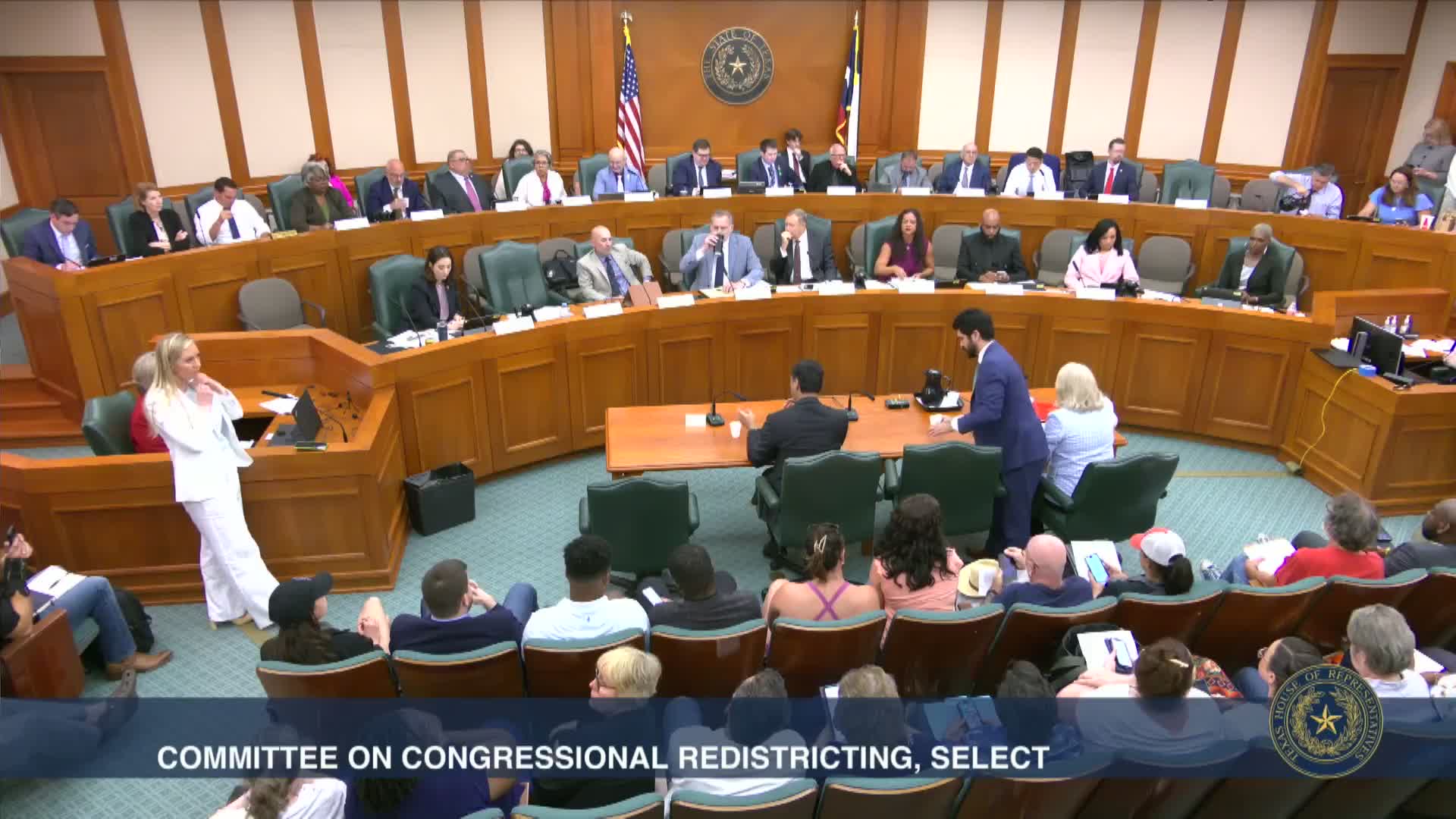
Summary
Two law experts at the July 24 hearing said the Justice Department’s July 7 letter mischaracterizes coalition districts and could create constitutional risk if the state redraws districts by focusing on racial composition rather than following Section 2 standards.
Two legal experts told the House Select Committee on Congressional Redistricting on July 24 that a Justice Department letter urging the state to correct certain districts was legally flawed and could itself prompt an unlawful race‑based redraw.
Law professor Ellen Katz testified that the July 7 DOJ letter’s suggestion that “coalition” districts violate the Voting Rights Act is incorrect. Katz told the committee that the Fifth Circuit’s recent Pettaway decision and U.S. Supreme Court precedent do not make existing coalition or majority‑minority districts automatically unlawful and that instructing the state to “dismantle” districts based solely on racial composition risks constitutional problems.
“What's critical here,” Katz said, “is that if there were a showing that a state intentionally drew district lines in order to destroy otherwise effective crossover districts that would raise serious questions under both the Fourteenth and Fifteenth Amendments. The July 7 DOJ letter instructs Texas to do just that.”
Nina Perales, vice president of litigation for the Mexican American Legal Defense and Educational Fund (MALDEF), told the committee that her organization’s litigation argues the state’s 2021 maps failed to create additional Latino opportunity districts that population growth justifies. Perales also emphasized that the legal framework requires careful analysis of citizen voting‑age population, not only total population, and that the courts apply strict fact‑based tests before ordering or upholding map changes.
Why it matters: The legal testimony framed the dispute at the hearing: whether the DOJ’s letter requires or merely suggests that Texas redraw maps, and whether acting on the letter’s apparent remedy — reassigning lines because of racial composition — would itself be unlawful. Katz warned that the DOJ’s approach, if followed, “would in fact be illegal” because it would inject race into the drawing process in a way the Supreme Court has cautioned against.
What the experts recommended: Both Katz and Perales urged caution. They said the committee should allow the litigation in federal court to proceed, require the production of any proposed maps before further public hearings on specific plans, and avoid any action that could be framed as race‑targeted dismantling of functioning minority opportunity districts.
Context from the hearing: Counsel for the state had argued in prior litigation that the 2021 maps were drawn “race‑blind.” Several committee members and witnesses pointed to that sworn testimony as a reason to proceed slowly. The committee’s chair said the first phase is public testimony and that no bill is yet before the committee.
Bottom line: Legal witnesses told the committee the letter’s claims are contestable and that the safer path is a transparent process that does not require the committee to act on the DOJ’s letter until legal issues are resolved.