
Houston hearing draws broad opposition as DOJ flags four Texas congressional districts
Get AI-powered insights, summaries, and transcripts
Subscribe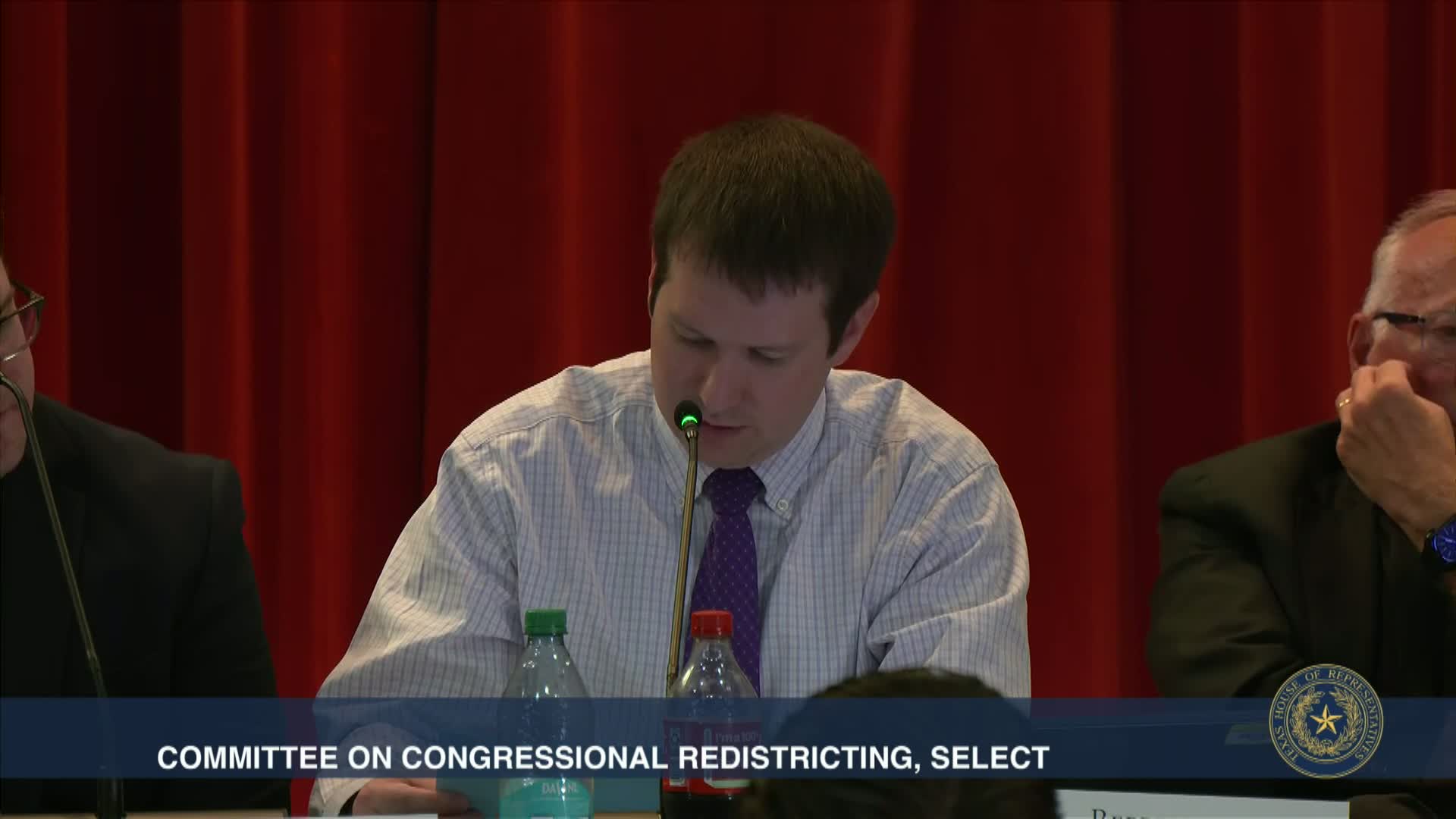
Summary
A House Select Committee on Congressional Redistricting hearing in Houston drew sustained opposition from residents, civil‑rights groups and several members of Congress who said any mid‑decade redrawing of Texas congressional districts would dilute the power of Black and Latino voters.
A House Select Committee on Congressional Redistricting hearing in Houston drew sustained opposition from residents, civil‑rights groups and several members of Congress who said any mid‑decade redrawing of Texas congressional districts would dilute the power of Black and Latino voters.
The committee convened an in‑person public hearing to gather testimony after Gov. Greg Abbott put ‘‘redistricting’’ on a special‑session proclamation dated 07/09/2025. The chair told witnesses the committee would hear only in‑person testimony, limited to two minutes each, and that written submissions and electronic comments at comments.house.texas.gov are accepted for the record.
Why it matters: A July 7 letter from the U.S. Department of Justice — referenced repeatedly in testimony — warned that Texas congressional districts 9, 18, 29 and 33 raise legal concerns and could prompt federal action if not fixed. Witnesses and several lawmakers said the DOJ’s intervention and the prospect of changing maps outside the once‑a‑decade cycle almost always harms communities of color.
Congresswoman Sylvia Garcia, whose district (29) was cited in the DOJ letter, told the committee that District 29 was ‘‘created to comply with the Voting Rights Act’’ and described it as "nearly 75% Latino," adding: "Ripping up the … district will silence the voices of this community." Congresswoman Lizzie Fletcher, representing Texas’ 7th District, said the 13 currently Democratic‑held districts in Texas are "majority‑minority" and warned that dismantling them would "intentionally dilut[e] the voting strength of minority communities." Congresswoman Jasmine Crockett framed the redistricting push as a partisan effort that would shrink the political clout of growing Black and Latino populations.
Several witnesses and members urged the committee to refuse a rushed process while 2021 maps remain in litigation and before any new maps are produced. "You cannot meaningfully testify about how a map affects you unless the map is available," said multiple witnesses and legislators, who asked that proposed maps be published and field hearings be held in affected regions before any vote.
Committee logistics and reaction: Committee staff warned that registration for in‑person testimony would close early and that testimony would be limited. The chair extended registration once when paper forms ran out and announced he would accept written submissions for the record. Members pressed the chair about whether the committee had seen proposed maps (the chair said it had not) and whether the committee had invited DOJ officials to testify; the chair said DOJ representatives would be welcome and that the committee would consider a formal invitation.
Outcome and next steps: The committee moved and later voted to adjourn at the hearing’s close; the motion passed by roll call (10 ayes, 6 nays). Committee members and many witnesses said they expected further hearings, additional written submissions and, if maps are filed, separate public hearings on any concrete proposals.
Ending: Witnesses left Houston urging the committee to prioritize disaster recovery and constituent services over mid‑decade map changes and to make any future redistricting process public, geographically accessible and compliant with the Voting Rights Act.