
Texans flood Capitol to oppose mid‑decade congressional redistricting called after DOJ letter
Get AI-powered insights, summaries, and transcripts
Subscribe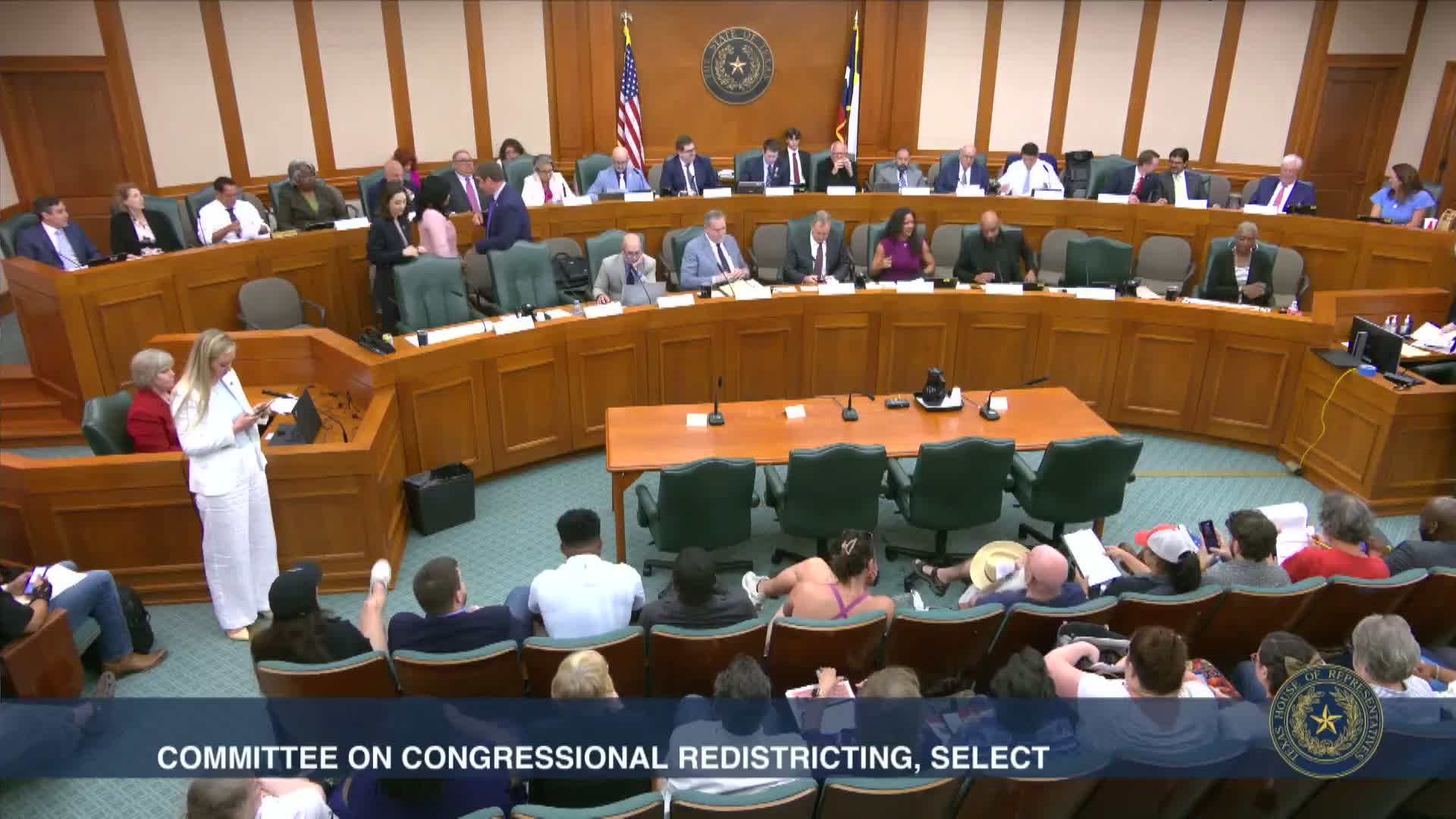
Summary
Hundreds of Texans and several members of Congress told a House select committee on July 24 that a proposed mid‑decade rewrite of congressional districts — prompted by a July 7 Justice Department letter — would disenfranchise communities of color, lacked maps and risked distracting the legislature from immediate flood relief.
A House select committee hearing on proposed mid‑decade congressional redistricting drew hours of public testimony on July 24 in Austin, with dozens of witnesses urging lawmakers not to redraw district lines before the 2030 census or a court order.
The hearing was called after a July 7 letter from the U.S. Department of Justice raised concerns about several Texas congressional districts and the governor placed redistricting on the special session agenda. Vice Chair John Rosenthal, who opened the invited panel of witnesses, told the committee he opposed a mid‑decade redraw and said the Justice Department letter “set this entire chain of events in motion.” He added, “Mid‑decade redistricting is pointless, unjust and we won't let that happen quietly. I'm here to fight.”
Why it matters: Witnesses and several members of Congress said the plan being discussed would likely dilute the voting power of Black, Latino and other communities of color. Speakers also criticized the committee’s process: no draft maps were shown, testimony was limited and registration for in‑person testimony closed mid‑afternoon while many people still waited to speak.
Dozens of public witnesses — from students at the University of Texas and community organizers to union leaders and former city officials — said the committee should prioritize disaster relief and infrastructure after recent deadly floods instead of using special‑session time for redistricting. “Texans deserve fair maps,” said Emily Amps of the Texas AFL‑CIO. “We deserve elections where candidates have to earn our vote, not inherit it.”
Many witnesses also asked for more transparent, geographically dispersed hearings and for the committee to publish any proposed maps before voting. Several members of Congress who came to testify — including Reps. Greg Casar, Sylvia Garcia and Joaquin Castro — warned that redrawing districts in the middle of litigation and without public maps would harm constituent services and community ties. “You should be having really, really about 10 in‑person hearings in a state like Texas,” Casar told the committee.
Committee logistics and votes: The chair announced the committee would hold three initial public hearings (Austin on July 24; Houston on July 26; Arlington on July 28) and then consider any bill that might be filed. The committee took a motion at the end of the meeting to adjourn “subject to the call of the chair”; the motion passed 11–7.
What wasn't decided: No draft congressional map was presented at today’s hearing. The committee did not vote on any redistricting measure or adopt changes to existing districts. Multiple witnesses and several members asked the committee to wait for court determinations in ongoing litigation before considering new maps.
The next steps: The chair said the committee will continue to accept written testimony and materials and expects additional hearings in Houston and Arlington later in the week. Members urged residents who could not testify to submit written comments to the committee’s portal.