Get Full Government Meeting Transcripts, Videos, & Alerts Forever!
Get email alerts on the Mass Fatality Volunteer Management topic
No spam. Unsubscribe anytime.
House bill would create statewide volunteer registry, emergency-manager certification and mass-fatality rapid-response teams
Summary
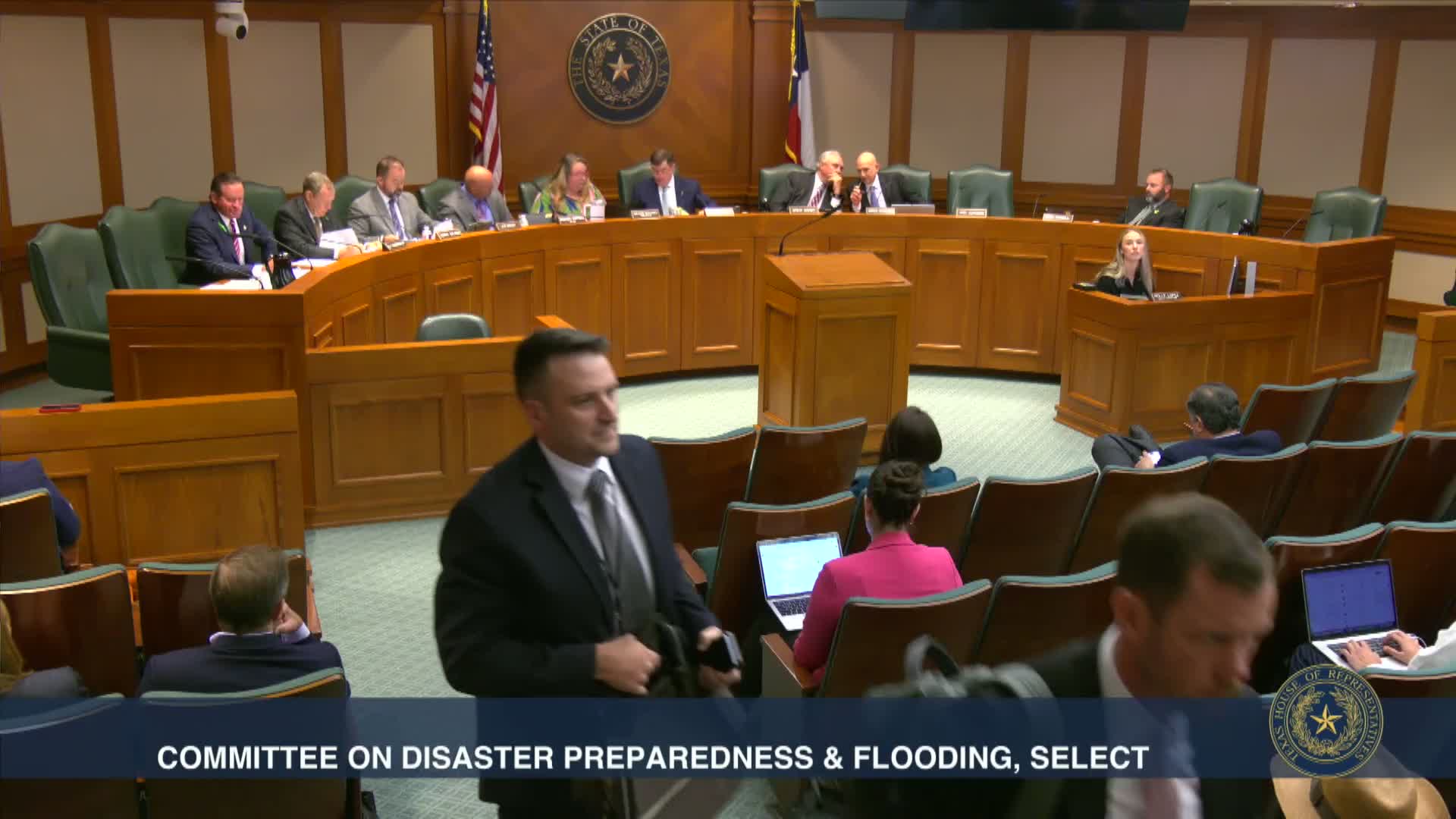
House Select Committee members considered House Bill 1, which would require mass-fatality training for justices of the peace in counties without medical examiners, create a licensed emergency-manager credential, establish a statewide volunteer-management system, and form mass-fatality rapid-response teams.
House Select Committee members considered House Bill 1, a broad package of proposals aimed at improving mass-fatality operations, volunteer management and emergency-manager qualifications after recent catastrophic flooding.
The bill would require justices of the peace (JPs) in counties without a medical examiner to take training developed by DSHS and TDEM on mass-fatality incident management, autopsy-referral decisions, identification and documentation practices, and interagency coordination. It would create a licensed emergency-manager credential issued by TDEM (including statutory authority for background checks), establish a statewide volunteer-management system that records volunteer credentials and experience and authorizes criminal-history checks for applicants, and create a mass-fatality operations rapid-response team to be deployed after disasters.
Chairman King presented the bill and emphasized prior hearing testimony about the need for clearer roles, training and coordination after the Kerrville floods. Chief Nim Kidd told the committee that while many JPs did valuable work during the response, there was “a need for additional resource understanding and capability” in overwhelming events and that training could reduce mistakes such as separate autopsy routing and family separation. Kidd said the state currently has no standard, statewide emergency-manager certification: “there is no national certification to be an emergency manager. And frankly, there is no state certification,” he told the committee.
Several justices of the peace and the JPCA testified in favor of codified training and regional support teams. Angela Williams (Justice of the Peace, Williamson County) told the committee that in her county a single JP on call might handle dozens of inquests during busy periods; she said adding certified death investigators helped, but smaller counties lacked the same capacity. Mark Russo of the JPCA said the association supports improved training and asked to be included on advisory planning. Witnesses and TDEM agreed that a regionalized, deployable rapid-response structure that includes medical examiners and experienced JPs would make mass-fatality response more uniform and would help manage volunteer flows and federal reimbursement documentation.
The committee left the bill pending. Members requested follow-up on details such as whether backup coordinators must hold the new license, whether fingerprint-based checks are required for volunteers, how costs for background checks would be handled, and how university forensic and medical-examiner resources would be integrated into the rapid-response team.