Get Full Government Meeting Transcripts, Videos, & Alerts Forever!
Get email alerts on the Charitable Solicitations topic
No spam. Unsubscribe anytime.
Committee considers voluntary certification for disaster-relief charities; education required, opponents warn of weaponization
Summary
House Bill 20 would create state-backed education materials and a voluntary attorney general certification for organizations soliciting donations for disaster relief; supporters said certification will promote transparency for donors while opponents warned the program could be misused to restrict spontaneous volunteers.
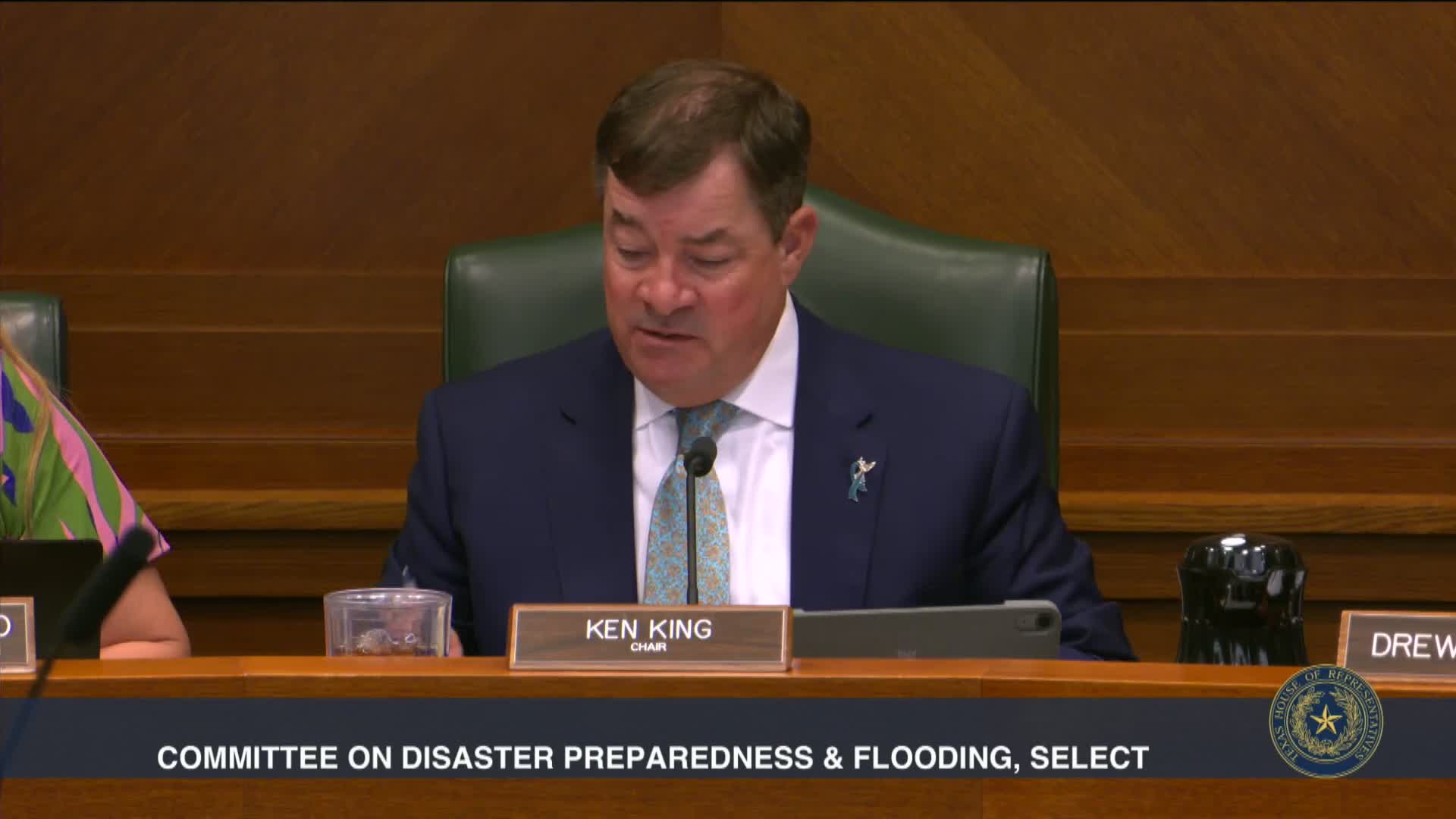
The House Select Committee on Disaster Preparedness and Flooding reviewed House Bill 20, which would require the Texas Division of Emergency Management and the attorney general’s office to develop educational materials and establish a voluntary certification program for organizations that solicit donations to provide disaster relief services.
Representative Darby, the bill’s sponsor, told the committee the two-pronged plan — public education and optional certification — is intended to protect Texans from fraudulent solicitations while helping reputable organizations win public trust. “This certification program is completely voluntary,” he said. He added certified organizations would be listed in a public registry maintained by the attorney general and could display an approved seal; state or local entities administering disaster-grant funding would be allowed to consider certification status when awarding public funds.
Witnesses expressed support for the bill’s education component but mixed views on the certification. Timothy Mabry, a volunteer who worked in recovery, said he supported educational materials but opposed the certification portion, warning it “could potentially be used as weaponization and for growing the government.” Mabry told the committee he had seen well-meaning volunteer groups turned away at some disaster sites because officials were uncertain who they represented.
Other witnesses urged the committee to design the certification so it does not impede legitimate volunteers and faith-based organizations that spontaneously mobilize following disasters. Kenneth Flippen of the U.S. Green Building Council described many ad hoc local groups that successfully provided food and services after the Kerrville floods and urged inclusive criteria so those organizations would not be excluded from relief efforts or from access to public funding.
The committee left the bill pending. Members said they want further conversations with the attorney general’s office and other agencies that currently oversee charitable solicitations before moving a substitute or advancing the bill.