Get Full Government Meeting Transcripts, Videos, & Alerts Forever!
Get email alerts on the Campgrounds Safety topic
No spam. Unsubscribe anytime.
Committee hears bill to require flood-disaster plans at campgrounds; DSHS oversight, civil penalties proposed
Summary
House Bill 19 would require public and private campgrounds in floodplains or along waterways to adopt, post and update written flood-disaster plans, submit them for state review, train staff and share plans with local responders; committee left the bill pending pending a committee substitute and resource follow-up.
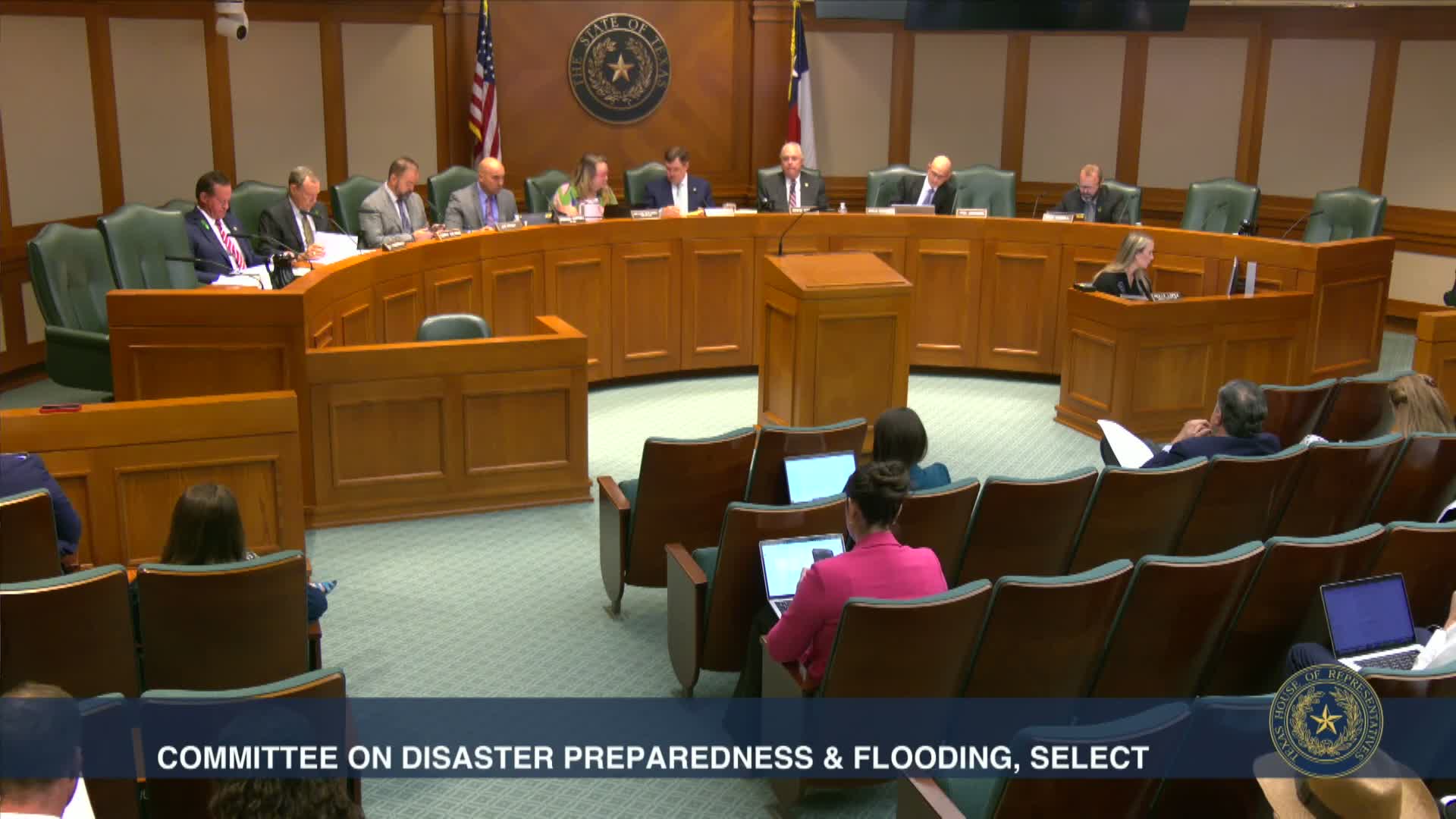
House Select Committee on Disaster Preparedness and Flooding members on Oct. 5 considered House Bill 19, introduced by Representative Darby, which would require public and private campgrounds located in flood plains or along waterways to adopt, post and annually update written flood-disaster plans and submit them for state review.
The bill’s sponsor told the committee the measure is “a starting point, not the finished product” and described it as a public-safety response to camps that lacked preparation during recent catastrophic flooding. Representative Darby said, “House Bill 19 addresses this critical safety gap by simply requiring campground operators to develop, adopt, and annually update written flood disaster plans for their facilities.”
Under the bill as presented, campground operators would: develop and adopt written flood-disaster plans; provide staff and campers copies and training on the plan before seasons begin; make approved plans conspicuous at the facility or online; and share plans with local emergency services and counties to improve coordination. The measure would require plans to be submitted for review to a state agency; the author said a committee substitute will transfer final oversight to the Department of State Health Services (DSHS) under Chapter 141 of the Health and Safety Code so regulatory authority would align with existing youth-camp oversight.
Enforcement in the introduced text would allow the attorney general to seek civil penalties of up to $1,000 per violation per day for failures to comply. Representative Darby told members the bill’s substitute would preserve a requirement that rulemaking be sensitive to campground operators’ financial hardship and practical timelines; the draft timelines cited by the author called for rules by March 1, 2026, and initial plans due by May 1, 2026.
Chief Nim Kidd, appearing as a resource for TDEM, told the panel that TDEM is not a regulatory agency and supported coordination with the health agency. “Our agency is not a regulatory agency in any means right now,” Kidd said, noting DSHS is the more typical regulatory home for camp oversight. Industry witnesses said they generally welcomed the safety goals but raised questions about standards and implementation. Randall Dowley of the Texas Association of Campground Owners said the association was neutral on the bill and noted the group has templates and past proposals to adopt national standards.
The committee did not vote on the measure. Chair and the author said a committee substitute is pending that will address agency oversight and technical drafting items; the bill was “left pending” for further work and to allow follow-up with DSHS and other resource witnesses.
Why it matters: The bill targets a narrow set of facilities (campgrounds in flood plains or adjacent to waterways) but addresses safety gaps identified after recent floods by requiring written plans, staff training, and local coordination — actions that state witnesses and industry representatives told the committee could reduce confusion in future responses.
What’s next: The author plans a committee substitute to move regulatory review to DSHS and to clarify posting, training and applicability. The committee will call DSHS and other resource witnesses before advancing the substitute.