
South Texas officials urge state backing for $221 million Delta water-and-flood project after March storms
Get AI-powered insights, summaries, and transcripts
Subscribe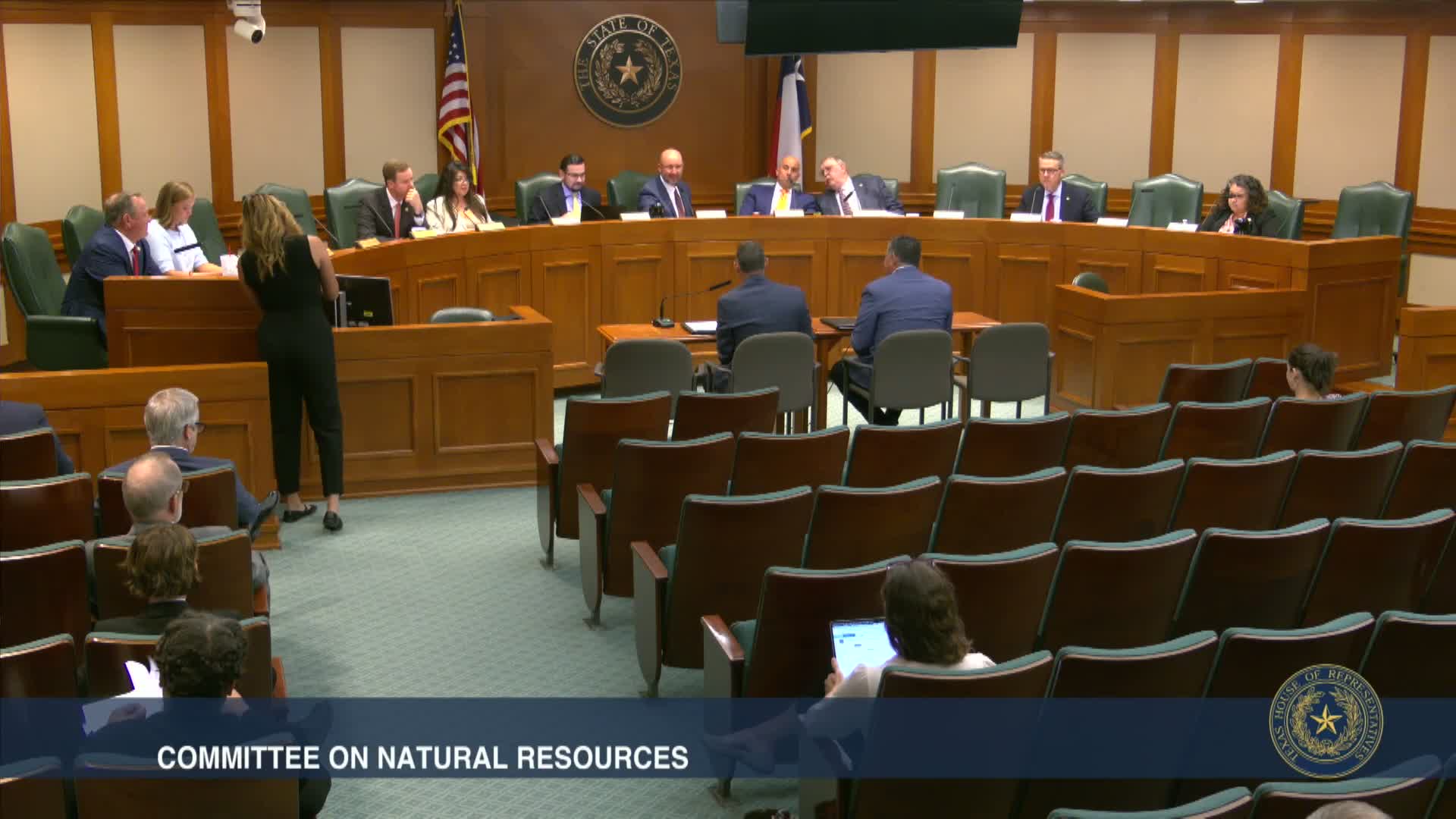
Summary
Hidalgo County officials told the House Committee on Natural Resources that a late-March storm system overwhelmed local drainage, destroyed homes and closed key corridors, and they urged state help to finish a $221 million Delta Region Water Management Project intended to both reduce downstream flooding and provide an alternate water supply.
Hidalgo County officials told the House Committee on Natural Resources that a late-March storm system overwhelmed local drainage, destroyed homes and closed key corridors, and they urged state help to finish a $221 million Delta Region Water Management Project intended to both reduce downstream flooding and provide an alternate water supply.
"From March 26 to March 28 our community endured a sudden and severe storm system that dropped more than 20 inches of rain across our region," Hidalgo County Commissioner David Fuentes told the committee. "In Hidalgo County the impacts were devastating: 235 homes were destroyed or severely damaged, more than 1,000 structures inundated, hundreds of roads flooded and six lives lost. Property damage in our county alone exceeded $100,000,000."
Fuentes and Raul Sassin, general manager of McDowell County Drainage District No. 1, described damage to transportation corridors and the limits of existing drainage infrastructure. "Our region's most critical transportation corridor, Interstate 2, was shut down in multiple locations," Fuentes said, citing flooded underpasses in Mercedes, Weslaco, Donna and Alamo that stranded motorists and delayed emergency services.
Nut graf: Local officials said the Delta project would capture stormwater and agricultural runoff, treat it to drinking-water standards and reduce downstream flows, but it needs additional state and federal funds to move from locally funded phases into full buildout.
Fuentes described the Delta project as a multi-benefit effort that stores and treats storm runoff and treated effluent "to drinking water standards" and would both reduce flooding and diversify supplies during drought. He told the committee the total project cost is $221,000,000; local voters have approved $25,000,000 in bonds, and the project is eligible for the state's Flood Infrastructure Fund (FIF), but about $181,000,000 remains to complete the full buildout.
Sassin outlined the drainage district's system and recent work, saying the district manages roughly 780 miles of manmade channels and about 1,100 acres of regional detention facilities. He said local investments and partnerships have reduced impacts where projects were completed: "In 2018 we had over 200-plus homes that were underwater. In 2020 when we had Hurricane Hannah, we had a handful, maybe like 8 homes that were impacted and this last rain event in March since we finished the project we had 0 impacted. So you can see investing ahead and getting these fundings in place allows for ... better level of protection."
Committee members asked about coordination with TxDOT around drainage of frontage roads and emergency access. Sassin said some TxDOT local engineers have been receptive, but agency design guidelines "don't account for that amount of water" in some places, and local agencies have pushed back when right-of-way limits complicate watershed-scale solutions. He described a local approach that requires point-discharging developers and the state to account for water they convey into local systems.
Fuentes and Sassin summarized local funding history and expected needs. Fuentes said roughly 40% of Hidalgo County lies in the 100-year floodplain and 55% in the 500-year floodplain (figures given to the committee). He said local voters approved bond issuances in 2018 and 2023 and estimated local investment since 2018 at more than $200,000,000, with additional projects already authorized and under construction. Sassin said the district previously received grants and a mix of loans and grants through the state's FIF and other programs, and that nine applications were pending with the Texas Division of Emergency Management's Hazard Mitigation Grant Program totaling about $37,200,000.
Committee members pressed for clarity about project costs, funding status and how the Delta project complements state flood planning. Fuentes asked the Legislature to "adapt, fund funding programs so innovative, multi-benefit projects like this can move forward without being disqualified by technicalities."
Ending: Officials said the Delta project and other locally led projects can serve as models but need state and federal partners to close large funding gaps before construction can finish.