
Camp operators and state health officials urge clearer, site‑specific emergency plans after Hill Country floods
Get AI-powered insights, summaries, and transcripts
Subscribe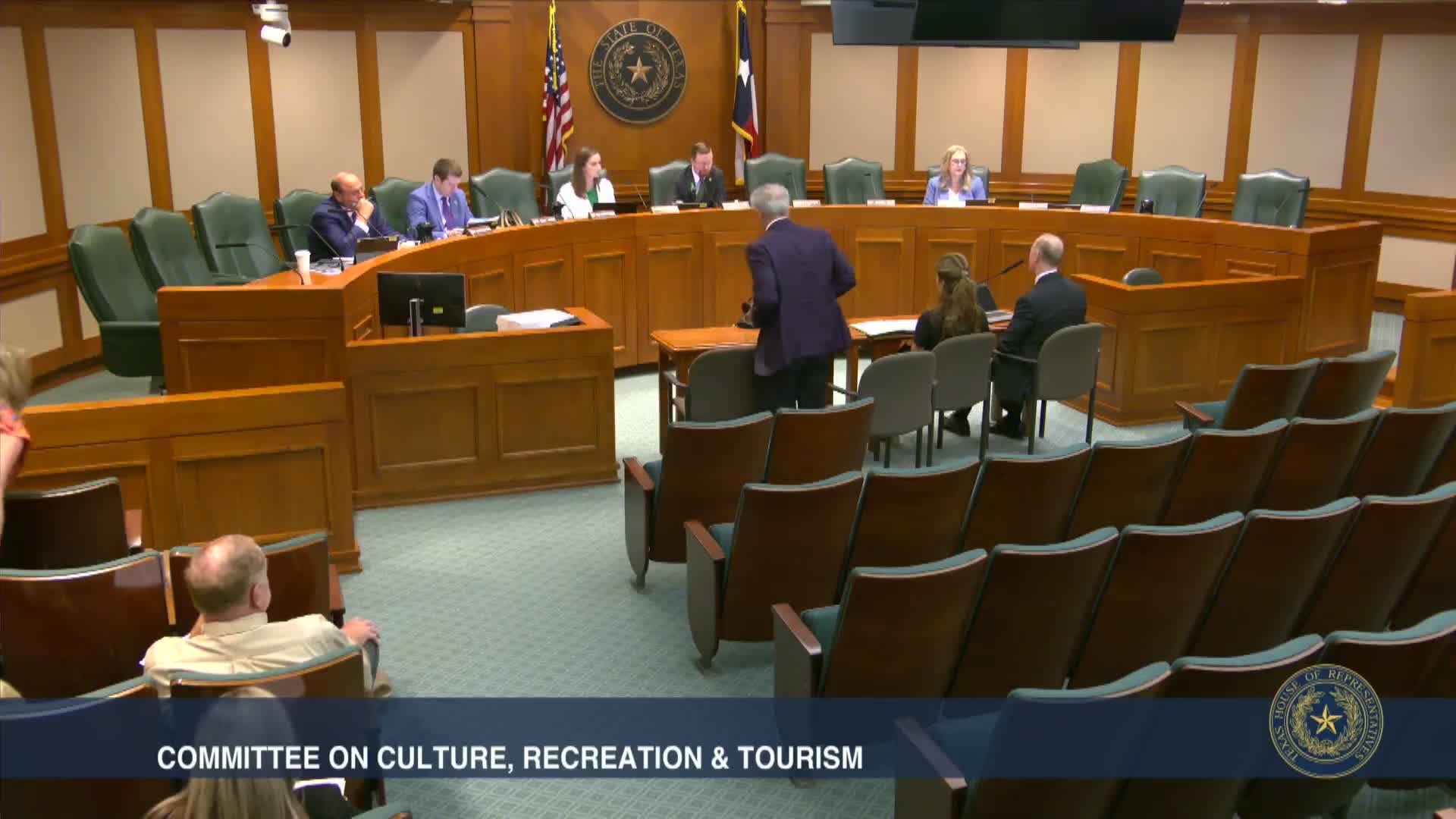
Summary
Camp operators, the Department of State Health Services and the American Camp Association told lawmakers that youth camps need site‑specific emergency plans, redundant non‑cell communications, and coordination with local first responders; legislators questioned whether overnight accommodations should be allowed in flash‑flood‑prone locations.
Representatives of Texas youth camps, the Department of State Health Services and national camp groups told the House Culture, Recreation & Tourism Committee that youth camps must strengthen site‑specific emergency plans, establish non‑cell communications, and coordinate with local emergency responders after the July Hill Country floods.
"There is a statutory framework in Health and Safety Code, Chapter 141, and camps are required to have written emergency plans," Dr. Timothy Stevenson, testifying for the Texas Department of State Health Services, told the committee. He said DSHS inspects roughly 374 youth camps annually, aims to inspect about 95 percent of licensed camps during the operating season, and reviews each camp's written emergency plan during inspections.
Camp operators described how they sheltered in place during the flood, relied on two‑way radio systems, and used relationships with local first responders. Meg Clark, representing Camp Waldemar, said the camp's staff moved canoes off the river and sheltered campers in cabins above the river overnight; power and cell service were lost and the camp used 2‑way radios to communicate. Clark said the camp ended its term early the day after the storm, transported campers once roads cleared, and emphasized regular orientation training and on‑site walkthroughs with local responders.
Steve Baskin, board chair of the American Camp Association and owner/operator of Camp Champions, urged clarified standards for emergency plans, including site‑specific procedures coordinated with local authorities and insurers, redundant communications (walkie‑talkies, NOAA radios, lightning alert devices), and clear triggers for escalating response levels from "watch" to "warning." Baskin recommended that camps file site plans with local emergency officials and suggested that plans be site‑specific because lakes, rivers and creeks present different hydrodynamic risks.
Committee members pressed whether the Legislature or the commission should prohibit overnight accommodations in flash‑flood‑prone locations. DSHS counsel said that a statutory prohibition would likely require legislative direction and that agencies can otherwise pursue layered mitigation: redundant communications, local coordination, and emergency drills. Camp witnesses favored on‑site consultations with local first responders and annual walkthroughs as best practice but warned against unduly prescriptive rules that would not fit every camp's physical context.
Other topics included alarm/siren use (witnesses suggested careful calibration so alarms do not traumatize children and that tests be clearly marked), the limits of cellular alerts in rural areas, and the value of regular joint exercises with local emergency personnel. No rule changes or legislation were adopted at the hearing; witnesses said they will provide written recommendations to the committee for further consideration.