
TPWD outlines river restoration and wildlife recovery work after Hill Country floods
Get AI-powered insights, summaries, and transcripts
Subscribe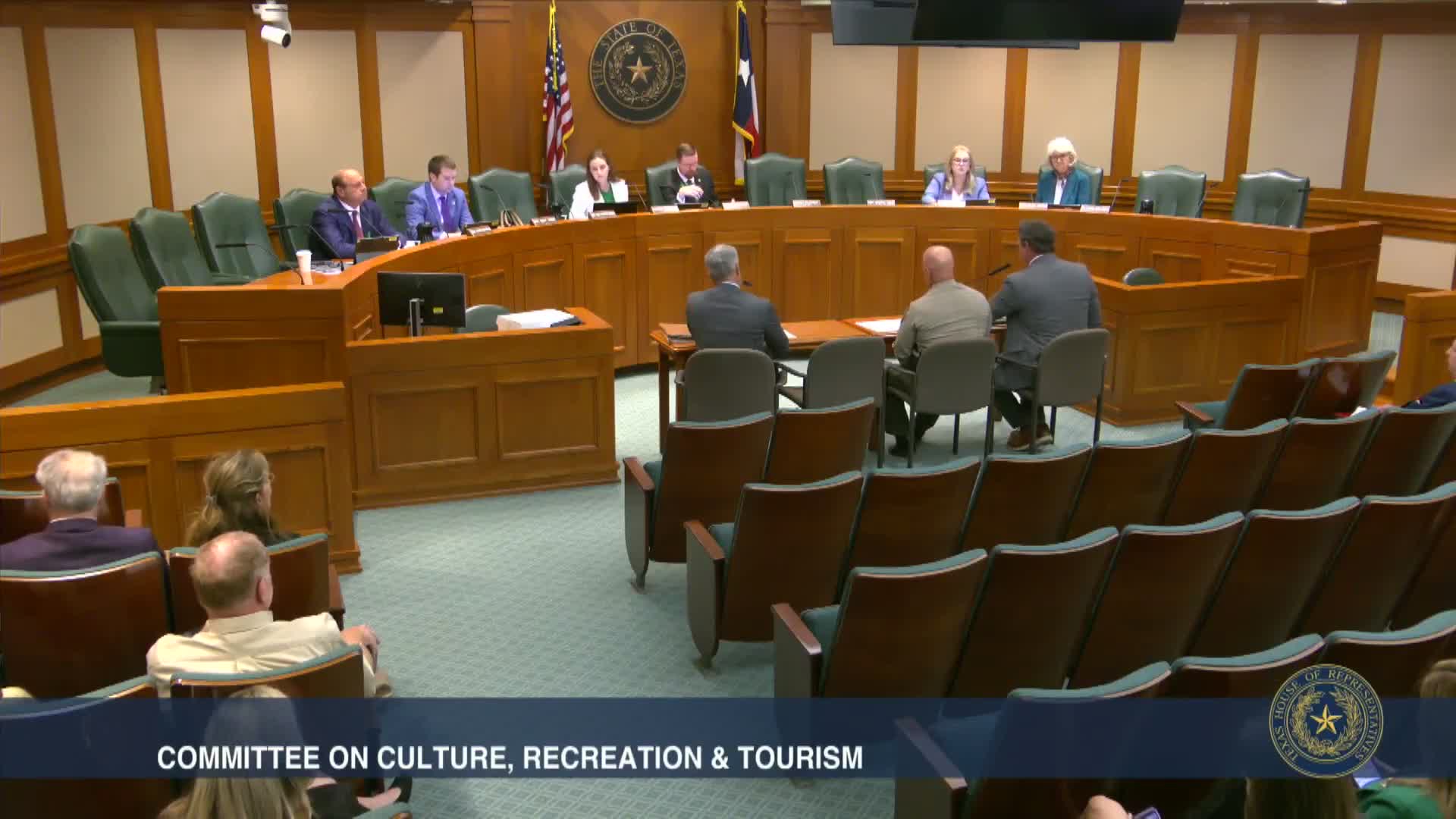
Summary
Texas Parks and Wildlife Department told the committee it will refocus biologists, hold public scoping meetings and use farm‑and‑ranch conservation and landowner programs to support riparian and river corridor restoration after the floods.
Texas Parks and Wildlife Department officials told the House Culture, Recreation & Tourism Committee that fish and wildlife populations in Hill Country streams are resilient after flash flooding but that habitat recovery will require targeted restoration work and landowner partnerships.
"Fish are gonna be fine at a population level so long as we can help those river corridors recover," Tim Birdsong, director of TPWD's Inland Fisheries Division, said during his testimony. Birdsong described tagging studies that showed many Guadalupe Bass remained in-place during prior flood events and others moved upstream to recolonize habitat.
Birdsong reviewed TPWD programs that support river restoration: landowner outreach, cost‑share incentives through USDA Farm Bill programs, the Texas Farm and Ranch Lands Conservation Program and technical assistance offered through TPWD's wildlife and fisheries biologists. He said following the Blanco River floods in 2015 and the Llano River events in 2018 TPWD organized workshops, distributed plants from nurseries and developed demonstration sites with willing landowners.
To assess flood damage this year, Birdsong said TPWD will conduct surveys to identify hazards to navigation and safety for paddlers, anglers and waders, complete standard fish and wildlife surveys, then prepare action and conservation plans. He said the department will hold public scoping meetings this fall to gather stakeholder input and identify partners to implement restoration projects.
Birdsong emphasized the importance of managing riparian vegetation to provide buffer functions and cover for terrestrial wildlife and to support long‑term river healing. He said some post‑flood activities—including gravel dredging or heavy machinery in riparian zones—can impede natural recovery and that TPWD seeks to guide landowners toward best practices.
No formal policy or funding change was enacted at the hearing; TPWD said it will use existing programs and seek partner funding to implement restoration plans and public engagement.