
Texas Parks and Wildlife describes large-scale search, rescue and evacuations after July Hill Country floods
Get AI-powered insights, summaries, and transcripts
Subscribe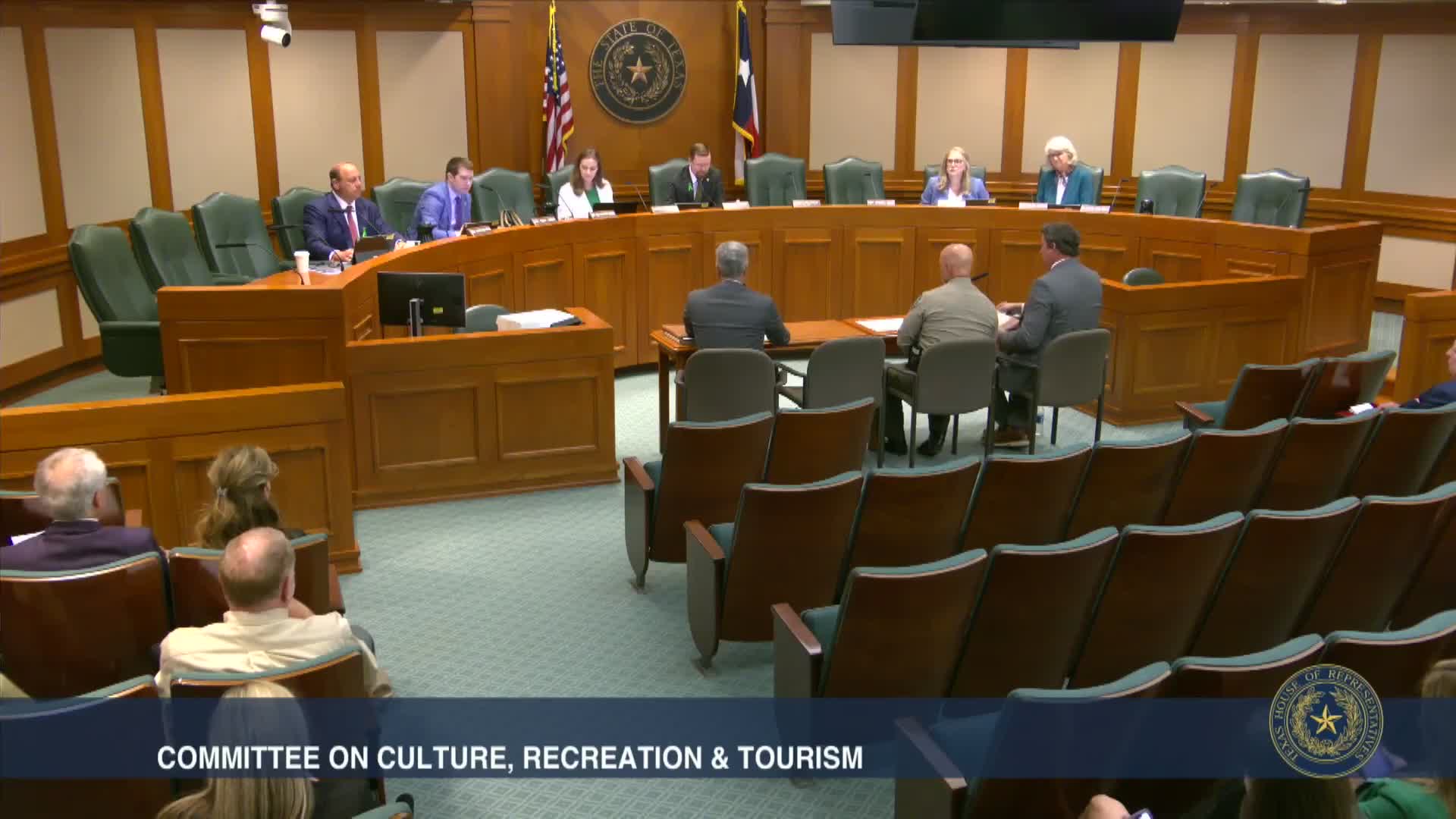
Summary
Texas Parks and Wildlife Department told the House Culture, Recreation & Tourism Committee that state park staff and game wardens pre‑staged assets before the July storms, executed search and rescue operations and relocated hundreds of people without injuries during the Hill Country floods.
A Texas Parks and Wildlife Department executive told the House Culture, Recreation & Tourism Committee on July 9 that the agency pre‑staged personnel and assets and carried out large‑scale search and rescue and evacuation operations after flash floods struck the Hill Country.
"The department takes the preparation for response to emergencies with a high level of professionalism," David Joskowitz, executive director of the Texas Parks and Wildlife Department, told the committee. He said the agency manages roughly 750,000 acres of wildlife management areas, 89 state parks that draw nearly 10 million visitors annually and 10,000 square miles of surface water.
The department said it activated site‑specific emergency plans at parks and the department level and placed staff at the State Operations Center to coordinate the response. Joskowitz said park staff relocated or evacuated 359 visitors from parks and closed 22 parks fully or partially; he reported no injuries or casualties among park visitors.
Colonel Ron Vander Roos, who testified as the department's game warden colonel, described the wardens' role in law enforcement and search and rescue. He said game wardens pre‑deployed assets on July 3, then responded before sunrise on July 4 with more than 169 pre‑staged wardens and roughly 200 specialized assets. Vander Roos said a broader tally for the Hill Country response included 375 game wardens, more than 475 assets, 33 life‑saving evacuations the morning of intense flooding, and more than 400 people evacuated in the region by game wardens.
"They did an incredible job under unbelievable conditions," Joskowitz said of the game wardens and state park staff. Vander Roos credited a permanent game warden presence at the state's Emergency Operations Center and pre‑positioning with enabling rapid response.
Committee members asked about warning systems at parks after witnesses said cell service is unreliable at many rural sites. Joskowitz said state parks do not have sirens but do collect phone numbers during registration and are working with their reservation vendor to target text alerts to campsites in identified flood zones. He also said the parks plan to rely on public‑address systems and park hosts to conduct campsite‑by‑campsite announcements when evacuation or relocation is needed.
Members and witnesses discussed communications gaps and interoperability challenges during major incidents. Vander Roos and Joskowitz said wardens and parks made use of helicopters, drones, boats, K‑9 and dive teams during the response and that they are preparing after‑action reports to identify areas for improvement.
The committee did not take formal action. Witnesses said they would continue after‑action reviews and coordinate with local emergency managers and the Texas Division of Emergency Management to refine communications and predeployment plans.