
Senate hearing spotlights rising financial exploitation of older adults; Guard Act and tech-driven scams central to discussion
Get AI-powered insights, summaries, and transcripts
Subscribe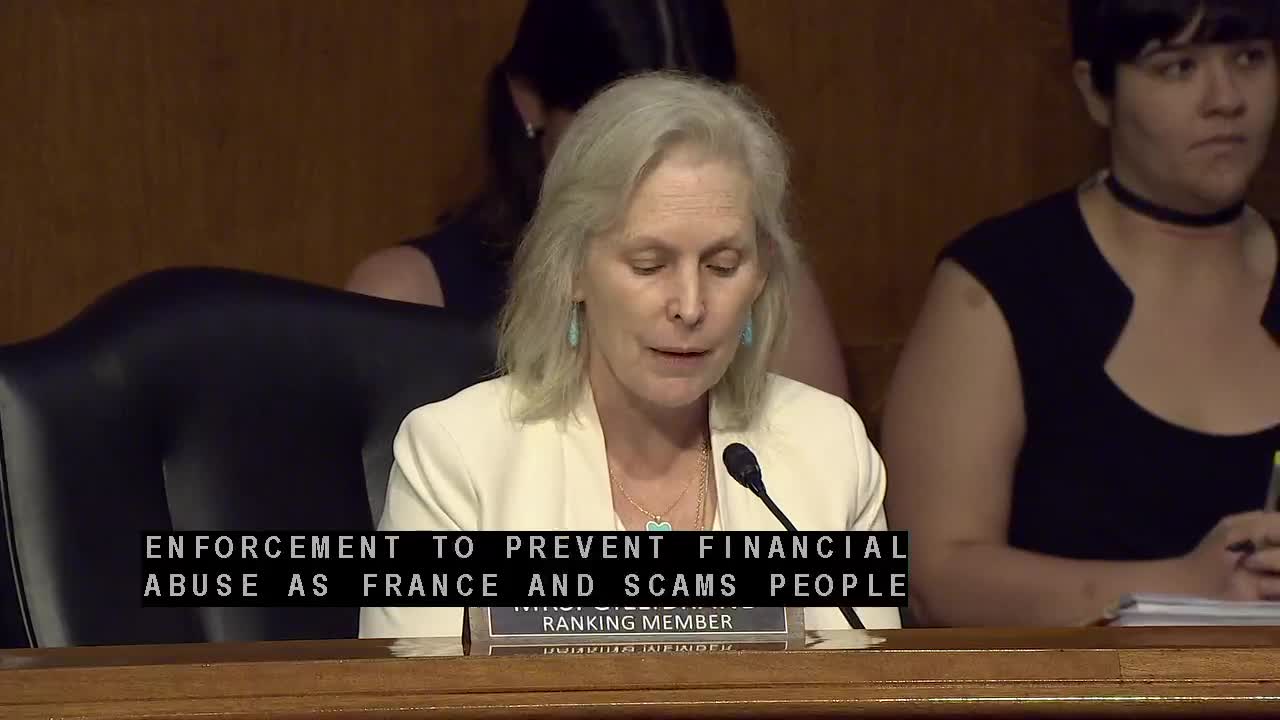
Summary
Prosecutors, AARP and advocates warned senators about rising cryptocurrency, AI and deepfake scams targeting older adults and backed the Guard Act, a bipartisan bill intended to strengthen local law enforcement tools and training to combat modern financial fraud.
At the Senate Special Committee on Aging hearing, witnesses described an evolving landscape of financial exploitation that increasingly uses cryptocurrency, AI-generated voices and deepfakes to target older adults. Nelson Bunn, executive director of the National District Attorneys Association, told the committee that digital scams have grown sharply and prosecutors must have flexible tools to keep pace. “One of the most prevalent means to exploit older adults is through financial scams,” Bunn said, adding that the FBI Internet Crime Complaint Center reported large annual losses to elder-targeted scams. Ranking Member Kirsten Gillibrand introduced the Guard Act—short for Guarding Unprotected Aging Retirees from Deception—and said it would give law enforcement “the tools and flexibility it needs to combat financial fraud and abuse in the modern age.” Several witnesses, including Sean Vosco, AARP Oklahoma State Director, and Bunn, expressed support for the bill and said local training and specialized task forces are key. Witnesses and senators cited specific threats and case examples. Bunn noted a recent indictment of Chinese nationals accused of a large-scale pop-up computer scam and said more than 50 victims across 19 states lost more than $10,000,000 in that matter. Ranking Member Gillibrand and AARP witnesses said older Americans lost about $2,800,000,000 to cryptocurrency fraud in 2024, and speakers warned that new AI-driven techniques are expanding the reach and plausibility of scams. Senators asked whether banks, credit unions and technology platforms are doing enough. Panelists urged more proactive monitoring by financial institutions—many already use machine-learning tools to flag unusual transactions—and greater public education, including programs that train bank employees and bank tellers to recognize exploitation. “Many times that teller and those bank employees know those individuals they go to,” Sean Vosco said, referring to AARP’s BankSafe education program. Discussion vs. decisions: The committee hearing featured policy recommendations and bipartisan support for the Guard Act but recorded no formal legislative vote. Witnesses recommended expanded training for law enforcement, better information sharing across jurisdictions and tighter oversight of cryptocurrency ATMs and platforms. Ending: Senators and witnesses emphasized public education, cross-jurisdictional task forces and updated law-enforcement tools as short-term priorities while urging lawmakers to pass legislation such as the Guard Act to strengthen long-term enforcement capacity.